
Securing Fort Worth’s New Urban Developments: What Property Managers Need to Know
Property managers in Fort Worth should be aware of the rapid urban development driven by significant population growth, which includes new mid-rise apartments and mixed-use blocks. Understanding these trends is essential for effective property management and meeting the needs of a growing resident base.
Why Fort Worth’s Building Boom Demands a New Security Playbook
Fort Worth added more than 19,000 residents in a single year, ranking among the fastest-growing large cities in the nation. That growth shows up in cranes along West 7th, mid-rise apartments in Near Southside, and mixed-use blocks near the Stockyards.
Each new project creates a target before anyone moves in. Urban development security protects these sites across three distinct phases: active construction, lease-up, and full occupancy.
Property managers who plan for all three avoid costly gaps. This post breaks down what each phase needs and where Fort Worth’s weather and crime patterns change the math.
The Three Phases of Urban Development Security
New developments shift risk as they grow. A plan built for an empty lot fails once residents arrive.
Phase 1: Active Construction
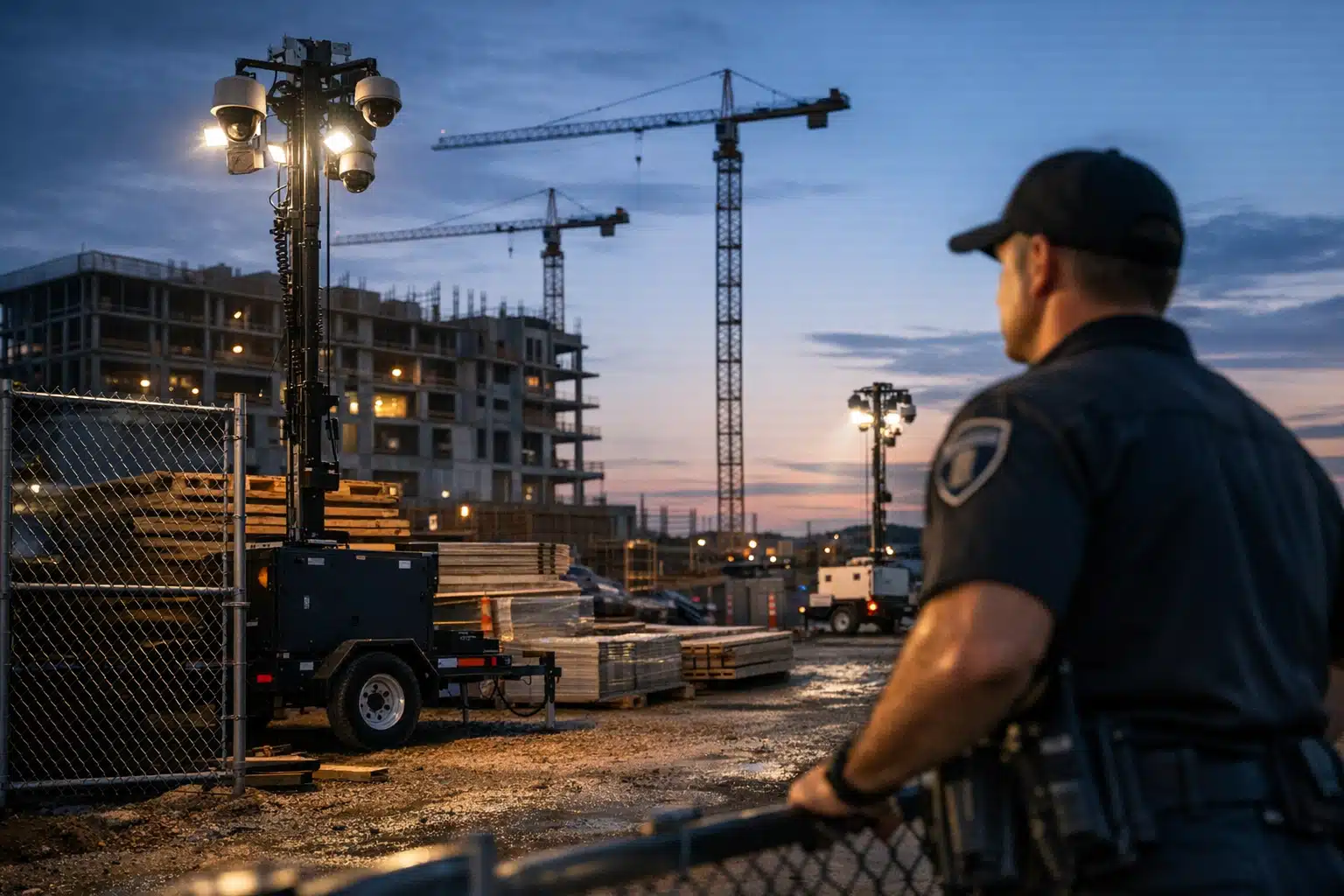
Construction sites are theft magnets. Copper wire, catalytic converters, and unattended equipment disappear fast in North Texas.
The Fort Worth Police Department logs regular reports of jobsite metal and tool theft across growth corridors. Most hits happen overnight and on weekends.
A strong construction-phase plan includes:
- Mobile surveillance towers with night vision covering material staging areas
- Remote video monitoring with live operators who verify alarms before police dispatch
- Access logs at single-point entry gates for subcontractors
- Light-and-sound deterrents triggered on perimeter breach
Remote monitoring cuts false alarm fines. Operators confirm real intrusions before calling 911, which matters under Fort Worth’s alarm permit rules.
Phase 2: Lease-Up and Transition
The hand-off period is the weakest link. Construction crews leave, residents trickle in, and locks or cameras may not be live yet.
Half-occupied buildings invite trespassing and squatting. Empty units get stripped of appliances and fixtures.
During lease-up, pair on-site guards with camera coverage. Guards handle resident move-ins while operators watch vacant floors.
Phase 3: Full Occupancy
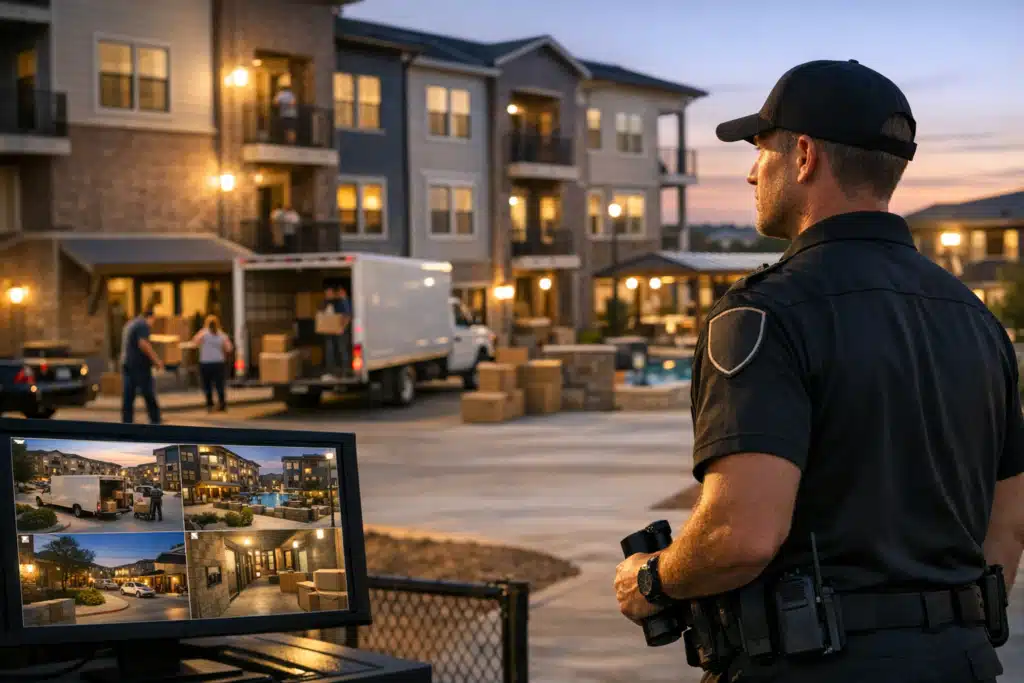
Once residents fill the building, priorities change. Package theft, garage break-ins, and after-hours loitering top the list.
Covered parking is a known hot spot in West 7th and Arlington Heights developments. Vehicle burglary spikes where garages sit open to foot traffic.
Occupied-phase coverage should include:
- Camera placement at every garage entry and elevator lobby
- Scheduled guard patrols during peak delivery windows
- Monitored package rooms with access control
- Visitor verification at amenity spaces and pools
How North Texas Weather Shapes Your Security Plan
Fort Worth weather breaks equipment that works fine elsewhere. Summer heat regularly tops 100 degrees for weeks.
Outdoor cameras and towers need heat-rated housings. Cheap units fail during the exact months thieves stay active late.
Storm and Tornado Season Planning
Spring brings hail and high wind to North Texas. March through June produces the region’s worst storm cells.
Construction sites lose power and fencing in minutes. A backup plan keeps cameras recording when the grid drops.
Battery-backed surveillance towers keep watching after storms. Looters target damaged sites once a cell passes, and that window is when losses climb.
Stockyards-Adjacent Developments Face Crowd Pressure
New residential and retail projects near the Stockyards sit beside millions of annual visitors. Event nights, rodeos, and festival crowds spill into nearby streets.
Developments in this district need plans built for foot traffic surges. A quiet Tuesday looks nothing like a Saturday twice-daily cattle drive.
For Stockyards-area properties, plan for:
- Parking lot control during event overflow
- Trespass prevention on private amenity decks facing public walkways
- After-event patrols once bars and venues close
- Clear signage marking private versus public space
Oil, Gas, and Mixed-Use Perimeter Concerns
Some Fort Worth developments rise near active well pads and pipeline easements. Texas Railroad Commission rules govern setbacks, but security remains the owner’s responsibility.
Perimeter protection matters where industrial and residential uses meet. Fencing, lighting, and camera coverage keep residents away from restricted equipment zones.

 Posted on Google
What Property Managers Should Ask Before Hiring
Good property management starts with the right questions. Before signing a security contract, ask these:
- Are guards licensed under the Texas Department of Public Safety Private Security program?
- Does remote monitoring use live operators or automated alerts only?
- How fast do operators verify and escalate an alarm?
- Is equipment rated for 100-plus degree heat and hail?
- Can coverage scale as the property moves from construction to occupancy?
The answers separate a real plan from a boilerplate quote. A provider who knows Fort Worth gives specifics, not generic promises.
Blending Guards and Remote Monitoring
On-site guards and remote cameras each cover what the other misses. Guards respond in person; operators watch wide areas at low cost.
A mid-rise in Near Southside might staff one overnight guard plus monitored cameras on every floor. That mix costs less than round-the-clock guards on each level.
Cost Planning Across the Development Timeline
Security spending should match each phase, not stay flat. Construction demands heavy perimeter coverage with fewer people.
Occupancy shifts budget toward resident-facing patrols and access control. Planning the full timeline upfront prevents last-minute, overpriced coverage.
Build security into the development budget early. Retrofitting cameras after drywall goes up costs far more than planning conduit during framing.
Protect Your Fort Worth Development From Day One
New Fort Worth developments shift risk as they grow from bare lots to full buildings. Matching coverage to each phase, planning for North Texas storms, and preparing for Stockyards crowds keeps losses down. Twin City Security Fort Worth builds on-site guard and remote monitoring plans for every stage of your project.
Call or text 817‑922‑9774, email fortworth@twincitysecurity.com, or visit https://www.twincitysecurityfortworth.com for a Fort Worth security assessment.
Sources
- U.S. Census Bureau – Fort Worth City, Texas QuickFacts
- Texas Department of Public Safety – Private Security Program
- Railroad Commission of Texas – Oil and Gas Regulation
- National Weather Service – Fort Worth/Dallas Forecast Office
Fort Worth's rapid growth necessitates a tailored security strategy for urban developments. Property managers must address security needs across three phases: active construction, lease-up, and full occupancy to mitigate risks effectively.
- Construction sites are prone to theft, requiring mobile surveillance and remote monitoring to deter intrusions. Security plans must adapt as buildings transition from empty lots to full occupancy.
- During lease-up, on-site guards and camera coverage are essential to prevent trespassing and protect vacant units from theft.
- Full occupancy shifts focus to package theft and loitering, necessitating monitored access control and scheduled patrols during peak times.