
How to Protect Fort Worth’s Financial Institutions Against Emerging Threats
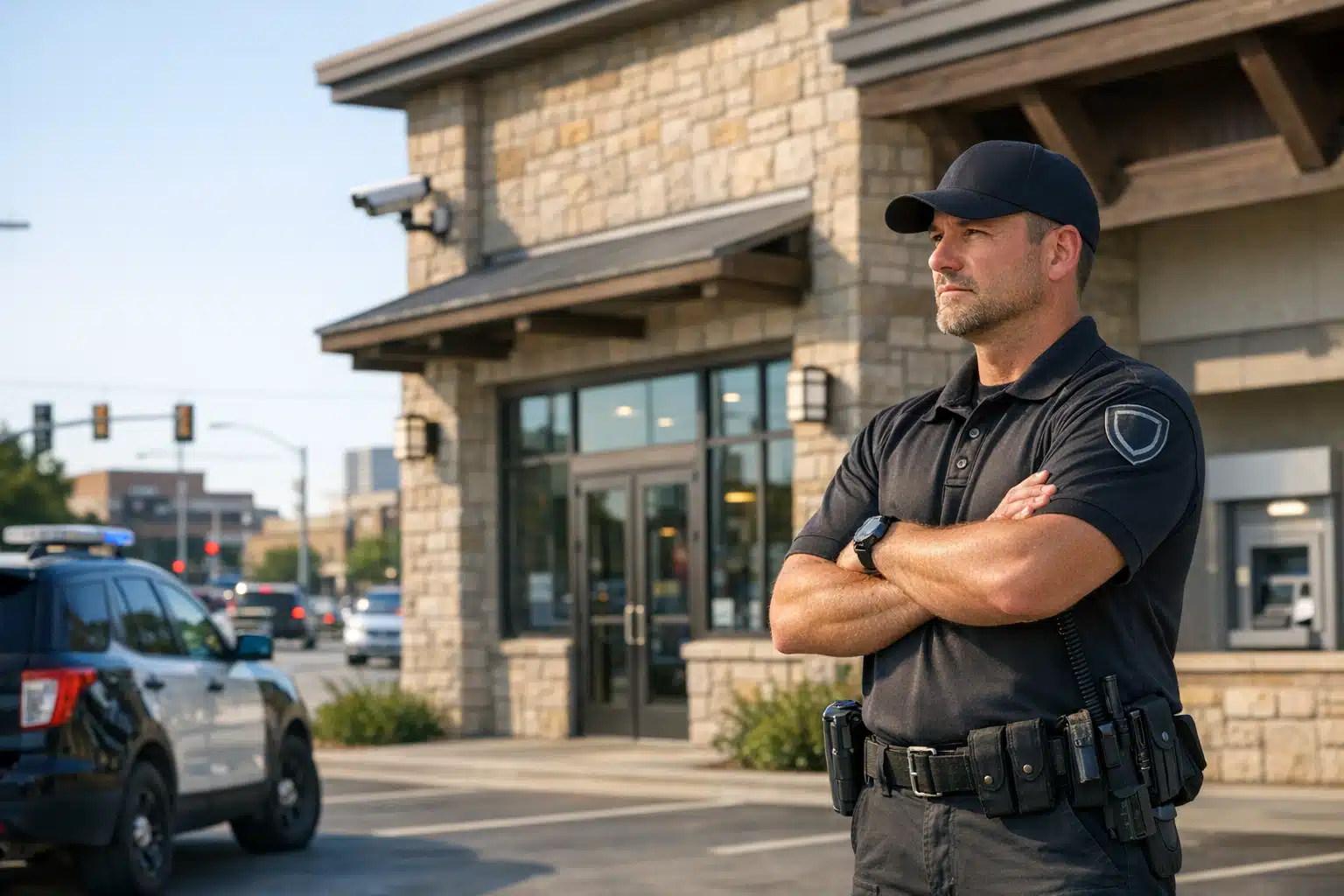
Emerging threats to Fort Worth's financial institutions include branch robberies, ATM skimming, and coordinated fraud schemes. These risks highlight the need for enhanced security measures beyond traditional methods, as financial security now requires a comprehensive approach to protect against various criminal activities targeting banks and their customers.
Financial security for Fort Worth banks now extends far beyond a vault door and a guard at the entrance. Branch robberies, ATM skimming, and coordinated fraud schemes hit North Texas institutions every year. This post breaks down the real threats facing Fort Worth financial institutions and the steps that reduce your exposure.
Tarrant County remains one of the busiest banking markets in Texas. That volume draws organized crews who study branch layouts and staff routines.
Credit unions, community banks, and regional branches along West 7th and the Near Southside each face different risks. Knowing which threats apply to your location is the starting point.
Why Financial Security in Fort Worth Looks Different in 2024
Fort Worth’s growth changed the threat picture for local banks. New construction, denser traffic, and more cash-handling locations create fresh openings for criminals.
Branches near major highways like I-35W and Loop 820 see faster getaway access. Criminals factor this into target selection.
The Shift From Smash-and-Grab to Patient Reconnaissance
Modern bank crews rarely act on impulse. They observe staffing patterns, camera blind spots, and cash delivery schedules for weeks.
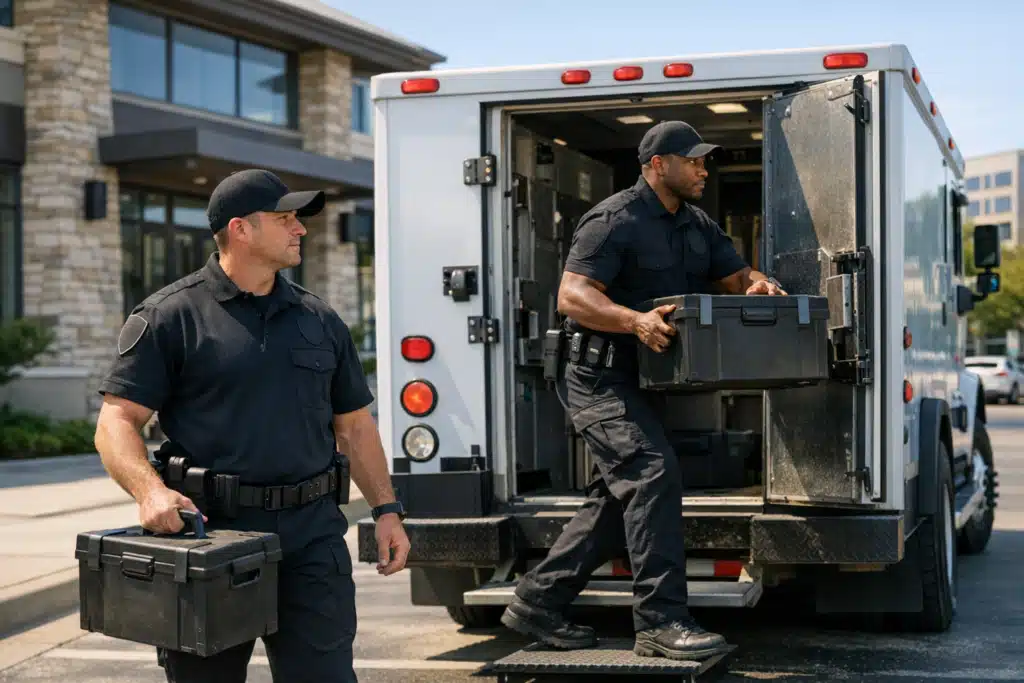
Armored car arrivals are a known weak point. Crews time attacks to the predictable windows when cash moves between vehicles and the building.
Varying delivery times and adding visible guard presence disrupts this planning.
Bank Protection Against Physical Threats
Physical attacks on Fort Worth financial institutions fall into a few recognizable categories. Each calls for a different countermeasure.
Branch Robberies
Most branch robberies happen near opening or closing. Staff are distracted, and customer traffic is thin.
A uniformed guard during these windows changes the risk math for a would-be robber. Visible deterrence remains one of the strongest tools for bank protection.
- Position guards where they are visible from the parking lot
- Cover opening and closing procedures, not just business hours
- Train staff on silent alarm protocols and hostage scenarios
- Keep teller-line sightlines clear of signage and displays
ATM and Night-Deposit Attacks
Standalone ATMs in Arlington Heights and along Camp Bowie draw after-hours criminals. Dark corners and missing cameras invite trouble.
Skimming devices are a growing problem at drive-up machines. Criminals install card readers that copy data in seconds.
To reduce ATM risk, inspect machines daily and light every approach fully.
Weather-Driven Vulnerability
North Texas storms knock out power regularly. A dark branch with disabled cameras is an open invitation.
Spring tornado season and summer grid strain both cause outages. Battery backup for cameras and alarms keeps protection running when the lights go out.
Cyber-Physical Threats Targeting Fort Worth Institutions
Attacks now cross the line between digital and physical. Criminals use one to open the other.
A common scheme involves tailgating into secure areas while posing as IT vendors. Once inside, they access network hardware directly.
Social Engineering at the Branch Level
Fraudsters call tellers pretending to be regional managers. They request wire transfers or override codes under pressure.
Staff training is your defense here. Clear verification steps stop most of these attempts cold.
- Require callback verification using known internal numbers
- Never process urgent transfers without secondary approval
- Document every vendor visit with photo ID and appointment confirmation
- Escort all non-employees in restricted zones
How Remote Video Surveillance Strengthens Financial Security
Remote monitoring fills the gaps that on-site staff cannot cover alone. Trained operators watch live feeds and respond in real time.
For a Fort Worth bank, this means someone is watching the parking lot at 2 a.m. when no employee is present.
What Live Monitoring Catches
Operators spot loitering near ATMs before a crime starts. They can trigger voice-down warnings that scare off suspects.
Many fleeing criminals abandon the attempt when a live voice calls out their actions. This single feature prevents measurable losses.
Audit Trails and Investigation Support
Recorded, timestamped footage supports law enforcement after any incident. Clear video shortens investigations and aids prosecution.
Fort Worth Police work faster when handed usable footage. Grainy, poorly placed cameras waste that opportunity.

 Posted on Google
Steps to Assess Your Fort Worth Branch Today
A practical self-audit reveals your biggest gaps quickly. Walk your property with these questions in mind.
- Can a guard or camera see every entrance and ATM?
- Are opening and closing hours covered by live personnel?
- Do cameras have battery backup for storm outages?
- Are vendor access procedures written down and enforced?
- Is exterior lighting bright across the full parking area?
- Do staff know silent alarm and verification protocols?
Any “no” answer marks a point worth addressing. Most branch incidents trace back to one of these overlooked areas.
Combining Guards and Monitoring for Layered Financial Security
On-site officers and remote surveillance work best together. One provides physical response; the other provides constant eyes.
A guard handles the lobby and customer interactions. Remote operators cover the perimeter, ATMs, and after-hours windows.
This pairing closes the coverage gaps that single-method security leaves open. For Fort Worth institutions managing multiple branches, it also controls cost.
Why Local Matters
A Fort Worth-based team knows which neighborhoods see repeat activity. That knowledge shapes smarter guard placement and camera priorities.
Response time matters when seconds count. Local teams reach your branch faster than distant call centers.
Protecting Fort Worth Financial Institutions Starts With a Plan
Branch robberies, ATM skimming, and social engineering all target predictable weaknesses. Addressing lighting, coverage windows, verification steps, and backup power cuts your risk sharply. Layered guard and remote monitoring protection keeps your branch covered around the clock.
Twin City Security Fort Worth builds financial security plans around your specific branches and threat profile. Call or text 817‑922‑9774, email fortworth@twincitysecurity.com, or visit https://www.twincitysecurityfortworth.com for a Fort Worth security assessment.
Sources
- FBI – Bank Robbery Investigations
- FDIC – Physical Security Guidance
- CISA – Physical Security
- Fort Worth Police Department – Crime Data
Fort Worth's financial institutions face a range of threats including branch robberies and ATM skimming, necessitating enhanced security measures. This article outlines the specific risks and effective strategies to mitigate exposure for local banks and credit unions.
- Branch robberies often occur during opening or closing hours when staff are distracted. Visible security measures like uniformed guards can deter potential robbers.
- ATM skimming is a growing concern, especially at poorly lit locations. Regular inspections and adequate lighting are essential to reduce risks.
- Cyber-physical threats combine digital and physical attacks, making staff training on verification protocols crucial to prevent fraud.