
Ensuring Security for Fort Worth’s Public Transit Hubs
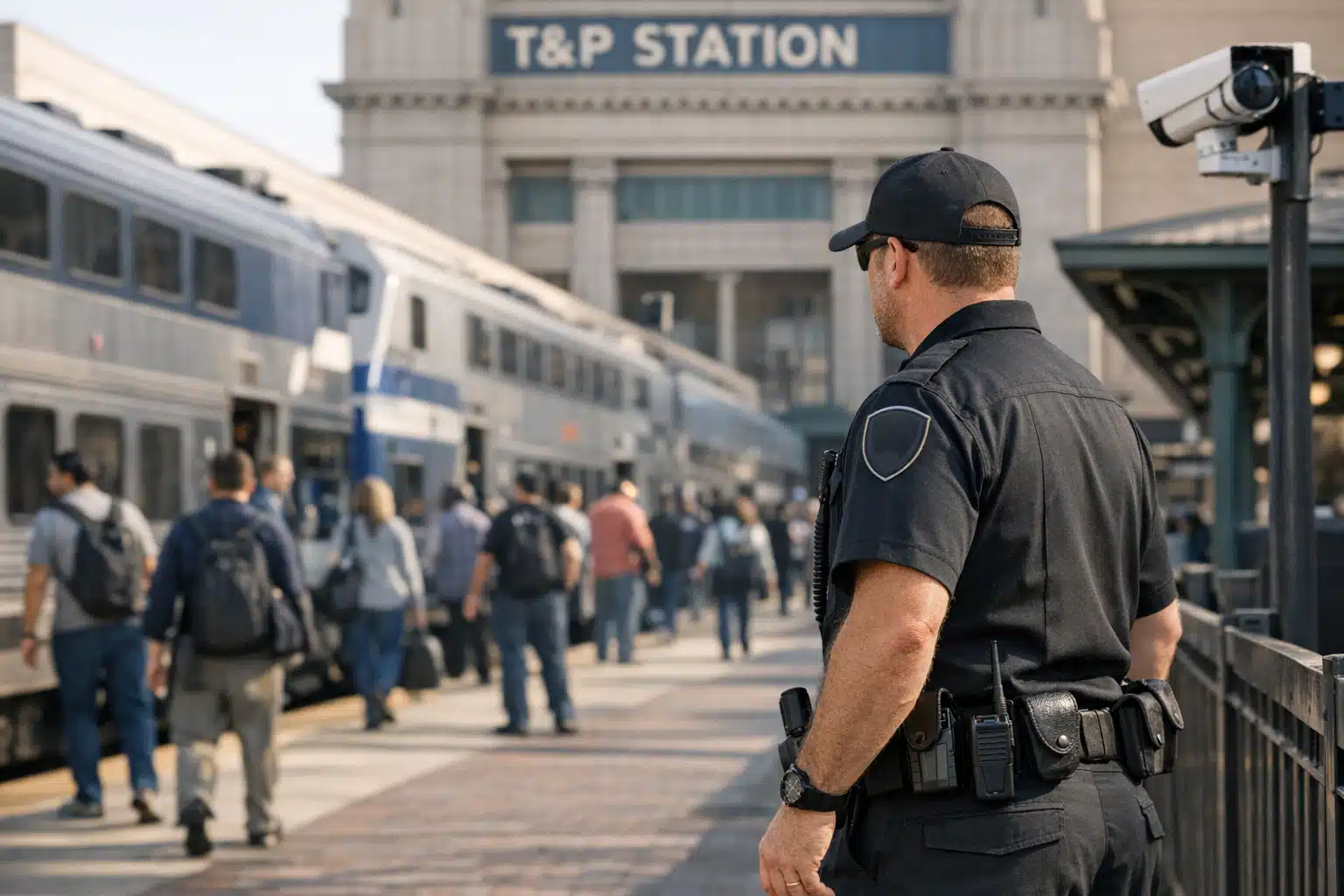
Security for Fort Worth's public transit hubs is vital due to the high volume of daily riders using services like TEXRail and Trinity Metro. These hubs attract significant foot traffic, making them susceptible to loitering and property crime, which can impact the safety and experience of commuters.
Why Fort Worth Transit Hubs Face Growing Security Pressure
Fort Worth moves thousands of riders daily across TEXRail, the Trinity Railway Express, and Trinity Metro bus routes. Each stop becomes a magnet for foot traffic, loitering, and property crime.
Public transit security matters because stations stay open long hours with limited staff on-site. Fort Worth transit hubs like the T&P Station and Central Station sit near high-activity corridors downtown.
This post breaks down the risks at local transit hubs. It covers patrol coverage, remote video monitoring, and steps operators can take right now.
Common Security Risks at Fort Worth Transit Hubs
Transit hubs attract specific problems that differ from retail or office sites. The open layout and 24-hour access create blind spots.
Loitering and Vagrancy
Covered platforms offer shade in summer and shelter during North Texas storms. Without a visible guard presence, these spots draw extended loitering.
The TEXRail line connecting downtown to DFW Airport runs eight stations. Each park-and-ride lot becomes a target after the evening rush clears out.
Vehicle Break-Ins in Park-and-Ride Lots
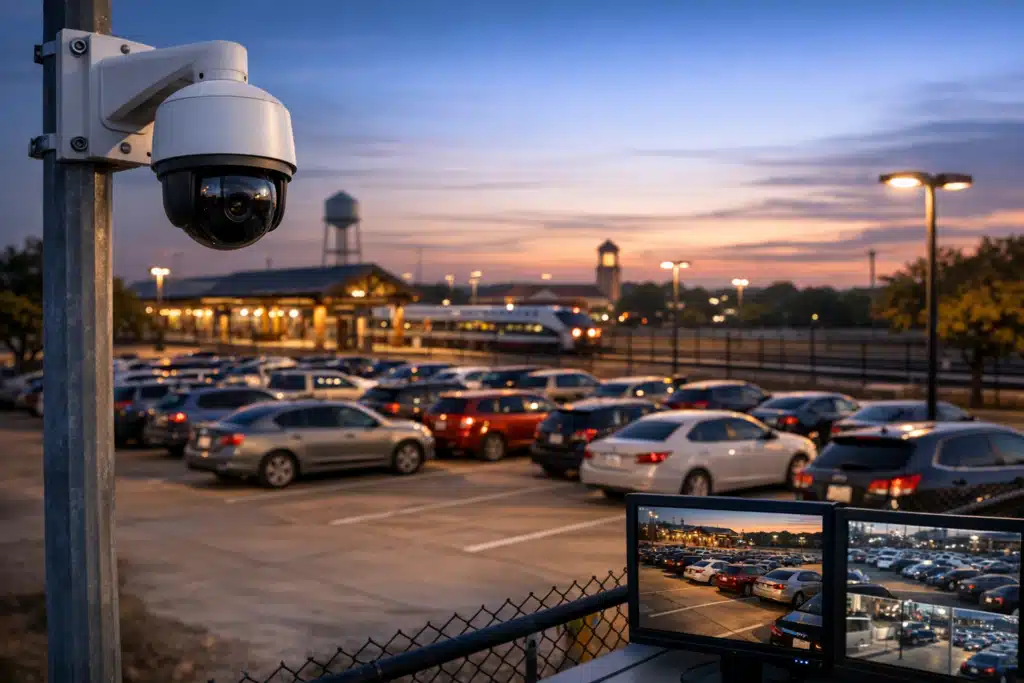
Riders leave cars parked for full workdays at stations like Grapevine-Main Street and North Side. Unmonitored lots see smash-and-grab theft during business hours.
Catalytic converter theft hit Fort Worth parking areas hard over recent years. Transit lots with rows of unattended vehicles rank among the easiest targets.
Vandalism and Property Damage
Graffiti, broken ticket machines, and damaged shelters cost transit operators thousands per incident. Overnight hours bring the highest vandalism risk.
Rider Safety Concerns
Passengers waiting alone on dark platforms feel exposed. A single assault or harassment report can drive down ridership for months.
How Remote Video Monitoring Protects Transit Properties
Remote video monitoring watches multiple station cameras from one central location. Trained operators spot problems and respond in real time.
This method covers more ground than a single roving guard. One monitoring team can watch a dozen platforms across the TEXRail corridor at once.
What Live Monitoring Catches
- After-hours trespassing on closed platforms and maintenance areas
- Vehicle break-ins in park-and-ride lots during low-traffic periods
- Loitering groups forming near ticket machines or entrances
- Vandalism in progress on shelters, signage, and equipment
When an operator spots a threat, they trigger a live voice warning. A speaker announcement tells intruders they are being watched.
This verbal deterrent stops many incidents before police arrive. Suspects leave once they realize a real person sees them.
Combining On-Site Guards With Remote Technology
Video monitoring works best alongside physical patrols at busy Fort Worth stations. Each method covers the other’s gaps.
When On-Site Guards Make Sense
High-volume hubs like downtown Central Station benefit from a visible guard presence. Uniformed officers calm riders and respond to medical events fast.
Guards also handle fare disputes and direct lost passengers. Their presence alone cuts the number of incidents reported each week.
When Remote Monitoring Covers the Gaps
Smaller stations and overnight hours fit remote video better. Paying a guard to stand at an empty platform until 2 a.m. rarely pays off.
A hybrid setup gives operators coverage across every station. Guards cover peak crowds, and cameras watch the quiet hours.
Protecting Transit Hubs During North Texas Weather Events
Fort Worth weather swings from 105-degree summers to ice storms and spring tornadoes. Each pattern creates distinct security needs.
Summer Heat and Sheltered Platforms
Covered platforms draw people looking to escape triple-digit heat. Guards and monitoring teams manage crowding and keep walkways clear.
Severe Storms and Evacuations
Spring brings hail, high winds, and tornado warnings across Tarrant County. Security staff help clear platforms and direct riders to safe shelter.
Remote operators keep watching abandoned stations during storms. They report flooding, downed signage, and damage before staff return.

 Posted on Google
Steps Fort Worth Transit Operators Can Take Now
Securing a transit hub starts with a clear assessment of weak points. Follow these steps to build coverage that fits your stations.
- Map your blind spots. Walk each station at night and note dark corners, hidden entrances, and unlit lots.
- Audit your camera coverage. Check that existing cameras cover platforms, ticket areas, and parking rows.
- Set patrol priorities. Assign guards to peak-ridership stations and high-incident locations first.
- Add remote monitoring for off-hours. Use live video with voice-down capability at smaller stops overnight.
- Build an escalation plan. Define who calls Fort Worth police and how fast operators respond.
- Review incident data monthly. Track theft, vandalism, and trespass reports to shift coverage where it counts.
What Transit Security Costs in Fort Worth
Pricing depends on station count, hours of coverage, and method chosen. Remote monitoring costs less per station than full-time guards.
A single overnight guard runs higher than monitoring several cameras from a central hub. Many operators mix both to control budget.
Key cost drivers include:
- Number of stations and platforms covered
- Hours of coverage per day and days per week
- On-site guards versus remote video monitoring
- Existing camera equipment versus new installation
- Voice-down speaker and lighting upgrades
A site assessment gives you an accurate quote for your stations. Generic per-hour pricing rarely reflects a transit property’s real needs.
Why Local Knowledge Matters for Transit Security in Fort Worth
A security provider who knows Fort Worth responds faster and smarter. Local teams understand which corridors draw crime and when.
Twin City Security Fort Worth works across downtown, the Near Southside, and the TEXRail corridor. That local footprint shortens response time when incidents happen.
Knowing Tarrant County weather patterns matters too. Teams prepared for ice storms and tornado season protect riders and property during emergencies.
Protect Your Fort Worth Transit Hub
Fort Worth transit hubs face real risks from theft, vandalism, and weather. A mix of on-site guards and remote video monitoring covers both peak hours and quiet overnight stretches.
Twin City Security Fort Worth builds coverage plans around your stations, budget, and local risks. Call or text 817‑922‑9774, email fortworth@twincitysecurity.com, or visit https://www.twincitysecurityfortworth.com for a Fort Worth security assessment.
Sources
- Trinity Metro – Fort Worth Transit System and TEXRail Information
- City of Fort Worth – Police Department Crime Data and Resources
- Federal Transit Administration – Transit Safety and Security
- National Weather Service – Fort Worth/Dallas Forecast Office
Fort Worth's public transit hubs face significant security challenges due to high foot traffic and limited staff. The company emphasizes the importance of combining on-site guards with remote video monitoring to enhance safety across various stations.
- Transit hubs attract loitering, vehicle break-ins, and vandalism, especially during off-peak hours. Remote video monitoring allows for real-time responses to incidents across multiple locations. A hybrid security approach ensures coverage during busy times and quiet hours, addressing specific risks effectively.
- Why Fort Worth Transit Hubs Face Growing Security Pressure Fort Worth moves thousands of riders daily across TEXRail, the Trinity Railway Express, and Trinity Metro bus routes.
- Each stop becomes a magnet for foot traffic, loitering, and property crime.