
How Fort Worth’s Sports Venues Can Improve Their Security Protocols
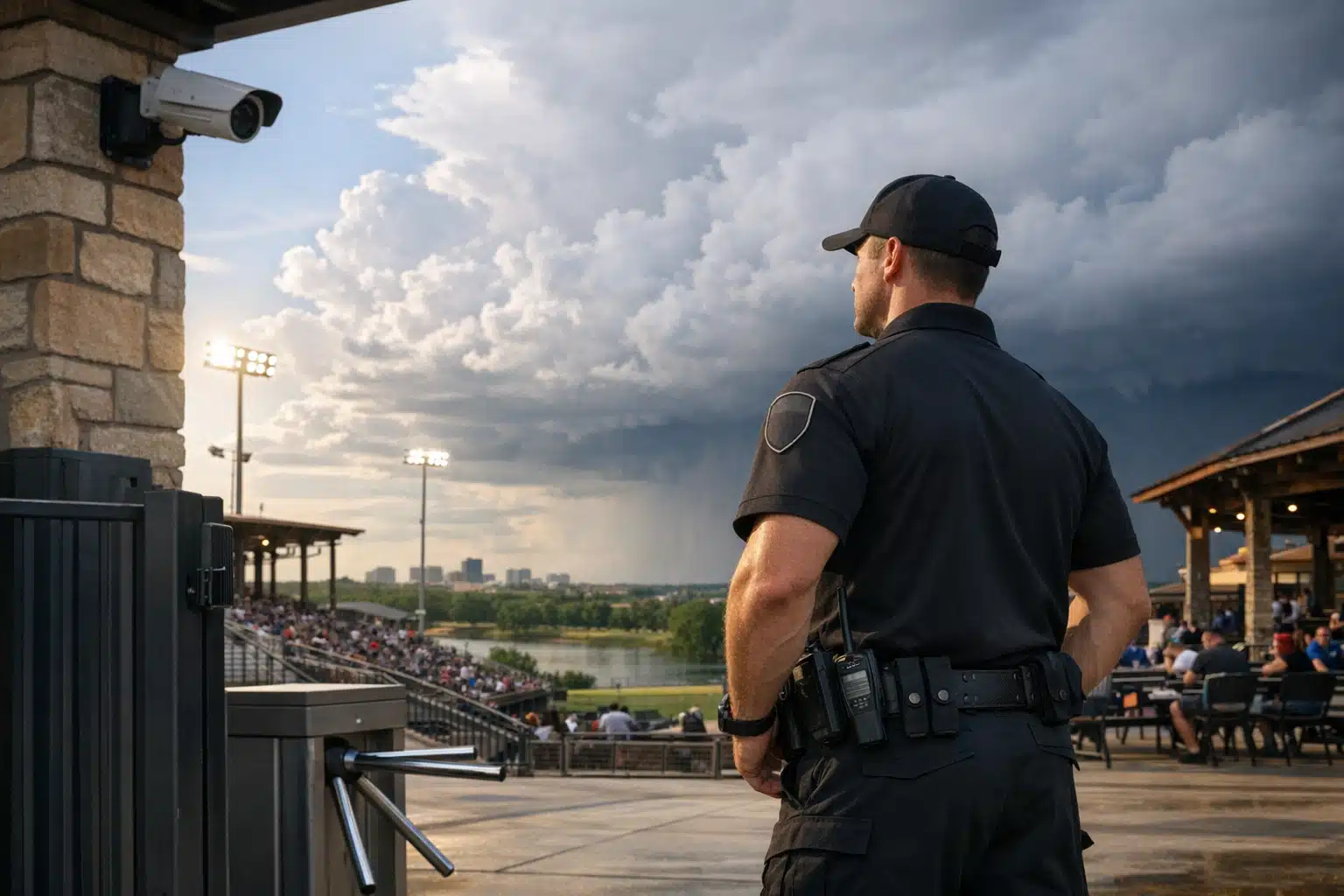
Fort Worth's sports venues can enhance their security protocols by implementing advanced surveillance systems, increasing the presence of trained security personnel, and utilizing crowd management strategies. Additionally, venues should conduct regular security assessments and engage with local law enforcement to ensure a safe environment for fans during high-density events.
Why Sports Venue Security Matters in Fort Worth
Fort Worth hosts thousands of fans each week across rodeo arenas, ballfields, and stadium grounds. Crowd density spikes fast during weekend events.
Strong sports venue security protects fans, staff, and revenue. It also limits liability when incidents happen inside gates.
Fort Worth venues face pressures that differ from generic stadiums. North Texas heat, sudden storms, and Stockyards foot traffic all shape risk.
This post breaks down practical protocol upgrades for local operators. Each recommendation reflects real conditions across Cowtown event spaces.
The Distinct Challenges Facing Fort Worth Sports Venues
Sports venue security in Fort Worth carries specific pressures tied to geography and climate. Operators who ignore local factors leave gaps in coverage.
North Texas Weather Disrupts Event Safety
Spring storm season runs March into June. Tarrant County sits inside a high tornado-risk corridor.
Open-air venues near the Trinity River need clear shelter routing. Staff must move crowds fast when sirens sound.
Summer heat brings a second threat. July temperatures regularly top 100 degrees at outdoor ballfields.
Heat-related medical calls climb during afternoon games. Guards trained in early symptom spotting reduce ambulance runs.
Stockyards Crowds Create Overlapping Foot Traffic
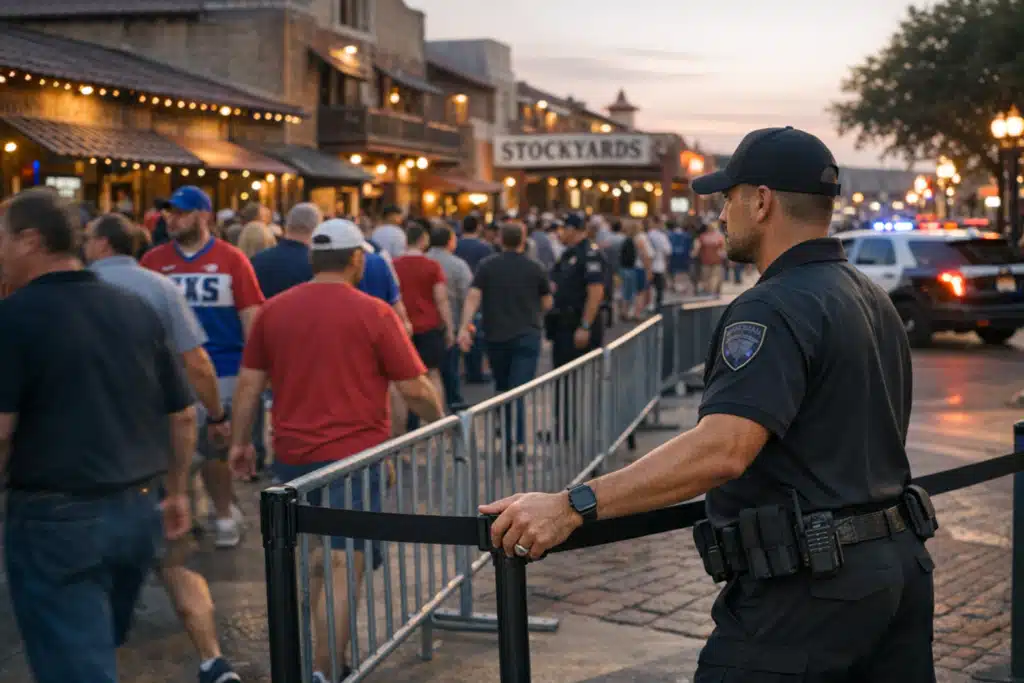
Venues near the Stockyards share sidewalks with tourists and bar patrons. Event crowds mix with unrelated pedestrian flow.
That overlap complicates perimeter control. Guards must separate ticketed guests from street traffic without creating bottlenecks.
Alcohol Sales Raise Incident Rates
Concession alcohol drives most fan conflicts. Ejections, fights, and DUI concerns rise in later innings and periods.
Texas venues must follow TABC rules on service cutoffs. Trained staff enforcing those limits prevent both injury and license risk.
Building a Layered Security Protocol for Fort Worth Venues
Effective protection uses several coordinated layers. Each one covers a specific point of failure.
Layer One: Perimeter and Entry Control
Entry points decide how safe your event stays. A weak gate lets prohibited items inside.
- Bag check stations with clear-bag policies posted early
- Metal detection at every fan entrance, not just main gates
- Credential scanning for staff, vendors, and media
- Vehicle screening for loading docks and VIP lots
Post signage in English and Spanish. Fort Worth crowds include large bilingual segments.
Layer Two: On-Site Guard Coverage
Licensed guards handle situations cameras cannot. They intervene in disputes and direct emergency movement.
Texas requires guards to hold a license from the Department of Public Safety. Confirm every officer carries valid commissioned credentials.
Position guards at these fixed points:
- Each entry and exit gate
- Concession and alcohol service areas
- Stairwells and upper-deck transitions
- Parking structures and rideshare zones
- Locker room and player access corridors
Layer Three: Remote Video Surveillance
Remote monitoring extends coverage beyond what guards physically see. Trained operators watch feeds from a central location.
This layer catches problems early. A monitored parking lot deters break-ins during the fourth quarter rush.
Fort Worth venues benefit from remote surveillance in overnight hours too. Empty stadiums attract copper theft and vandalism.
Crowd Management Protocols That Work in Cowtown
Crowd control prevents most large-scale incidents. Fort Worth event volumes demand written movement plans.
Plan Exit Flow Before Doors Open
Post-event egress causes the most crush risk. Map every route before ticket holders arrive.
Assign guards to funnel crowds toward wide exits. Keep emergency lanes clear at all times.
Coordinate With Fort Worth Police and Fire
Large venues should brief local responders ahead of major games. Share your emergency plan with FWPD and MedStar.
A shared radio channel speeds response. Seconds matter during a medical or weather emergency.
Prepare for Severe Weather Evacuations
Every outdoor venue needs a storm protocol. Fort Worth’s spring lightning shuts down games without warning.
- Identify indoor shelter zones with rated capacity
- Assign staff to guide fans by section
- Use PA and scoreboard messaging together
- Pause alcohol service during evacuation
Technology Upgrades That Strengthen Venue Protection
Modern equipment multiplies guard effectiveness. The right tools fill gaps human patrols miss.
License Plate Recognition for Parking
Camera systems reading plates flag flagged vehicles. Stadium lots become far harder targets for theft.
Thermal and Low-Light Cameras
Night events and dim corners need capable optics. Thermal imaging spots movement in unlit perimeter zones.
Two-Way Audio Systems
Remote operators can speak directly to trespassers. A live voice warning stops many intrusions before they escalate.

 Posted on Google
Staffing Ratios and Training for Fort Worth Events
Guard count must match crowd size. Understaffing invites incidents and slow response.
A common baseline uses one guard per 100 attendees. Alcohol-heavy events and rowdy rivalries need tighter ratios.
Training should cover these areas:
- De-escalation and conflict resolution
- Heat illness recognition
- Severe weather response steps
- Evacuation direction and headcounts
- TABC-compliant alcohol enforcement
Run a walkthrough drill before your season opener. Repetition builds calm response under pressure.
How to Assess Your Current Venue Security Gaps
Start with an honest audit of weak points. Most venues find blind spots they never mapped.
Follow these steps to review your setup:
- Walk every entry point during peak arrival
- Test camera coverage for dead zones after dark
- Time your evacuation from full capacity
- Review last season’s incident reports for patterns
- Check guard licensing against DPS records
Document each gap with a photo and note. A written record helps prioritize fixes and budget.
Partner With Twin City Security Fort Worth
Fort Worth sports venues need protection built for local conditions. Twin City Security Fort Worth pairs licensed guards with remote video monitoring for full-event coverage.
Our team knows Cowtown crowds, storm season demands, and Stockyards foot traffic. We build protocols around your venue’s real risks.
Request a Fort Worth security assessment or monitoring quote today. Call or text 817‑922‑9774, email fortworth@twincitysecurity.com, or visit https://www.twincitysecurityfortworth.com.
Sources
- Texas Department of Public Safety – Private Security Program
- Texas Alcoholic Beverage Commission – Official Site
- National Weather Service – Fort Worth/Dallas Forecast Office
- CDC – Extreme Heat Safety
Fort Worth's sports venues face unique security challenges due to local geography and climate. Enhancing security protocols is essential for protecting fans and staff during events.
- Crowd density increases rapidly during events, requiring strong security measures to ensure safety.
- Local weather conditions, such as storms and extreme heat, necessitate specific emergency protocols.
- Effective security includes layered approaches like perimeter control, on-site guards, and remote surveillance systems.