Security Strategies for Fort Worth’s High-Traffic Tourist Areas
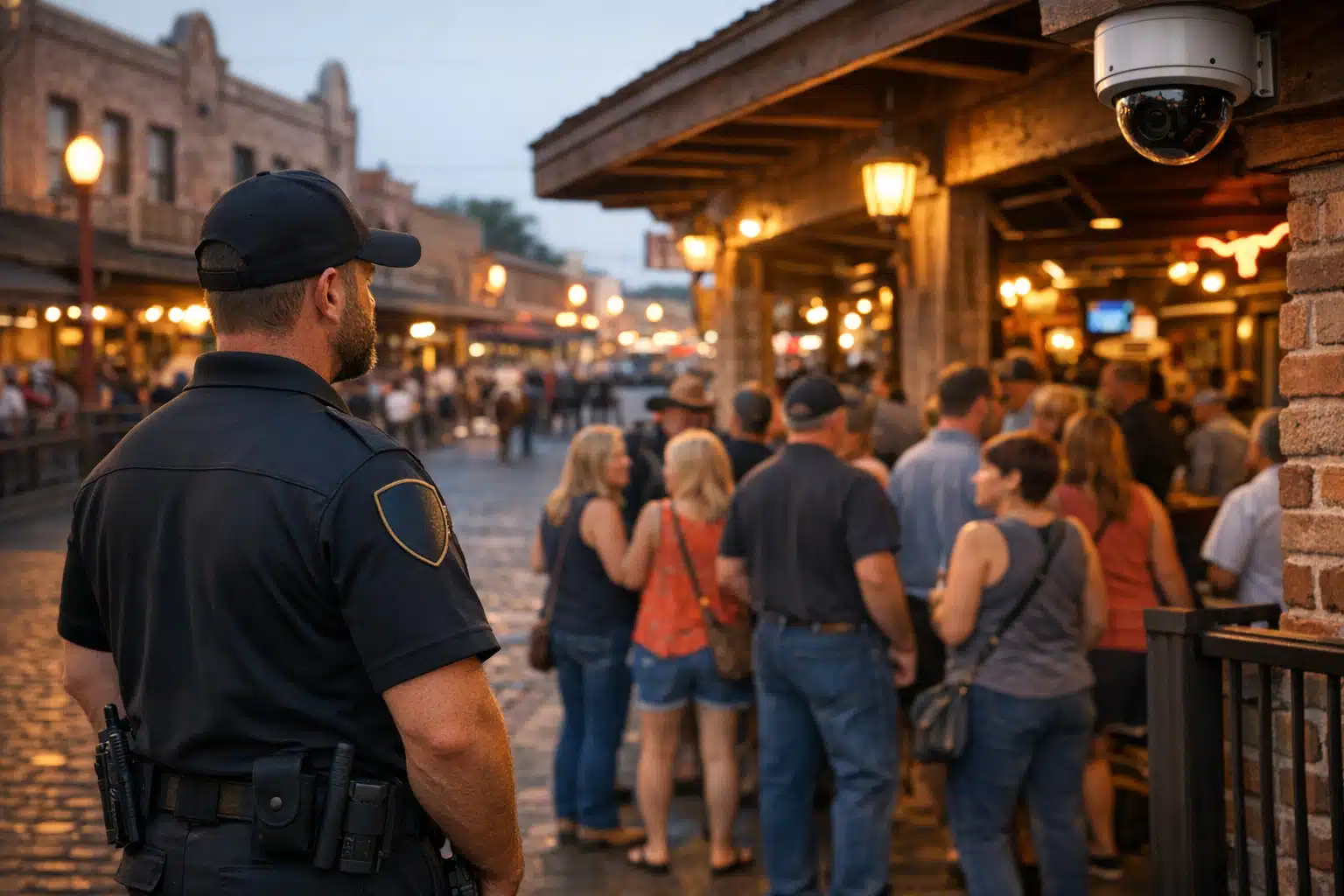
Effective security strategies for high-traffic tourist areas in Fort Worth include increasing visible law enforcement presence, utilizing surveillance technology, implementing crowd management techniques, and fostering community partnerships. These measures help ensure visitor safety while maintaining a welcoming environment for the millions of tourists who visit annually.
Why Tourist Area Security Matters in Fort Worth
The Fort Worth Stockyards draws more than 3 million visitors each year. That foot traffic brings revenue for local venues, restaurants, and event operators.
It brings risk too. Large crowds attract pickpockets, disorderly conduct, and property theft after hours.
Strong tourist area security keeps visitors safe and protects your bottom line. This post breaks down practical strategies for Fort Worth hotspots like the Stockyards, West 7th, and Sundance Square.
You will learn where risks concentrate, how guards and remote cameras work together, and what a real security plan costs.
The Security Risks Unique to Fort Worth Tourist Zones
Each Fort Worth destination faces different threats. A single plan rarely fits every location.
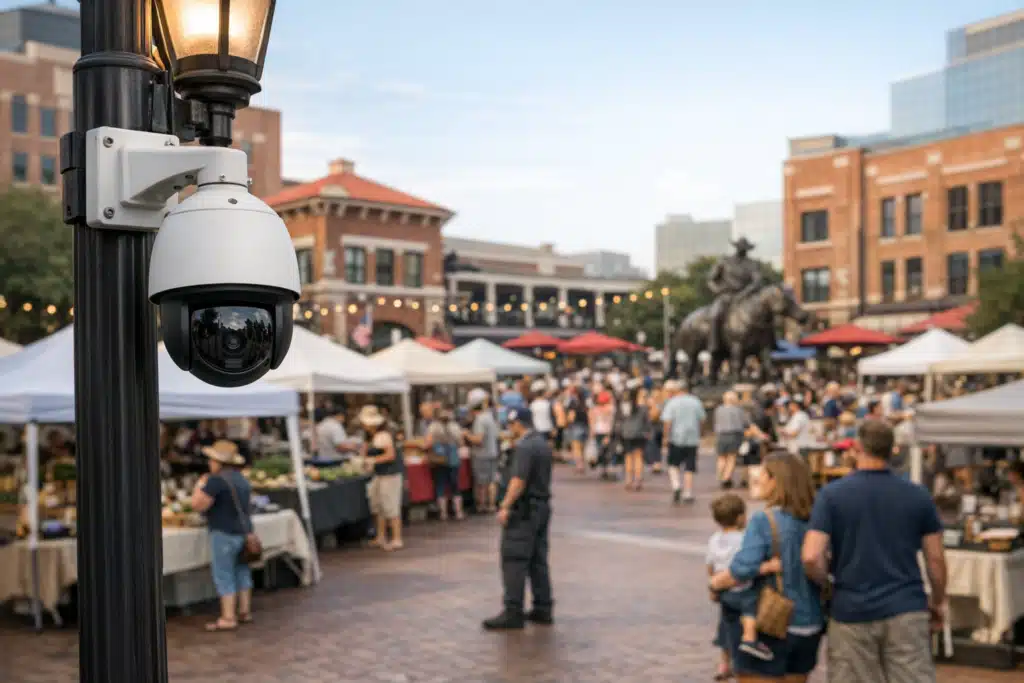
Stockyards National Historic District
The Stockyards packs cattle drives, rodeos, bars, and retail into a compact area. Peak crowds gather at 11:30 a.m. and 4 p.m. for the daily cattle drives.
Common problems here include:
- Alcohol-related incidents near Exchange Avenue bars after dark
- Vehicle break-ins in unmonitored gravel lots
- Vendor cash theft during high-volume weekend events
- Crowd surges during rodeo let-out at Cowtown Coliseum
West 7th and Cultural District
West 7th mixes nightlife with apartment communities and museums. Late-night bar traffic creates parking garage and sidewalk incidents.
Museum venues face after-hours trespassing and vandalism concerns.
Sundance Square Downtown
Sundance Square hosts concerts, markets, and family events. Open plazas need visible patrol to deter loitering and property damage.
How On-Site Guards and Remote Cameras Work Together
The strongest tourist area security pairs human presence with video monitoring. One covers judgment calls. The other covers blind spots around the clock.
What On-Site Guards Handle
Uniformed guards deter crime by being seen. Visitors and troublemakers both notice a badge near the entrance.
Guards manage tasks that cameras cannot:
- De-escalating disputes between intoxicated patrons
- Directing crowd flow during cattle drives and rodeo exits
- Checking bags and IDs at ticketed events
- Escorting staff carrying cash to vehicles
- Responding to medical incidents until EMS arrives
What Remote Video Surveillance Adds
Remote monitoring covers areas guards cannot stand all night. Trained operators watch live feeds from an off-site center.
When a camera detects motion in a closed parking lot, an operator verifies the threat. They can trigger a live voice-down warning over speakers.
That spoken warning stops most trespassers before police arrive. It also cuts false alarm costs.
Remote surveillance fits Fort Worth venues that need overnight coverage without paying for a full guard shift.
Building a Tourist Area Security Plan Step by Step
To protect a Fort Worth tourist venue, follow these steps in order.
- Map your peak hours. Track when crowds and cash volume rise. Stockyards weekends differ from weekday afternoons.
- Identify blind spots. Walk your property at night. Note dark corners, back alleys, and unlit lots.
- Set guard posts. Place visible guards at entrances and cash points during peak windows.
- Add camera coverage. Install monitored cameras on lots, loading docks, and rear exits.
- Write an emergency protocol. Define who calls 911, who manages the crowd, and where guests exit.
- Review incident logs monthly. Adjust posts based on where problems keep happening.
Planning Security Around North Texas Weather
Fort Worth weather shapes tourist crowds and security needs. Summer heat and spring storms both affect your plan.
Summer Heat and Crowd Safety
Fort Worth summers push past 100°F for weeks at a time. Heat drives visitors indoors and raises medical incident risk at outdoor events.
Guards stationed at Stockyards events watch for heat exhaustion in the crowd. Shaded rest points and water access reduce liability.
Spring Storms and Tornado Season
North Texas storm season runs March into June. Sudden severe weather can scatter an outdoor crowd fast.
Your security team needs a shelter plan before an event starts. Guards should know the nearest sturdy structure and safe exit routes.
Stockyards Event Security: What It Involves
Stockyards event security requires crowd management, access control, and coordination with local venues. A rodeo night differs from a corporate rental.
Key elements of an event security plan include:
- Entry screening at ticketed gates to control who enters
- Perimeter guards to stop unauthorized rear access
- Roaming patrols to watch for fights and theft in the crowd
- Parking lot coverage to protect vehicles during and after the event
- A command point where staff report incidents in real time
Guard counts scale with attendance. A 200-guest private event needs fewer posts than a sold-out coliseum show.

 Posted on Google
What Tourist Area Security Costs in Fort Worth
Cost depends on hours, guard count, and whether you add remote monitoring. A few factors drive the price.
On-Site Guard Pricing
Guard rates in Fort Worth reflect training level and armed status. Armed guards cost more than unarmed posts.
Event coverage runs on hourly rates with a minimum shift length. Overnight construction and lot posts price differently than event work.
Remote Monitoring Pricing
Remote video surveillance costs less per hour than a standing guard. You pay for camera setup plus monitoring windows.
Many Stockyards operators pair a few peak-hour guards with overnight remote coverage. That mix controls cost without leaving gaps.
Texas Licensing Rules for Fort Worth Security
Texas regulates private security through the Department of Public Safety. Any guard company working Fort Worth venues must hold a state license.
Before you hire, confirm the provider meets state rules:
- Company licensed by the Texas DPS Private Security Program
- Guards registered and background-checked
- Armed officers hold a valid Level III commission
- Proof of liability insurance for your venue
Working with an unlicensed provider exposes your business to legal risk. Always verify credentials first.
Why Fort Worth Operators Choose a Local Provider
A local team knows Stockyards traffic patterns and West 7th nightlife rhythms. They arrive fast and adjust posts on short notice.
Twin City Security Fort Worth staffs guards and remote monitoring for tourist venues across the metro. Our teams cover events, lots, and overnight shifts with plans built around your peak hours.
Protect Your Fort Worth Tourist Venue
Tourist area security in Fort Worth works best when visible guards pair with monitored cameras. Map your peak hours, cover your blind spots, and verify state licensing before you hire.
Contact Twin City Security Fort Worth for a venue assessment or monitoring quote. Call or text 817‑922‑9774, email fortworth@twincitysecurity.com, or visit https://www.twincitysecurityfortworth.com.
Sources
- Texas Department of Public Safety – Private Security Program
- Fort Worth Stockyards – Official Visitor Site
- National Weather Service – Fort Worth/Dallas Forecast Office
- Fort Worth Police Department – Crime Data and Resources
Fort Worth's tourist areas, such as the Stockyards and Sundance Square, attract millions of visitors each year, necessitating effective security measures to mitigate risks like theft and disorderly conduct. This guide outlines practical strategies for enhancing safety through a combination of on-site guards and remote video surveillance.
- The Stockyards experiences peak crowds that can lead to alcohol-related incidents and vehicle break-ins. Security plans must be tailored to each location's unique risks.
- On-site guards provide visible deterrence and manage crowd control, while remote cameras monitor blind spots and verify threats.
- Developing a security plan involves mapping peak hours, identifying vulnerabilities, and ensuring compliance with Texas licensing regulations.