
How to Ensure 24/7 Security for Fort Worth’s Data Centers
To ensure 24/7 security for data centers in Fort Worth, operators should implement a combination of physical security measures, such as surveillance cameras and access control systems, along with cybersecurity protocols to protect sensitive data. Regular audits and staff training on security practices are also essential to maintain a secure environment.
Why Fort Worth Data Centers Need Round-the-Clock Protection
Fort Worth has become a magnet for hyperscale and colocation facilities, drawing operators to sites near Alliance and along the I-35W corridor. Each server rack holds financial records, medical data, and business operations worth millions.
Data center security differs from standard commercial protection because downtime carries steep costs. A single breach or outage can trigger regulatory fines, lost contracts, and permanent client loss.
This post breaks down the continuous protection strategy Fort Worth facilities require. You will learn how layered guard coverage, remote monitoring, and North Texas weather planning keep sensitive infrastructure safe.
What Makes Data Center Security Different
Data center security combines physical barriers, human patrols, and video surveillance into one continuous defense. The goal is zero gaps in coverage, day and night, every day of the year.
Unlike a retail store that locks up at closing, a data center never sleeps. Servers run constantly, cooling systems demand power around the clock, and technicians move in and out at all hours.
The Stakes for Fort Worth Operators
A compromised facility risks more than stolen hardware. Clients trust operators with regulated data covered by HIPAA, PCI-DSS, and Texas privacy statutes.
Physical access remains one of the most common attack vectors. An intruder inside the building can bypass firewalls that cost millions to build.
Building 24/7 Data Center Security in Fort Worth
Fort Worth 24/7 security for data centers works best in defined layers. Each layer catches what the previous one might miss.
Layer 1: Perimeter Control
The outer boundary stops threats before they reach the building. Effective perimeter protection includes:
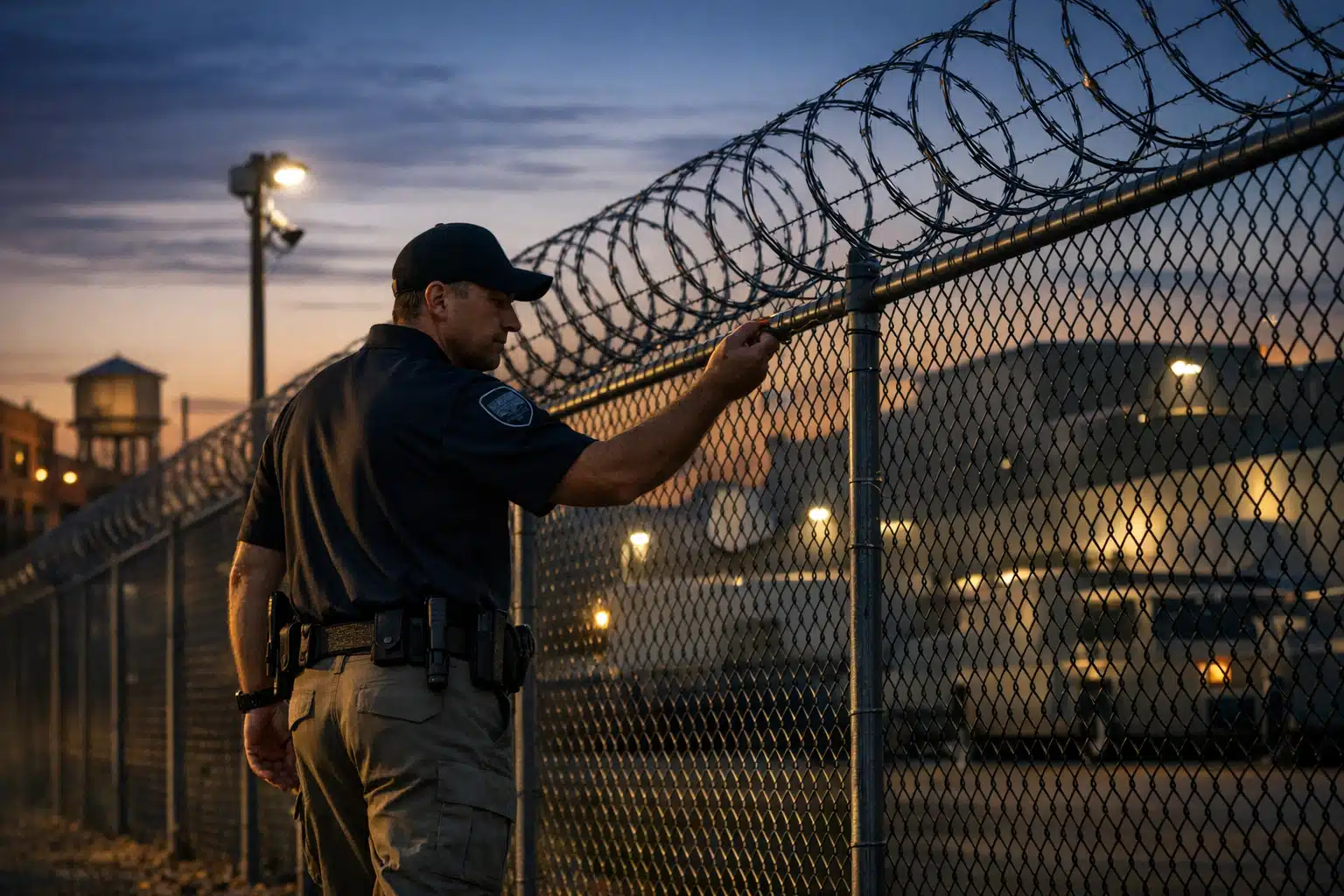
- Fence line patrols that check for cuts, climbing marks, or tampering
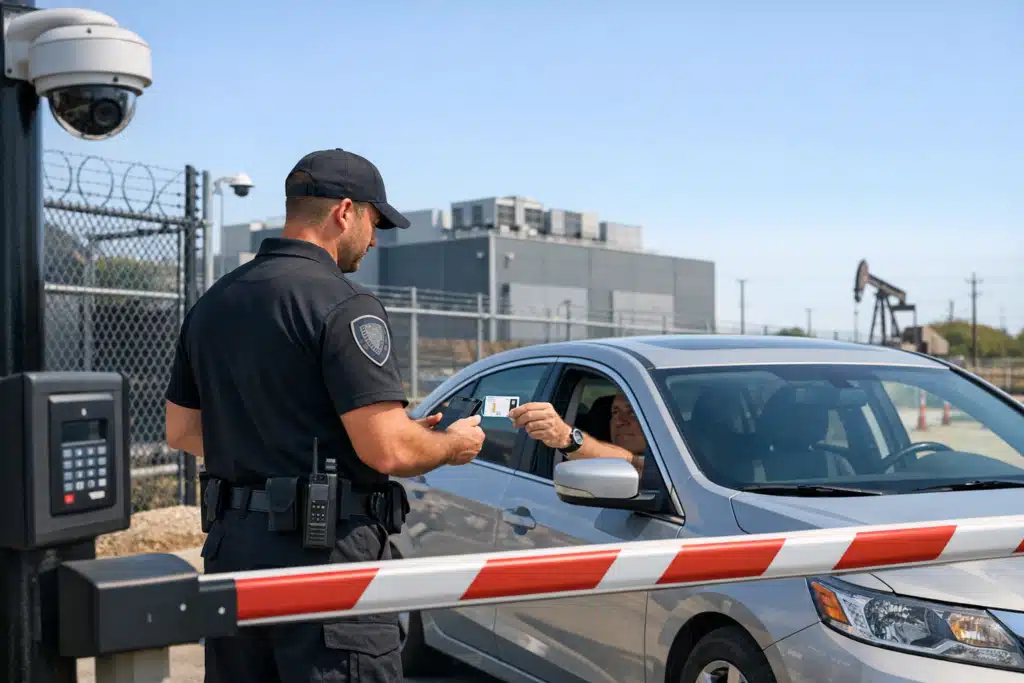
- Vehicle gate screening with logged entry for every delivery and contractor
- Thermal cameras that spot movement in low light along the fence
- Lighting audits to remove dark spots near loading docks
An officer walking the perimeter spots problems cameras alone can miss. Loose ground, propped doors, and unfamiliar vehicles get flagged in real time.
Layer 2: Access Point Management
Every door, dock, and gate needs verified control. Officers confirm identity against pre-approved access lists before anyone enters.
Follow these steps at each entry point:
- Verify photo ID against the visitor management system
- Confirm the visitor appears on the day’s authorized list
- Issue a tracked badge with time-limited access
- Escort contractors to their work zone when required
- Log exit time and collect the badge on departure
Tailgating remains a top breach method. A guard stationed at the mantrap stops unauthorized people from slipping in behind badged staff.
Layer 3: Interior Monitoring
Inside the facility, protection focuses on server halls and equipment rooms. Restricted zones need stricter verification than office areas.
Camera coverage should include:
- Every server cage and cabinet aisle
- Network operations centers and control rooms
- Loading bays where equipment enters and leaves
- Power and cooling infrastructure areas
Remote Video Surveillance for Continuous Coverage
Remote monitoring extends protection beyond what on-site staff can watch alone. Trained operators view live feeds from a central station and respond instantly to alarms.
This model gives Fort Worth data centers several advantages:
- Overnight coverage without full guard staffing during low-traffic hours
- Instant verification of alarms to cut false dispatch costs
- Recorded evidence for compliance audits and incident reports
- Two-way audio to warn off trespassers in real time
Pairing remote surveillance with on-site officers creates redundancy. If a camera fails, a guard covers the gap until repairs finish.
Protecting Data Centers During North Texas Weather Events
Fort Worth sits in a region prone to spring storms, hail, and tornadoes. Severe weather threatens both physical structures and power stability.
Storm and Tornado Season Planning
Peak storm months run from April through June. During this window, security teams take on added duties.
Weather-ready protocols should include:
- Monitoring backup generator status when the grid drops
- Checking roof access points after hail damage
- Watching for looters if a storm knocks out area power
- Documenting damage for insurance and compliance records
Power outages create dangerous windows. When alarm systems reset or cameras reboot, an on-site officer maintains coverage until systems come back online.
Summer Heat and Equipment Risk
North Texas summers push past 100 degrees for weeks at a time. Cooling systems run at maximum load, and any failure risks server damage.
Guards trained to watch cooling infrastructure add an early warning layer. A rising temperature reading or a failed HVAC unit gets reported before hardware overheats.

 Posted on Google
Meeting Texas Compliance and Licensing Standards
Security officers in Texas must hold licensing under the Texas Department of Public Safety Private Security Program. Data center clients should confirm every officer carries valid credentials.
Ask any provider these questions before signing:
- Are all officers licensed and background-checked under Texas DPS rules?
- Does the team train for data center-specific protocols?
- Can the provider supply audit-ready access and incident logs?
- Is remote monitoring staffed by verified operators, not automated alerts alone?
Compliance documentation matters when clients undergo their own audits. A data center that cannot prove access control loses contracts fast.
Choosing a Security Partner in Fort Worth
Local knowledge matters for data center protection. A Fort Worth-based team understands regional weather, crime patterns, and response times better than a distant call center.
Twin City Security Fort Worth staffs officers who train for the strict demands of continuous facility protection. Our teams combine on-site patrols with remote video monitoring for full-day coverage.
We build each protection plan around the specific site. A colocation facility near Alliance has different needs than an enterprise data hall downtown.
Conclusion
Fort Worth data centers need layered defense that never pauses, from fence-line patrols to remote video verification. Weather planning, licensed officers, and audit-ready records round out a plan that protects both hardware and client trust.
Contact Twin City Security Fort Worth for a site assessment built for your facility. Call or text 817‑922‑9774, email fortworth@twincitysecurity.com, or visit https://www.twincitysecurityfortworth.com.
Sources
- Texas Department of Public Safety – Private Security Program
- National Weather Service – Fort Worth/Dallas Forecast Office
- Cybersecurity and Infrastructure Security Agency – Critical Infrastructure Security
- U.S. Department of Health and Human Services – HIPAA Security Rule
Fort Worth's data centers require continuous security measures to protect sensitive information and maintain operations. This involves a layered approach that includes physical barriers, monitoring, and weather preparedness.
- Data centers in Fort Worth face unique security challenges due to the sensitive nature of the data they handle. They need 24/7 protection to prevent breaches and ensure compliance with regulations.
- A layered security strategy includes perimeter control, access point management, and interior monitoring to create a comprehensive defense.
- Local security teams understand the specific risks associated with North Texas weather, enhancing their ability to protect facilities during storms and extreme heat.