The Role of Security in Fort Worth’s Expanding Healthcare Facilities
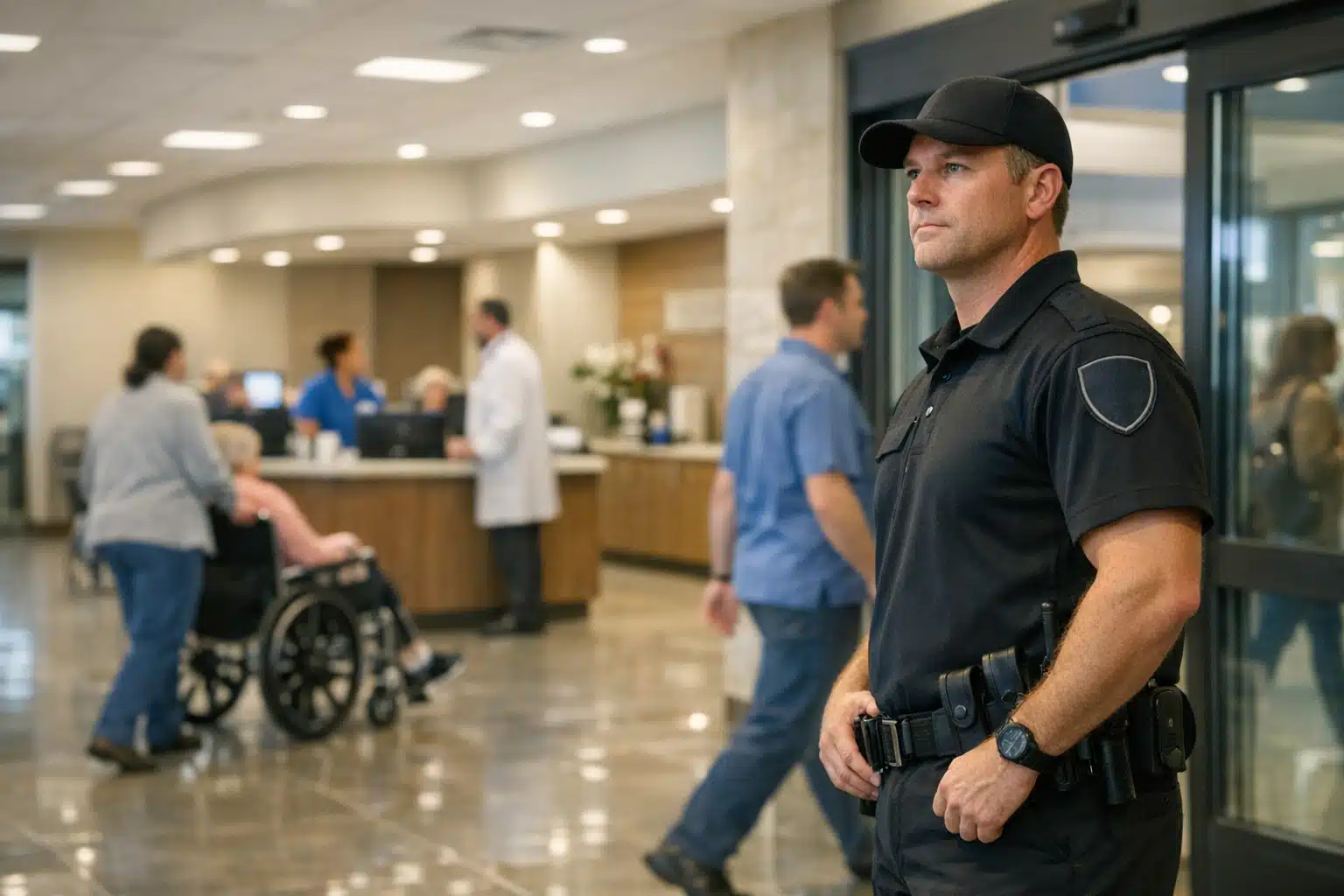
The role of security in Fort Worth's expanding healthcare facilities involves addressing unique challenges such as maintaining public access while ensuring patient privacy and protecting sensitive areas like drug storage. Additionally, effective security measures are essential for facilitating rapid emergency responses, which are critical in healthcare settings.
Fort Worth added more than 1,000 hospital beds across Tarrant County since 2020, with major expansions near the Near Southside medical district. This growth brings new healthcare security demands that differ from any other property type. Hospitals and clinics must balance open public access with patient privacy, drug storage protection, and rapid emergency response.
This post breaks down what medical facility managers across Fort Worth need to know before building a security program.
Why Healthcare Security Differs From Other Properties
Medical facilities operate 24 hours a day with doors that rarely lock. Patients, visitors, vendors, and staff move freely across most floors. That openness creates risk that retail or office buildings never face.
A Fort Worth hospital must protect several high-value targets at once:
- Controlled substances in pharmacies and crash carts
- Patient records protected under federal HIPAA rules
- Emergency department entrances where tension runs high
- Infant and pediatric units that require abduction prevention
- Parking structures used at all hours by night-shift staff
Each zone needs a different response plan. A guard posted at a surgery center lobby handles a very different threat than one monitoring an ER entrance at 2 a.m.
The Privacy Problem Unique to Medical Settings
Patient privacy shapes every security decision inside a clinic. Cameras cannot point into treatment rooms or recovery bays. Guards cannot access charts or overhear protected conversations.
A trained medical security officer knows where surveillance belongs and where it violates patient rights. That knowledge separates healthcare-ready staff from generic guards.
Emergency Department Protection in Fort Worth
Emergency departments see the highest rate of workplace violence in any medical setting. Staff face verbal threats, physical assaults, and agitated patients during long wait times.
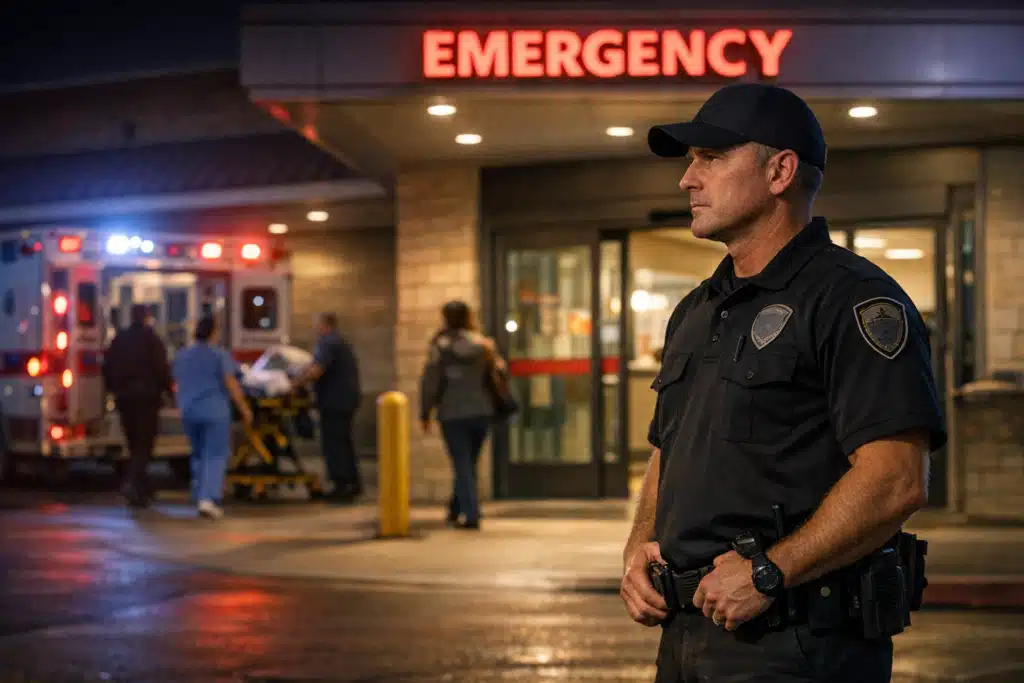
Fort Worth ERs near West 7th and the medical district stay busy during weekend nights. Alcohol, drug cases, and mental health crises arrive without warning.
What ER Security Should Include
Strong emergency department coverage uses layered defense. A single front-desk guard cannot manage a full waiting room during a surge.
- A visible guard at the triage entrance to control who enters
- Panic buttons at every nurse station and reception desk
- Weapons screening during high-risk hours when volume spikes
- De-escalation training for all officers assigned to the unit
- Direct radio links to Fort Worth police for rapid backup
Response time matters most here. A guard who reaches an escalating incident in 30 seconds prevents injuries that an off-site camera only records.
Remote Video Surveillance for Medical Campuses
Large medical campuses cannot afford a guard on every corner. Remote video monitoring fills that gap at lower cost than full staffing.
Live operators watch parking garages, loading docks, and perimeter doors from a central station. When a camera detects motion in a restricted area after hours, an operator verifies the threat and alerts on-site staff or police.
Where Remote Monitoring Works Best
Remote surveillance protects areas that need eyes but not constant human presence:
- Staff parking lots during shift changes at night
- Medical waste and supply loading areas
- Vacant floors under renovation or construction
- Exterior perimeters of multi-building campuses
- After-hours clinic entrances in Arlington Heights and Near Southside
Pairing live operators with on-site guards gives Fort Worth facilities full coverage without doubling payroll.
North Texas Weather and Healthcare Continuity
Fort Worth sits inside Tornado Alley. Severe spring storms knock out power and force facility lockdowns on short notice.
Security staff hold a direct role during these events. Guards direct patients and visitors to interior safe zones away from glass. They secure exterior doors and control access when backup generators run.
Summer Heat Adds Its Own Risk
Fort Worth summers push past 100 degrees for weeks. Medical campus parking garages trap heat, and stranded visitors face real danger.
Guards trained for North Texas conditions watch for heat distress in lots and waiting areas. They check on elderly visitors and flag anyone showing signs of heat illness.
Access Control and Infant Protection
Maternity and pediatric units carry one of the highest-stakes security needs in any hospital. Infant abduction, though rare, demands a dedicated prevention system.
Effective infant protection combines several controls:
- Electronic tagging that triggers alarms at exit doors
- Badge-restricted access to labor and delivery floors
- Camera coverage of every unit entrance and stairwell
- Staff training on abduction response drills
- Lockdown protocols that seal exits within seconds
Guards assigned to these floors learn the abduction code and practice drills with clinical staff.

 Posted on Google
Protecting Medical Pharmacies and Drug Storage
Opioids and other controlled substances make pharmacies a theft target. Both outside criminals and internal staff pose risk.
Hospital protection for drug storage uses access logs, camera coverage, and restricted entry. A guard patrol that checks pharmacy doors on a set schedule deters internal theft and documents every entry.
Reducing Internal Loss
Most drug diversion comes from inside, not break-ins. Camera footage paired with access records helps facilities spot patterns and act fast.
A strong healthcare security program treats internal theft with the same seriousness as external threats.
Building a Healthcare Security Plan That Fits Fort Worth
Every Fort Worth medical facility carries different risk. A standalone surgery center in Arlington Heights needs less coverage than a full trauma hospital near downtown.
Start your plan with a site assessment that answers four questions:
- Where do patients and visitors enter? Map every public access point.
- Which zones hold high-value targets? Pharmacies, records, and infant units top the list.
- When does risk peak? Night shifts, weekends, and storm season raise exposure.
- How fast can help arrive? Measure guard response and police backup times.
Answers to those questions shape the right mix of guards, cameras, and remote monitoring for your campus.
Why Local Knowledge Matters
A security partner based in Fort Worth understands Tarrant County crime patterns and police response. They know which medical corridors draw after-hours loitering and which parking structures need extra attention.
Twin City Security Fort Worth staffs guards familiar with hospital protection and remote monitoring across North Texas medical campuses. That local footing helps facilities respond faster when minutes count.
Protect Your Fort Worth Medical Facility
Healthcare security protects patients, staff, and records at the same time. The right plan combines trained guards, privacy-aware surveillance, and fast emergency response built for Fort Worth conditions.
Contact Twin City Security Fort Worth for a medical facility assessment or monitoring quote. Call or text 817‑922‑9774, email fortworth@twincitysecurity.com, or visit https://www.twincitysecurityfortworth.com.
Sources
- OSHA – Workplace Violence in Healthcare
- U.S. Department of Health and Human Services – HIPAA Privacy Rule
- National Weather Service – Fort Worth Forecast Office
- U.S. Drug Enforcement Administration – Controlled Substances Information
Fort Worth's healthcare facilities have expanded significantly, adding over 1,000 hospital beds since 2020. This growth necessitates a tailored approach to security that addresses unique challenges in medical environments.
- Healthcare security must balance public access with patient privacy and safety. Hospitals face distinct risks, including protecting controlled substances and managing emergency department violence.
- Effective security plans require understanding specific facility needs, including high-value target zones and peak risk times. Local knowledge enhances response capabilities during emergencies.
- Remote video monitoring complements on-site security, providing coverage for areas that do not require constant human presence, thus optimizing resource allocation.