How to Manage Security for Fort Worth’s Oil & Gas Exploration Sites
Managing security for oil and gas exploration sites in Fort Worth involves implementing access control measures, monitoring surveillance systems, and conducting regular security assessments. It is essential to train personnel on emergency protocols and collaborate with local law enforcement to ensure a swift response to any incidents.
Why Oil & Gas Security Is Different in Fort Worth
Fort Worth sits atop the Barnett Shale, one of the largest onshore gas fields in Texas. Drilling pads and wellheads dot Tarrant County from Eagle Mountain Lake to the city’s southern edge.
Oil & gas security here means protecting assets spread across open, often unmanned land. Thieves target copper wire, diesel fuel, and expensive downhole equipment at sites miles from the nearest patrol car.
This post breaks down how to protect remote exploration sites. You get practical steps for perimeter defense, remote monitoring, and handling North Texas heat and storms.
The Real Threats to Fort Worth Exploration Sites
Exploration site safety starts with knowing what criminals actually want. Fort Worth operators face predictable patterns across the Barnett Shale footprint.
Copper and Metal Theft
Copper grounding wire and brass fittings vanish from wellheads overnight. Scrap metal prices make a single unmanned pad a quick payday.
Thieves cut power lines and strip motors, leaving thousands in damage for a few hundred dollars of metal. Repair downtime costs far more than the stolen copper.
Fuel and Equipment Theft
Diesel tanks on drilling rigs are a constant target. Fuel siphoning spikes when prices climb.
Portable generators, pumps, and hand tools disappear from active and idle sites alike. Equipment left over a weekend is most at risk.
Vandalism and Trespassing
Remote pads attract trespassers on ATVs and dumping of illegal waste. Vandals damage control panels and fencing for no gain beyond destruction.
How to Build Oil & Gas Security for Remote Sites
Securing a wellhead 20 miles from downtown Fort Worth takes layered defense. Follow these steps to protect an exploration site.
- Map your access points. Identify every road, gate, and gap in fencing. Most theft happens at the easiest entry.
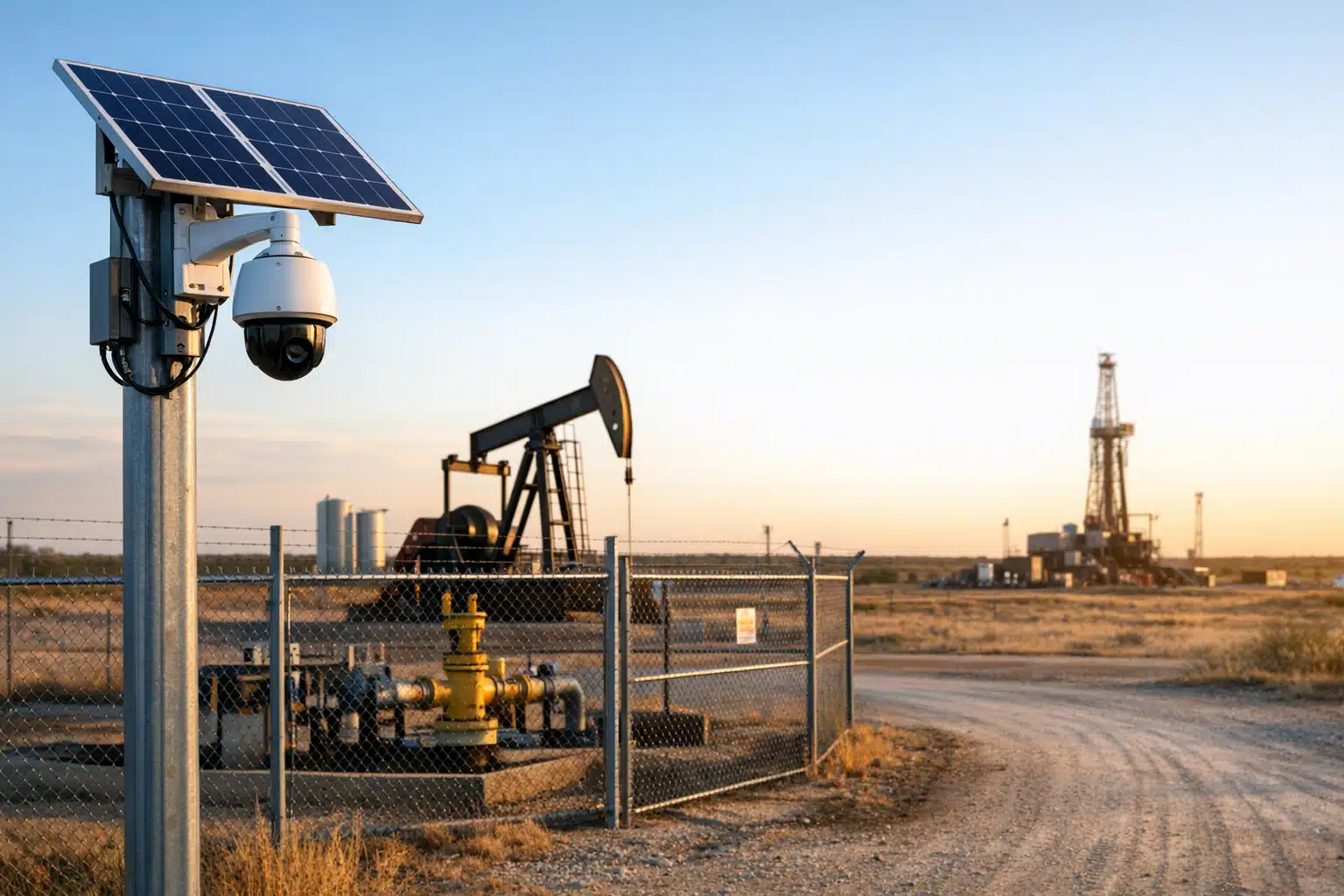
- Install remote video surveillance. Solar-powered cameras cover sites without reliable grid power.
- Add motion-triggered alerts. Live monitoring agents verify threats before dispatching response.
- Light the perimeter. Motion-activated lighting deters approach and improves camera footage at night.
- Schedule mobile patrols. Marked vehicle checks break predictable patterns thieves rely on.
- Control gate access. Log every vehicle entering and leaving the pad.
Why Remote Video Monitoring Fits Barnett Shale Sites
On-site guards at every remote pad cost more than most operators can justify. Remote video monitoring covers wide areas at a fraction of the price.
Live agents watch multiple sites from one center. When a camera detects movement, an agent assesses the feed in real time.
Agents can trigger speakers to warn intruders directly. A voice telling a trespasser they are being recorded ends most incidents fast.
Handling North Texas Weather at Exploration Sites
Fort Worth weather punishes equipment and complicates security. Summer heat and spring storms both demand planning.
Summer Heat Above 100°F
Tarrant County sees weeks of triple-digit heat each summer. Cameras and batteries fail when hardware overheats.
Use equipment rated for Texas temperatures. Solar camera systems need heat-tolerant batteries and shaded mounting where possible.
Heat also drives up fuel theft as cooling costs rise. Monitor diesel tanks closely from June into September.
Spring Storms and Tornado Season
North Texas storm season runs from March into June. High winds topple poorly mounted cameras and knock out power.
Mount surveillance hardware on reinforced poles. Battery backup keeps monitoring running when storms cut grid power to remote pads.
After severe weather, criminals target damaged sites while operators focus on repairs. Keep monitoring active during cleanup.
Texas Regulations Affecting Oil & Gas Security
Security staff in Texas must meet state licensing rules. The Texas Department of Public Safety regulates private security personnel.
Guards and remote monitoring providers operate under the Texas Private Security Act. Verify any provider holds proper state licensing before hiring.
The Railroad Commission of Texas oversees oil and gas operations statewide. Site security does not replace compliance with its safety rules on equipment and access.
- Confirm your provider is licensed by Texas DPS.
- Keep access logs that support incident investigations.
- Document theft and vandalism for insurance and law enforcement.

 Posted on Google
Comparing On-Site Guards and Remote Monitoring
Both approaches protect exploration sites. The right mix depends on site activity and budget.
When On-Site Guards Make Sense
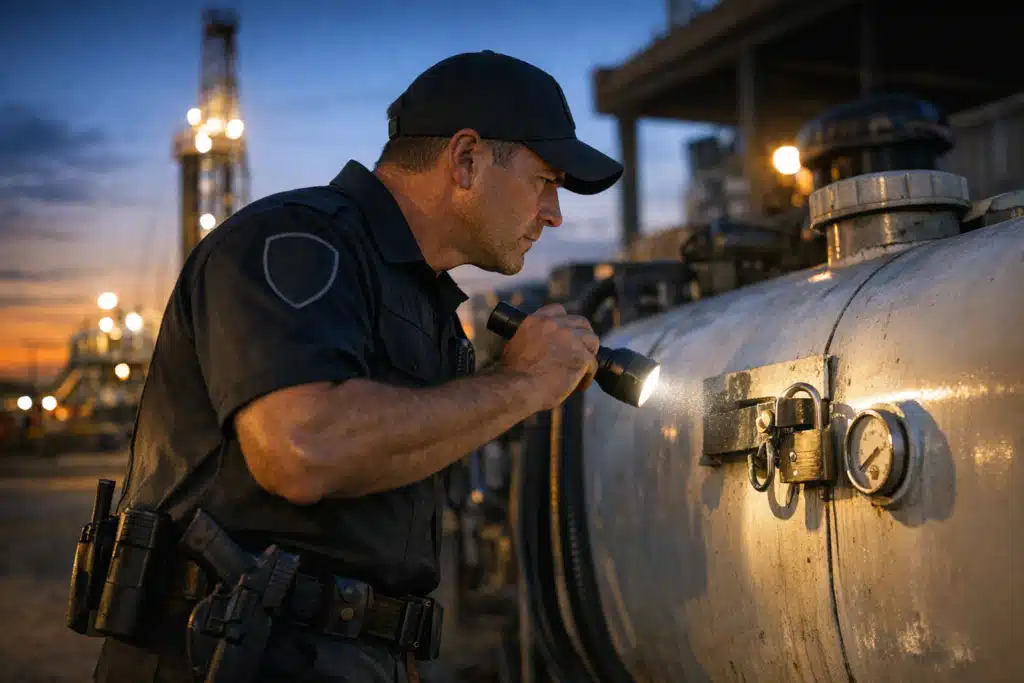
Active drilling sites with crews and heavy equipment benefit from a physical presence. Guards control gate access and respond to incidents instantly.
High-value sites during turnaround or completion phases warrant staffing. A guard on the pad stops theft before it starts.
When Remote Monitoring Wins
Idle pads and storage yards fit remote video monitoring. Coverage runs around the clock without per-site staffing costs.
Operators with sites scattered across Tarrant and Johnson Counties gain the most. One monitoring center watches dozens of locations at once.
Many Fort Worth operators combine both. Guards cover active rigs; cameras watch idle and remote pads.
Reducing Theft Costs Before They Happen
Prevention beats recovery every time. Stolen copper and fuel rarely return, and repair downtime stalls production.
These measures cut losses at Barnett Shale sites:
- Visible camera signage deters casual thieves at the gate.
- Loud speaker warnings from monitoring agents stop intruders mid-attempt.
- Verified alarm response gets law enforcement moving on real threats, not false alarms.
- Fuel tank locks and sensors flag siphoning as it happens.
A single prevented copper theft can cover months of monitoring costs. The math favors proactive protection.
Conclusion
Fort Worth oil & gas security demands defense built for remote locations and harsh North Texas conditions. Layered video monitoring, weather-rated hardware, and smart patrol scheduling protect exploration sites year-round.
Twin City Security Fort Worth protects wellheads, storage yards, and drilling sites across the Barnett Shale. Call or text 817‑922‑9774 or email fortworth@twincitysecurity.com for a site assessment and monitoring quote.
Sources
- Texas Department of Public Safety – Private Security Program
- Railroad Commission of Texas – Oil & Gas Division
- Texas Commission on Environmental Quality – Barnett Shale
- National Weather Service – Fort Worth/Dallas Office
Managing security for oil and gas exploration sites in Fort Worth requires a tailored approach due to the unique challenges posed by remote locations and environmental factors. Effective strategies include remote monitoring, perimeter defense, and understanding the specific threats faced by operators in the Barnett Shale region.
- Fort Worth's oil and gas sites are vulnerable to theft of copper, fuel, and equipment due to their remote nature. Operators must implement layered security measures to protect these assets.
- Remote video monitoring is cost-effective and allows for real-time assessment of multiple sites, reducing the need for on-site guards.
- Weather conditions in North Texas, such as extreme heat and storms, necessitate the use of weather-rated equipment and proactive monitoring to prevent damage and theft.