
How to Implement Effective Security for Fort Worth’s High-End Residential Areas
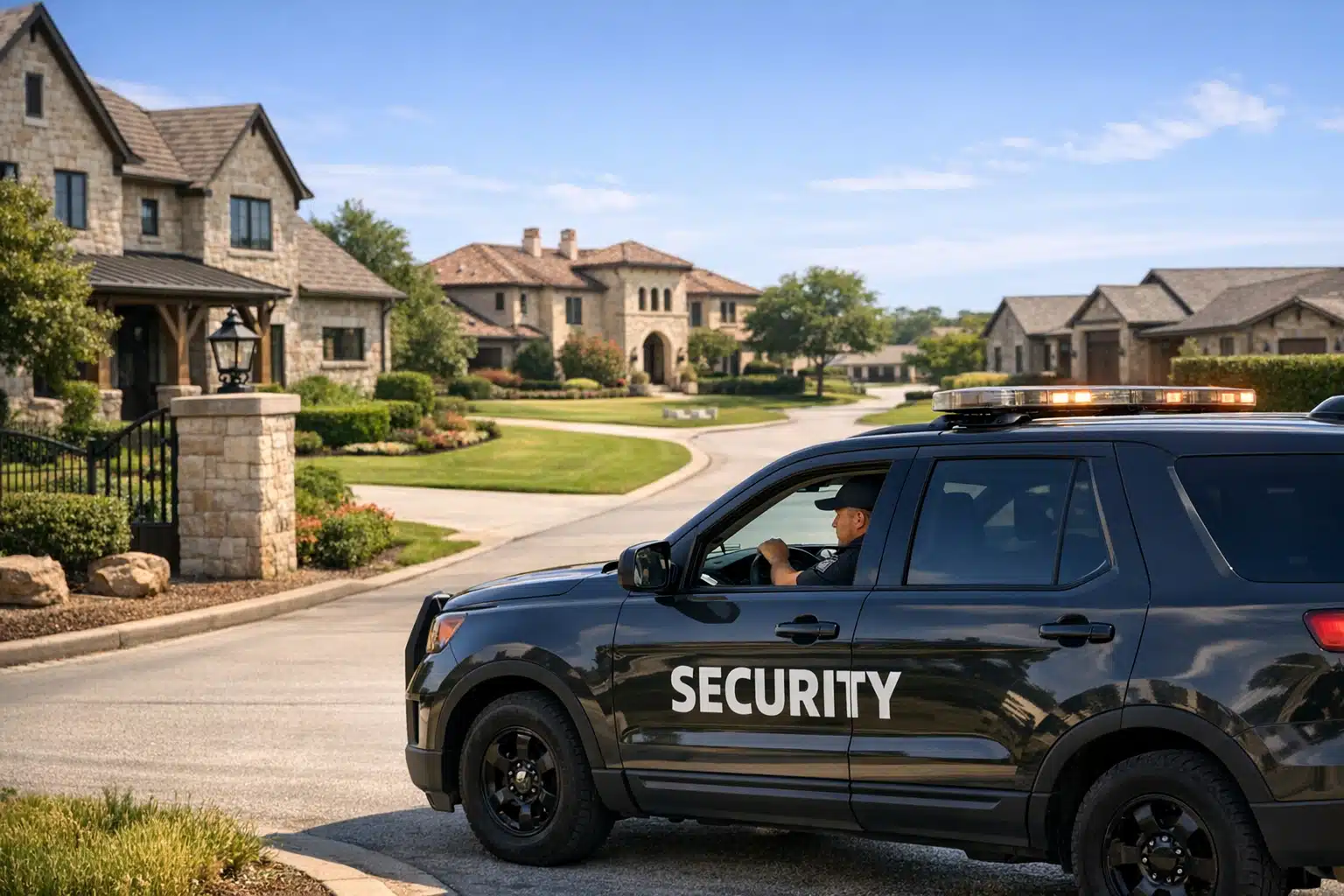
To implement effective security in Fort Worth's high-end residential areas, homeowners should consider a multi-layered approach that includes coordinated patrols, verified alarm responses, and reliable monitoring systems. These measures are essential to deter organized crime and ensure safety during extreme weather conditions.
Fort Worth police reported roughly 10,000 burglary and theft incidents in recent years, with affluent areas drawing attention from organized crews. For homeowners in Arlington Heights, Mira Vista, and Westover Hills, residential security means more than a doorbell camera. It means coordinated patrols, verified alarm response, and monitoring that works during North Texas storms and triple-digit summers.
This post breaks down how high-end Fort Worth neighborhoods build protection that fits their layout, value, and risks. You get concrete steps, local examples, and a clear sense of what works here.
Why Luxury Home Protection in Fort Worth Differs From Standard Residential Security
Luxury home protection carries risks that smaller properties rarely face. Larger lots, multiple access points, detached garages, and long driveways create blind spots. A single camera at the front door misses most of the exposure.
High-value homes near Rivercrest and Westover Hills also attract targeted crews, not opportunists. These groups watch patterns, note travel schedules, and strike when families leave for vacation.
Common Vulnerabilities in Fort Worth’s High-End Neighborhoods
- Gated but unmonitored entrances that let tailgating vehicles slip in behind residents.
- Dense landscaping that hides side yards and rear entry points.
- Construction and remodel activity that brings unfamiliar crews and open access.
- Short-term rental turnover near the Cultural District that masks strangers as guests.
Each gap needs its own fix. A plan built for a Near Southside bungalow fails on a five-acre Westover Hills estate.
Step-by-Step: Building Effective Residential Security for a Luxury Property
Strong protection follows a layered order. Start at the property line and work inward.
- Map every access point. Walk the perimeter. Count gates, walls, service entrances, and low fence sections.
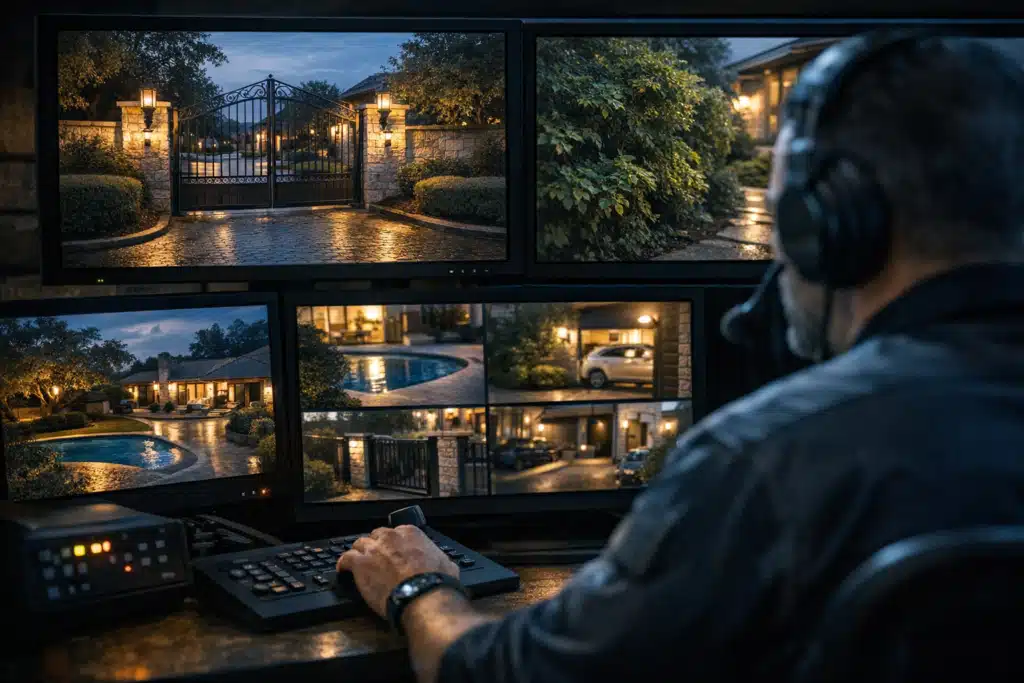
- Add verified monitoring. Cameras alone miss events. Remote operators watch live feeds and confirm threats in real time.
- Control the gate. Pair vehicle access with license plate capture and intercom verification.
- Schedule roving patrols. Marked and unmarked vehicles check grounds at irregular intervals.
- Light the dark zones. Motion-triggered lighting removes the cover crews depend on.
- Test response times. Confirm how fast an operator or guard reacts after an alert fires.
Order matters. A camera at the rear fence buys nothing if no one watches the feed at 2 a.m.
Remote Video Monitoring That Fits Large Estates
Remote surveillance covers acreage that guards cannot patrol every minute. Trained operators watch live feeds from a central station. When a person crosses a boundary after hours, operators issue voice warnings or dispatch response.
For a sprawling Mira Vista lot, this means eyes on the pool house, side gates, and driveway at once. Cameras with analytics flag human movement and ignore passing wildlife or blowing debris.
Protecting Fort Worth Homes During North Texas Weather Extremes
North Texas weather breaks security systems that were never built for it. July heat pushes outdoor camera housings past their limits. Spring hail and straight-line winds knock out power and rip down equipment.
Luxury properties need hardware rated for Fort Worth conditions.
- Heat-rated cameras that keep working above 100°F.
- Battery or generator backup for monitoring during storm outages.
- Cellular failover so alerts send even when internet drops.
- Weatherproof enclosures that survive hail and wind-driven rain.
Storms raise theft risk too. Crews target homes right after tornado warnings, when power is out and families have left. Backup-powered monitoring keeps watch when the grid fails.
On-Site Guards vs. Remote Monitoring for High-Value Homes
Both methods protect luxury properties, and many estates use a mix. The right choice depends on lot size, risk, and budget.
When On-Site Guards Make Sense
On-site guards fit homes hosting events, managing active construction, or sitting on large grounds. A guard checks visitors, deters approach, and responds in seconds.
During a holiday party in Westover Hills, a guard manages parking, screens arrivals, and watches for uninvited guests. No camera matches a trained person at the gate.
When Remote Monitoring Wins
Remote monitoring covers more ground for less cost. One station watches dozens of cameras across a property around the clock.
For an owner who travels often, remote operators act as constant eyes. They verify alarms, cutting the false dispatches that drain police patience and homeowner fees.
Managing Access and Visitors on Gated Luxury Properties
Access control decides who reaches the front door. Many Fort Worth estates have gates, but few control them well.
Effective access management includes:
- License plate capture at every vehicle entrance.
- Intercom verification before gates open for deliveries.
- Vendor logs for landscapers, pool crews, and housekeepers.
- Temporary codes that expire after a service visit.
Service traffic is a real weak point. A standing gate code shared across vendors spreads far beyond your control. Expiring codes close that gap.

 Posted on Google
Coordinating With Fort Worth Police and HOA Security
Private security works best alongside public response. Many luxury communities near Rivercrest already fund patrols or off-duty officers.
Coordinate your plan with neighborhood efforts. Share camera access points with your HOA when it helps. Confirm how your monitoring station contacts Fort Worth police after a verified event.
Verified alarms get faster police response than standard calls. When an operator confirms a real intruder on camera, that report carries weight.
What Luxury Residential Security Costs in Fort Worth
Pricing depends on property size and method. A single-camera setup differs sharply from full estate coverage with guards.
General ranges for Fort Worth high-end homes:
- Remote monitoring: scales with camera count and hours of live coverage.
- On-site guards: billed hourly, higher for armed or event coverage.
- Hybrid plans: remote watch most hours, guards for events and peak risk.
A site assessment gives the real number. Every estate layout changes the math.
Conclusion
Effective residential security in Fort Worth’s high-end neighborhoods takes layered protection built for large lots, storm extremes, and targeted crews. Combine verified remote monitoring, controlled access, and on-site guards where risk demands it. Luxury home protection works when the plan matches your property, not a template.
Twin City Security Fort Worth assesses estates across Arlington Heights, Westover Hills, Rivercrest, and Mira Vista. Call or text 817‑922‑9774, email fortworth@twincitysecurity.com, or visit https://www.twincitysecurityfortworth.com for a Fort Worth security assessment.
Sources
- Fort Worth Police Department – Official City Page
- FBI – Uniform Crime Reporting Program
- National Weather Service – Fort Worth/Dallas Office
- Texas Department of Public Safety – Private Security Program
Fort Worth's affluent neighborhoods face unique security challenges due to high burglary rates and targeted crews. Effective residential security requires a tailored approach that includes verified monitoring, controlled access, and on-site guards.
- High-end areas like Arlington Heights and Westover Hills need more than basic security measures. They require a layered strategy that addresses specific vulnerabilities.
- Remote monitoring and on-site guards can be combined to enhance protection for luxury properties. This approach ensures coverage during events and while homeowners are away.
- Access control is crucial for gated communities, including license plate capture and intercom verification to manage visitors effectively.