
Securing Fort Worth’s Oil & Gas Facilities: What You Need to Know
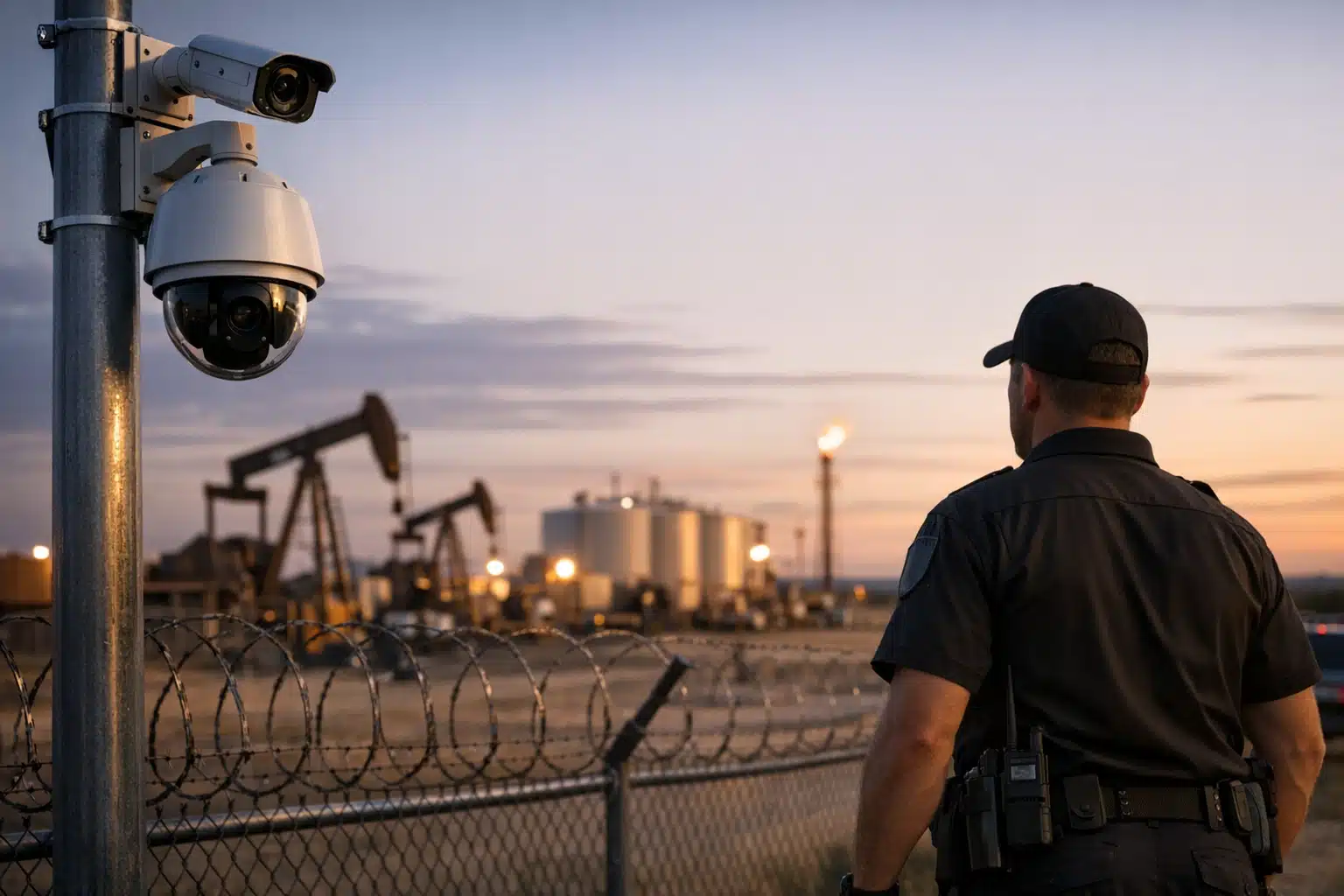
The main security concerns for oil and gas facilities in Fort Worth include copper theft, saltwater dumping, and equipment loss. These issues arise due to the proximity of wellheads, tank batteries, and compressor stations to neighborhoods and highways, leading to significant financial losses for producers in North Texas.
The Barnett Shale runs directly under Fort Worth, placing wellheads, tank batteries, and compressor stations across Tarrant County. That proximity makes oil & gas security a daily concern for operators managing remote pads near neighborhoods, highways, and open ranch land. Copper theft, saltwater dumping, and equipment loss cost North Texas producers millions each year. This post breaks down the real threats facing Fort Worth energy sites and the field-tested methods that stop them.
Why Oil & Gas Security Matters in Fort Worth
Fort Worth sits on one of the most active urban drilling zones in the country. Wellheads operate within blocks of homes in areas like Arlington Heights and along the Chisholm Trail Parkway corridor.
This mix of energy infrastructure and dense population creates risks that rural fields never face. Trespassers, scrap thieves, and vandals can reach a site in minutes and disappear into surrounding streets.
Unmanned sites are the biggest target. A tank battery left dark overnight invites metal theft and tampering.
Common Threats to Fort Worth Energy Sites
- Copper and metal theft — Grounding wires, brass fittings, and catalytic converters from field trucks.
- Equipment loss — Generators, pumps, and tools taken from open pads.
- Illegal dumping — Outside parties dumping waste on or near lease roads.
- Vandalism and tampering — Valve interference that risks spills and fines.
- Trespassing — Curious neighbors, scrappers, and off-roaders crossing lease boundaries.
Each threat carries regulatory weight. A tampered valve near a residential zone can trigger Railroad Commission of Texas reporting and steep cleanup costs.
How Remote Video Monitoring Strengthens Facility Protection
Remote video monitoring watches unmanned Fort Worth sites around the clock. Trained operators view live feeds and respond the moment motion triggers an alert.
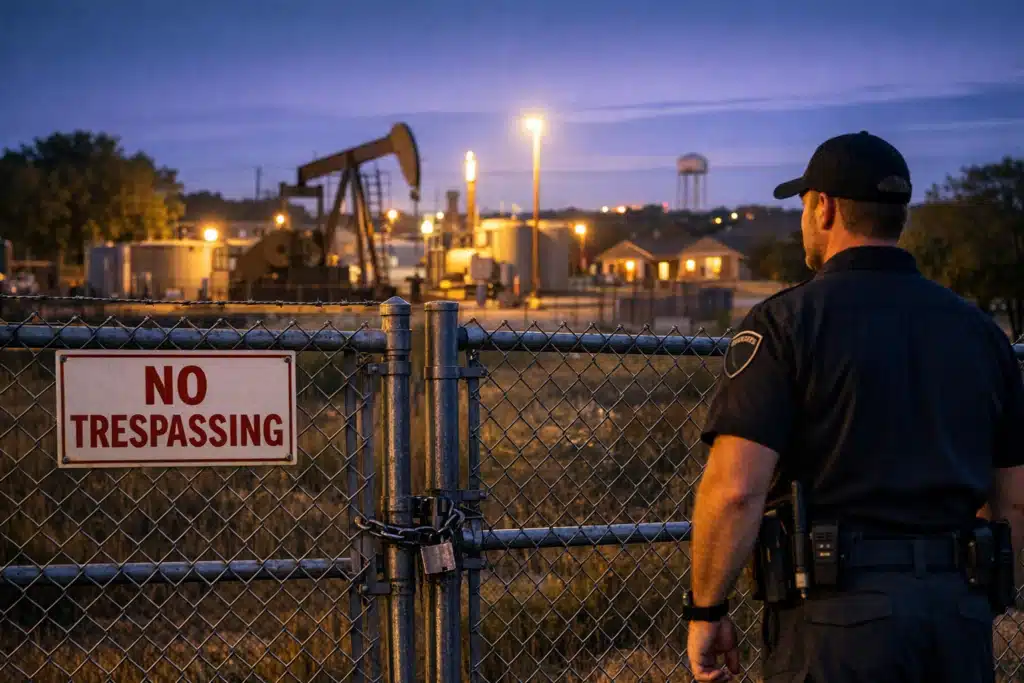
This method fits energy sites better than a lone patrol car. Cameras cover fence lines, tank batteries, and access gates at once.
What Effective Remote Monitoring Includes
- Thermal cameras that detect body heat across dark pads and open acreage.
- Two-way speakers that let operators warn intruders in real time.
- Motion-triggered recording that captures license plates and faces.
- Live monitoring center staffed to verify events before calling police.
- Solar power options for pads without grid access.
Voice-down warnings stop most intrusions on their own. A scrapper hearing a live operator call out their location usually leaves before touching a single wire.
Verified alerts also mean faster police response. Fort Worth PD prioritizes confirmed crimes over unverified alarm trips.
Protecting Oil & Gas Sites During North Texas Weather Extremes
North Texas weather tests energy site security year-round. Summer heat, spring storms, and winter freezes each create openings for loss.
Summer Heat Challenges
Fort Worth summers push past 100 degrees for weeks at a time. Standard cameras overheat and outdoor guards face real health limits during long shifts.
Remote monitoring removes people from that heat. Equipment rated for high temperatures keeps watching when a patrol would need to rest.
Storm and Freeze Season
Spring brings tornado watches and hail that can knock out power. Winter Storm Uri in 2021 froze wellheads and left sites dark for days.
Battery backups and solar setups keep cameras live during outages. That coverage matters most when crews cannot reach a remote pad safely.
On-Site Guards vs. Remote Monitoring for Oil & Gas Security
Both methods have a place at Fort Worth energy sites. The right mix depends on site activity, location, and risk level.
When On-Site Guards Fit Best
- Active drilling with crews, contractors, and daily vehicle traffic.
- Sites requiring gate access control and visitor logs.
- High-theft zones where physical presence deters repeat offenders.
When Remote Monitoring Fits Best
- Unmanned tank batteries and completed wells.
- Multiple scattered pads across Tarrant County.
- Budgets that cannot support 24-hour guard coverage at every location.
Many operators run both. Guards handle active pads by day, and cameras cover quiet sites overnight.
Steps to Secure Your Fort Worth Oil & Gas Facility
To protect your Fort Worth energy site, follow these steps in order:
- Map your vulnerabilities. Walk each pad and note dark corners, open gates, and exposed metal.
- Prioritize by value and risk. Cover tank batteries and equipment yards first.
- Choose a monitoring method. Match guards, cameras, or both to each site.
- Set clear response protocols. Decide who gets called and when police are dispatched.
- Review footage and reports monthly. Adjust camera angles as site conditions change.
Documentation supports insurance claims and Railroad Commission filings. Time-stamped footage proves what happened during an incident.

 Posted on Google
What Fort Worth Operators Should Ask Before Hiring Security
Before signing with any provider, energy managers should ask direct questions. The answers reveal whether a company knows field conditions.
- Do you monitor sites without grid power?
- How fast do operators respond to a motion alert?
- Can your equipment handle Fort Worth summer temperatures?
- Do you coordinate with Fort Worth PD on verified alarms?
- What happens to coverage during a storm outage?
A provider that answers with specifics has done the work. Vague responses point to a company new to energy sites.
Facility Protection Built for the Barnett Shale
Fort Worth energy sites face pressures that generic security misses. Urban drilling, extreme weather, and strict state rules all shape what real facility protection looks like here.
Twin City Security Fort Worth works with local operators across Tarrant County. Our teams know the lease roads, the theft patterns, and the response times that keep sites safe.
Conclusion
Fort Worth oil & gas security demands methods matched to urban drilling, North Texas weather, and Railroad Commission rules. Remote monitoring, on-site guards, and clear response protocols together stop theft, tampering, and trespassing before losses mount. Contact Twin City Security Fort Worth for a site assessment or monitoring quote: call or text 817‑922‑9774, email fortworth@twincitysecurity.com, or visit https://www.twincitysecurityfortworth.com.
Sources
- Railroad Commission of Texas – Oil & Gas Regulation
- Fort Worth Police Department – Crime Data and Reporting
- Texas Department of Insurance – Property and Theft Claims
- National Weather Service – Fort Worth/Dallas Forecast Office
Fort Worth's oil and gas facilities face significant security challenges due to their proximity to urban areas and the Barnett Shale. Operators must address threats like copper theft and vandalism while implementing effective monitoring solutions.
- The Barnett Shale's location leads to daily security concerns for operators near neighborhoods and highways. Remote video monitoring provides 24/7 surveillance, helping to deter theft and tampering. Operators should assess vulnerabilities and choose appropriate security measures for each site.
- The Barnett Shale runs directly under Fort Worth, placing wellheads, tank batteries, and compressor stations across Tarrant County.
- That proximity makes oil & gas security a daily concern for operators managing remote pads near neighborhoods, highways, and open ranch land.