How to Choose the Right Security Guard Company in Fort Worth
To choose the right security guard company in Fort Worth, evaluate their state licensing, experience in managing specific environments like construction sites or events, and their preparedness for local challenges such as crowd control and severe weather. Assessing these factors will help ensure effective protection for your property.
Fort Worth reported over 20,000 property crimes in a recent year, with theft and burglary hitting construction sites and commercial lots hard. Picking the right security guard company shapes how well your business, event, or oilfield site handles that risk. This post breaks down the exact criteria that matter when you hire security in Fort Worth, from state licensing rules to Stockyards crowd management and North Texas storm readiness.
Why Choosing the Right Security Guard Company Matters in Fort Worth
Fort Worth mixes tourist-heavy venues, active oil and gas sites, and fast-growing apartment communities. Each setting carries different threats.
A Stockyards saloon on a Saturday night faces crowd surges. A construction site off I-35W faces copper theft after dark. The wrong provider treats both the same way.
Matching guard skills to your actual site conditions cuts losses and liability. That match starts with knowing what to ask.
Step 1: Verify Texas Security Licensing Before Anything Else
Every legitimate security guard company in Texas must hold a license from the Texas Department of Public Safety Private Security Bureau.
Guards themselves need individual registration. Armed guards require a separate Level III certification with firearms training.
What to confirm during your search:
- Company license number issued by Texas DPS Private Security Bureau
- Individual guard registrations for every officer assigned to your site
- Level III armed certification if your property needs armed coverage
- Current liability insurance with proof of coverage limits
Ask for the license number and check it yourself. A provider that hesitates is one to skip.
Step 2: Match the Provider to Your Fort Worth Property Type
Different sites demand different training. A guard who works well at an office park may struggle at a packed Stockyards event.
Stockyards and event venues
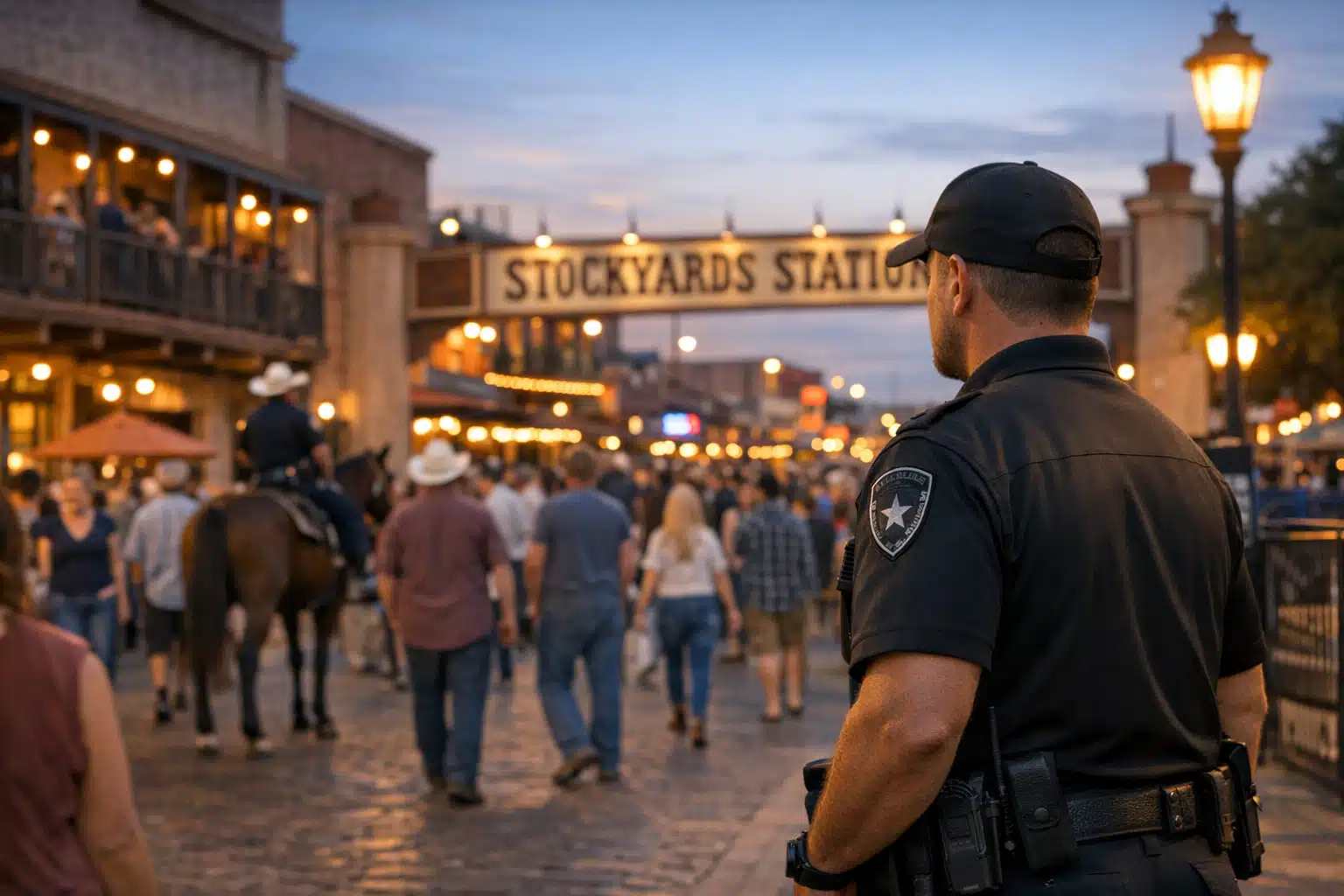
Stockyards event security requires crowd management skills and conflict de-escalation. Weekend foot traffic near Exchange Avenue climbs into the thousands.
Guards should know how to spot intoxicated patrons early and manage entry points without creating bottlenecks.
Construction sites
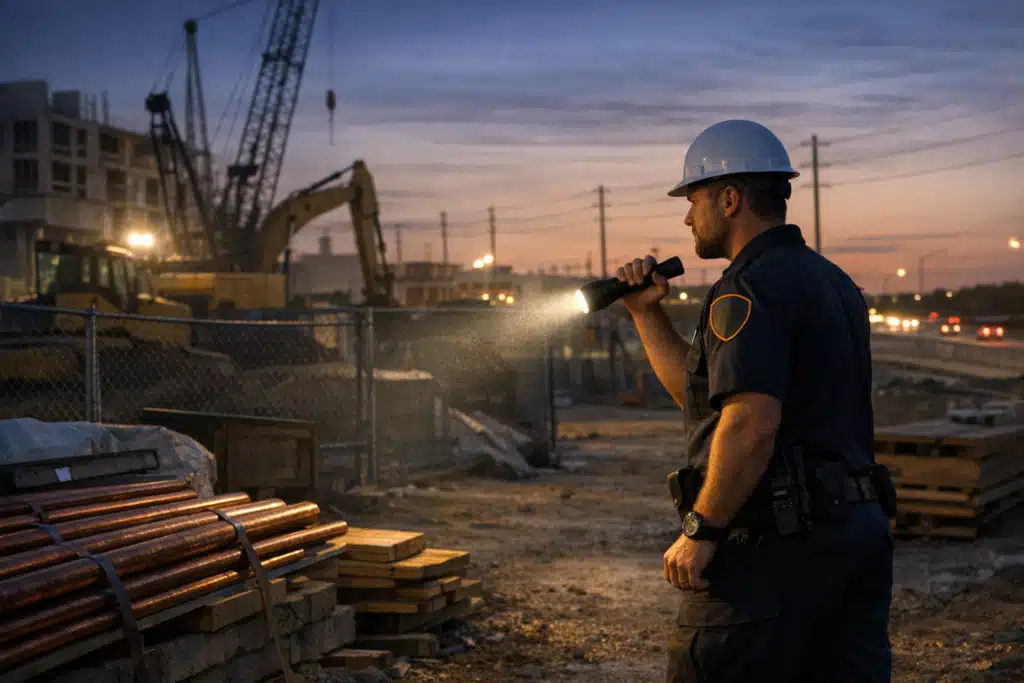
Construction sites along the I-35W corridor and near Alliance face material and equipment theft. Copper, tools, and fuel disappear overnight.
Ask whether the provider offers roving patrols and remote video surveillance for after-hours coverage.
Oil and gas facilities
Oilfield sites in and around Tarrant County need perimeter control and access logging. Guards must follow safety protocols on active production sites.
Confirm the provider trains officers on hazard awareness and site-specific entry rules.
Apartment communities
Apartment properties near West 7th and Arlington Heights deal with trespassing, package theft, and after-hours noise. Consistent patrol schedules matter more than a single visible post.
Step 3: Ask About Remote Video Surveillance Options
Remote video surveillance covers sites when a full-time guard costs too much. Cameras with live monitoring catch intruders and alert responders in real time.
This works well for construction sites, storage yards, and equipment lots. A monitoring center watches feeds and dispatches help when motion triggers an alert.
Questions to ask about monitoring:
- Is the video feed watched live or only recorded for later review?
- How fast does the team respond to a triggered alert?
- Can cameras handle Texas heat and glare during summer afternoons?
- Does the system include night vision for dark job sites?
A hybrid setup pairs remote cameras with on-call guard response. That combination often costs less than round-the-clock staffing.
Step 4: Check Weather and Heat Readiness for North Texas
North Texas summers push past 100 degrees for weeks. Guards standing outdoor posts face real heat risk.
Ask how the provider protects officers during extreme heat. Rotation schedules, shaded posts, and hydration plans keep guards alert and safe.
Spring brings a different threat. Tornado season and severe storms hit Tarrant County from March through June.
Storm season coverage checklist:
- Emergency protocols for guards during severe weather warnings
- Backup communication if power or cell service drops
- Post-storm patrols to secure damaged property against looting
- Camera durability against hail and high wind
A provider with a clear storm plan protects your assets when weather turns dangerous.
Step 5: Review Response Time and Local Presence
A security guard company based in or near Fort Worth responds faster than one dispatching from Dallas or beyond. Local teams know traffic patterns on I-30 and Loop 820.
Ask where guards report from and how quickly a supervisor can reach your site. Response speed matters most during an active incident.
Local providers also understand Fort Worth ordinances and coordinate better with Fort Worth Police when needed.

 Posted on Google
Step 6: Evaluate Training, Supervision, and Reporting
A visible guard means little without training and accountability behind them.
What strong providers offer:
- Documented training beyond the state minimum
- Field supervisors who check posts during shifts
- Daily activity reports you can review
- Incident documentation with photos and timestamps
Reporting gives you proof of coverage and a record if an incident heads to court.
Step 7: Compare Pricing Against Real Value
The lowest bid often signals corners being cut. Underpaid guards leave posts, sleep on shift, or fail to show.
Ask what a rate includes. A fair quote covers wages, insurance, supervision, and reporting, not just a warm body at the gate.
For events, ask how pricing scales with crowd size and hours. A Stockyards festival needs more coverage than a private office party.
Red Flags to Avoid When Hiring Security in Fort Worth
Certain warning signs point to a provider you should pass on.
- No verifiable Texas DPS license number
- Vague answers about insurance coverage
- No field supervision or reporting system
- Pricing far below every other quote
- No plan for heat or storm conditions
Trust what you can verify, not what sounds good on a sales call.
Conclusion
Choosing a security provider in Fort Worth comes down to verified licensing, site-matched training, weather readiness, and local response speed. Match the guard skills and monitoring tools to your specific property, then confirm every claim in writing.
Twin City Security Fort Worth offers on-site guards and remote video surveillance built for local conditions. Call or text 817‑922‑9774, email fortworth@twincitysecurity.com, or visit https://www.twincitysecurityfortworth.com for a site assessment or monitoring quote.
Sources
- Texas Department of Public Safety – Private Security Bureau
- FBI – Uniform Crime Reporting (UCR) Program
- National Weather Service – Fort Worth/Dallas Forecast Office
- OSHA – Heat Illness Prevention
Choosing the right security guard company in Fort Worth is essential for effectively managing property crime risks, which include theft and burglary at various sites. This guide outlines key criteria for hiring security, focusing on licensing, site-specific training, and local response capabilities.
- Fort Worth has over 20,000 reported property crimes, making security a priority for businesses and events. Different locations require tailored security approaches to address unique threats.
- Verify that any security company holds a valid Texas DPS license and that guards have the necessary training and certifications for their roles.
- Consider remote video surveillance for cost-effective security solutions, especially for construction sites and storage areas, while ensuring the provider has a solid plan for extreme weather conditions.