
The Importance of Security Guard Training in Fort Worth
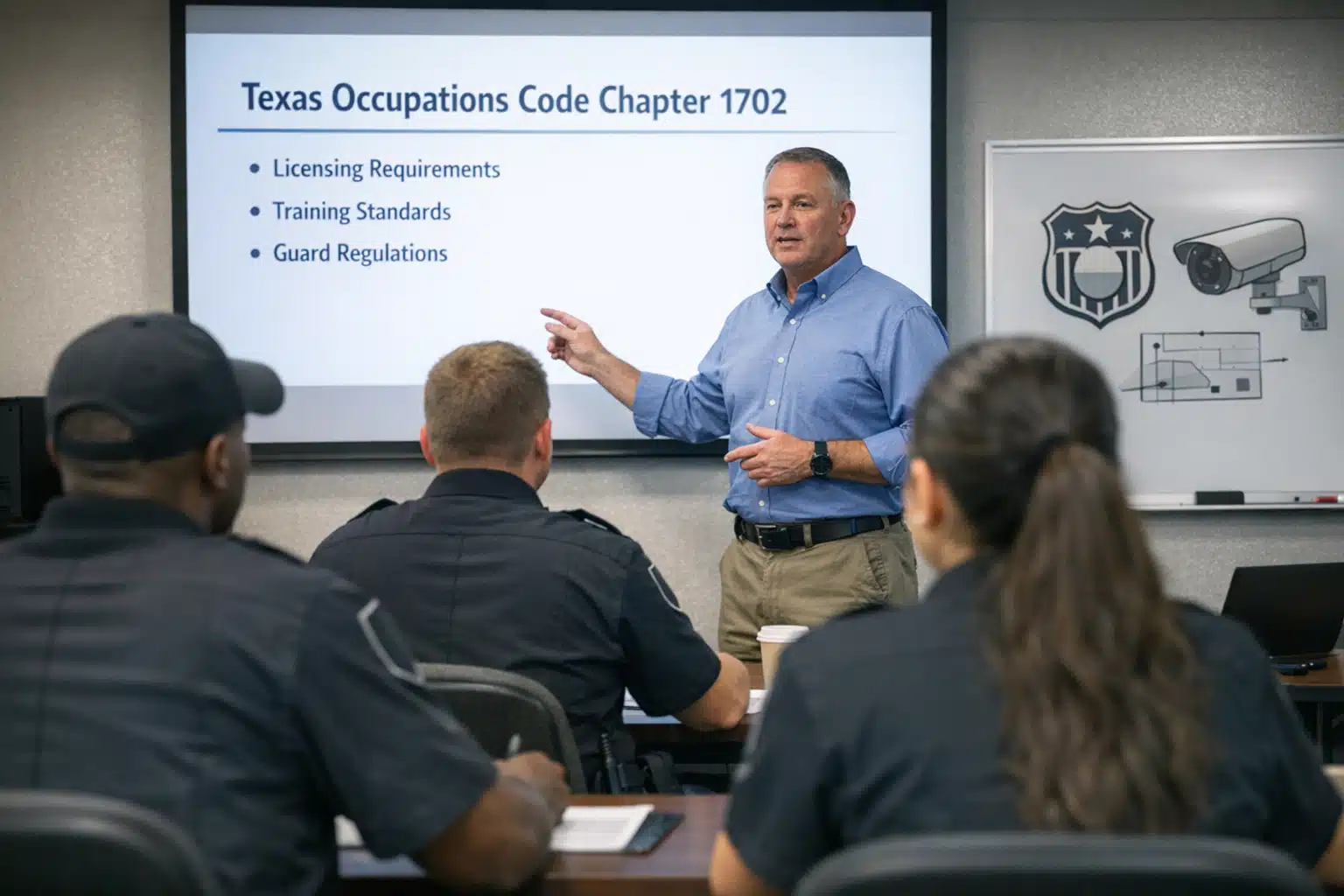
Security guard training in Fort Worth is crucial because Texas mandates that unarmed security officers obtain a Level II certification, which includes at least 30 hours of state-approved instruction. This training ensures that security personnel are adequately prepared to handle various situations, enhancing safety for businesses and their customers.
Texas requires every unarmed security officer to hold a Level II certification before working a single shift. That means at least 30 hours of state-approved instruction. Yet many Fort Worth business owners hire guards without asking about their security guard training at all.
Fort Worth saw more than 30,000 property crime reports in recent years, according to city police data. A guard’s response to those incidents depends on how they were trained. This post breaks down what Texas guards learn, why local conditions matter, and what to verify before you sign a contract.
What Security Guard Training Includes in Texas
Texas security personnel fall under the Department of Public Safety, Private Security Program. The rules are specific, and cutting corners is illegal.
Every officer must clear a state background check and fingerprint submission. Then training begins based on the type of work.
Level II: Non-Commissioned Officers
Level II covers unarmed guards. Instruction runs a minimum of 30 hours and includes:
- Texas Occupations Code Chapter 1702 — the law governing private security
- Use of force limits for unarmed personnel
- Report writing and incident documentation
- Field note practices that hold up in court
- Ethics and officer conduct standards
An unarmed guard at a Near Southside apartment community works under Level II rules. Their training shapes how they log a trespasser or de-escalate a dispute.
Level III: Commissioned (Armed) Officers
Level III applies to armed guards. The state mandates 45 hours of classroom and range instruction. Firearm proficiency testing is required, and officers must requalify each year.
An oil and gas facility on Fort Worth’s outskirts may request Level III coverage. The stakes of armed work demand this added rigor.
Level IV: Personal Protection Officers
Level IV certifies bodyguards and personal protection officers. It builds on Level III with 15 additional hours focused on protective tactics.
Why Local Training Standards Matter for Fort Worth
State minimums are the floor, not the ceiling. Fort Worth conditions push good operators to train beyond the baseline.
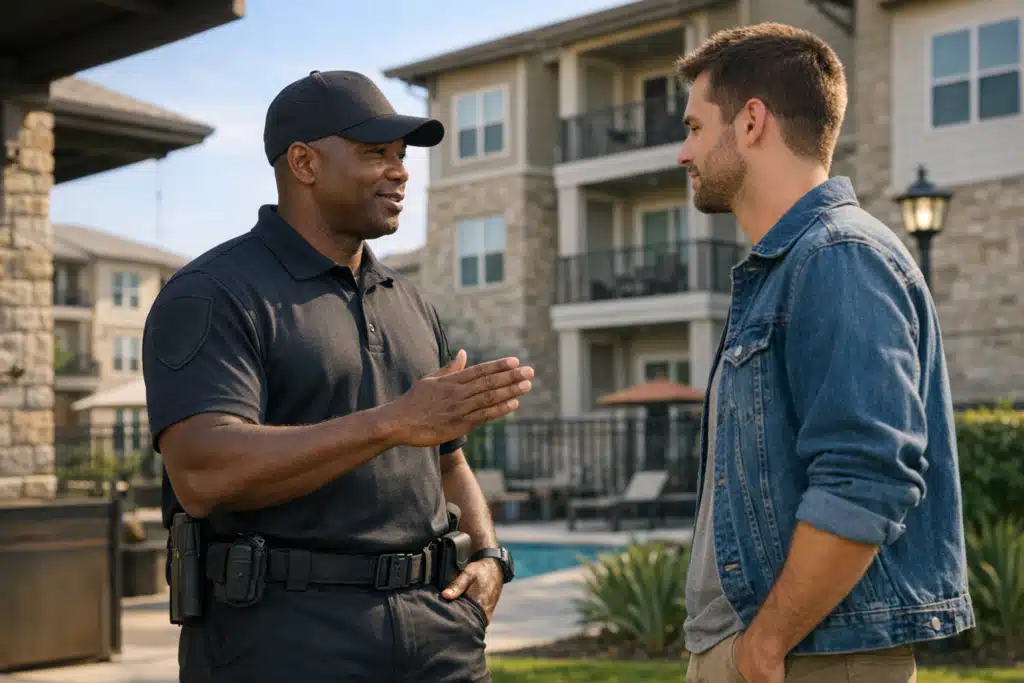
A guard who knows the code but has never worked a Stockyards Friday night will freeze under pressure. Real preparation blends classroom hours with local scenario drills.
Stockyards Crowd Management
Stockyards event security requires crowd control skills the state minimum barely touches. Rodeo weekends, honky-tonk crowds, and cattle drive tourists create dense foot traffic.
Guards working Exchange Avenue need training in:
- Reading crowd density and identifying choke points
- Spotting intoxicated patrons before conflicts start
- Coordinating with Fort Worth PD during large events
- Managing entry and exit flow at venues
A guard trained only in report writing cannot handle 5,000 people leaving a concert at once. Scenario-based practice fills that gap.
North Texas Weather Response
Fort Worth summers push past 100 degrees for weeks. Guards on construction sites face real heat risk. Training must cover hydration protocols and recognizing heat exhaustion in themselves and workers.
Spring brings tornado season across North Texas. A guard at a construction site needs a clear severe weather plan. That includes shelter locations, equipment shutdown steps, and headcount procedures.
Ice storms shut down parts of the metro most winters. Guards must know how to secure a vacant property when access roads freeze over.
How Training Affects the Services You Hire
Guard training directly shapes what you get for your money. A poorly trained officer creates liability rather than reducing it.
Construction Site Protection
Copper theft plagues Fort Worth construction sites across West 7th and Arlington Heights. Trained guards know to document serial numbers, patrol on irregular schedules, and coordinate with remote camera feeds.
To protect a Fort Worth construction site, verify your guard team can:
- Conduct varied patrol patterns instead of predictable loops
- Operate and monitor site camera systems
- Log equipment counts at shift start and end
- Respond to after-hours alarm triggers
Remote Surveillance Integration
Modern guard work pairs boots on the ground with camera monitoring. Officers trained on video systems catch what a single patrol misses.
A remote operator watching an oil and gas yard can direct an on-site guard straight to a breach point. That coordination only works when both are trained on the same platform.
Questions to Ask Before Hiring a Fort Worth Security Company
Verification protects your business. Ask any provider these questions before signing.
- Are your guards Level II, III, or IV certified? Match the level to your risk.
- Can you show current DPS licensing? Licenses expire and must stay active.
- What local scenario training do you provide? Look for Stockyards, weather, and theft response.
- How do you document incidents? Court-ready reports matter when claims arise.
- Do guards train on your surveillance systems? Integration prevents blind spots.
A company that dodges these questions is one to avoid. Proper credentials should be easy to produce.

 Posted on Google
The Cost of Skipping Proper Training
Untrained guards expose you to lawsuits. An officer who uses force incorrectly can turn a minor incident into six-figure litigation.
Insurance carriers scrutinize security practices after a claim. Documented training records protect your position. Missing records weaken it.
A Stockyards venue that hires unlicensed guards risks state penalties too. The DPS enforces Chapter 1702 with fines and shutdowns.
Conclusion
Guard training determines whether your security investment reduces risk or adds to it. Texas sets clear minimums, but Fort Worth conditions demand more than the baseline. The right team pairs state certification with local scenario preparation for Stockyards crowds, construction theft, and North Texas weather.
Twin City Security Fort Worth staffs licensed, locally trained officers backed by remote surveillance support. Call or text 817‑922‑9774, email fortworth@twincitysecurity.com, or visit https://www.twincitysecurityfortworth.com for a Fort Worth security assessment.
Sources
- Texas Department of Public Safety – Private Security Program
- Texas Legislature – Occupations Code Chapter 1702
- City of Fort Worth – Police Department Crime Data
- OSHA – Heat Illness Prevention
Security guard training in Fort Worth is essential for effective crime prevention and management. Texas mandates Level II certification for unarmed guards, but local conditions require additional training to handle specific challenges.
- Texas requires unarmed security officers to complete at least 30 hours of state-approved training before working.
- Fort Worth's unique environment demands guards be prepared for local scenarios like crowd control and severe weather.
- Hiring properly trained guards reduces liability and enhances security effectiveness in various situations.