Security Considerations for Fort Worth’s Shared Workspace Environments
Security considerations for shared workspace environments in Fort Worth include protecting sensitive data, managing access to shared resources, and ensuring a safe physical environment. With many individuals working in close proximity, it is vital to implement measures that safeguard personal information and maintain a secure atmosphere for all users.
Why Shared Workspace Security Matters in Fort Worth
Fort Worth added dozens of co-working sites across West 7th, Near Southside, and downtown over the past five years. Each one packs strangers, laptops, and private data into one open floor.
Shared workspace security faces a problem traditional offices never had: access without accountability. Members, guests, and day-pass visitors move freely past front desks that close by 6 p.m.
This post breaks down the real risks for Fort Worth co-working operators. You get concrete steps, local examples, and a clear picture of what effective co-working protection looks like.
The Risks Unique to Open-Plan Co-Working Spaces
Open floor plans invite collaboration. They also remove the natural barriers that stop theft and tailgating.

Tailgating at the Front Door
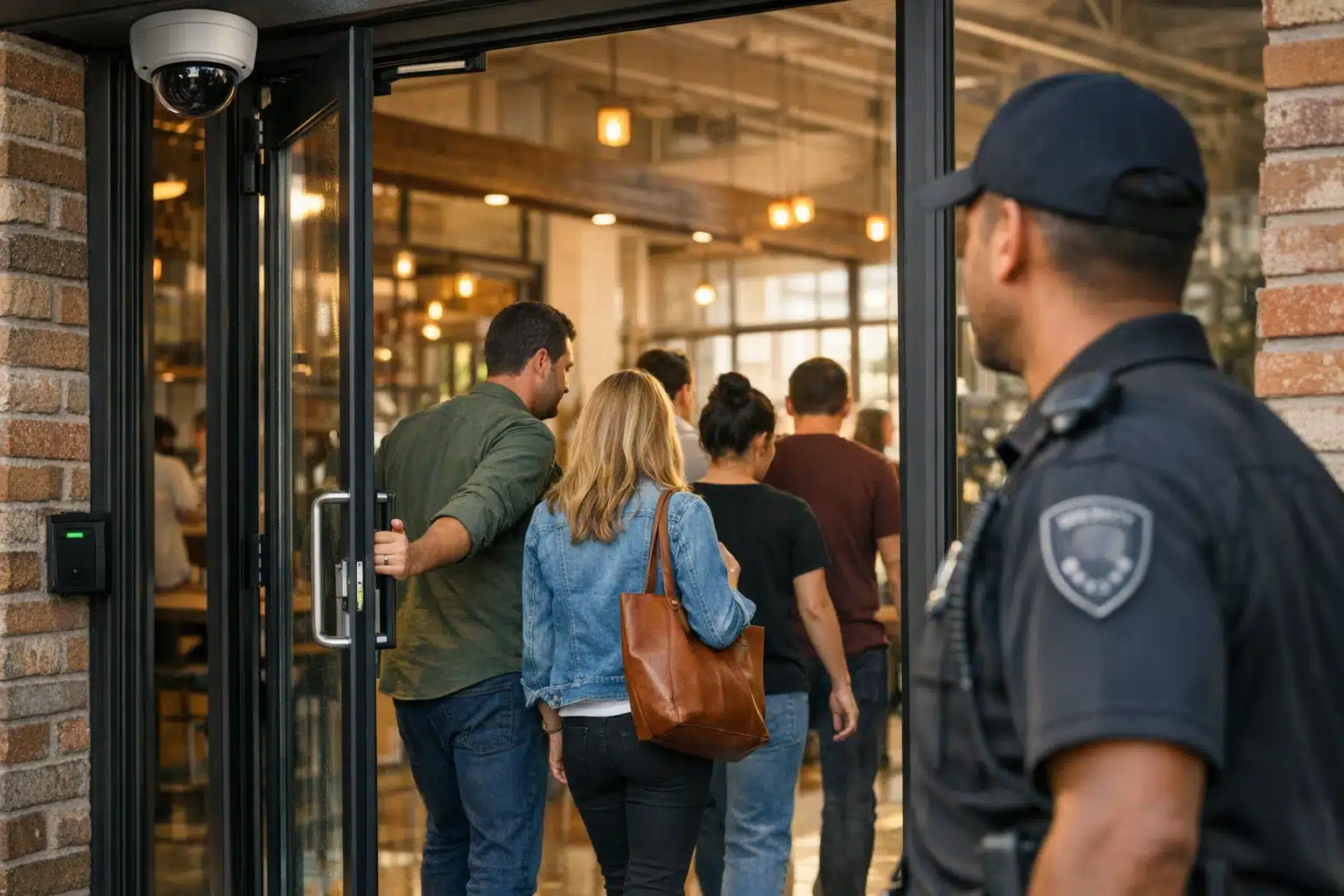
Tailgating happens when an unauthorized person follows a member inside. Keycard doors mean little if one person holds it open for five others.
Near Southside spaces with glass storefronts see this during lunch rushes. A busy entrance makes it easy for anyone to walk in unnoticed.
Unattended Equipment Theft
Laptops, monitors, and camera gear disappear fast in shared rooms. Members step away for coffee and leave devices on open desks.
Fort Worth police reports show theft from offices and commercial spaces remains a steady property crime category. Co-working floors multiply the targets in one room.
After-Hours Access Abuse
Many Fort Worth co-working sites sell 24/7 access. That convenience means members enter empty buildings at 2 a.m. with no staff present.
Without monitoring, you cannot prove who entered or what they did. A former member with an active keycard becomes a liability.
Access Control Built for Shared Workspace Security
Access control is the foundation of co-working protection. The goal is matching every entry to a named, verified person.
Credential Systems That Work
- Mobile credentials: Members use phone-based keys you can revoke instantly when a membership ends.
- Zone-based permissions: Limit private office members to their floor, day-pass users to open areas only.
- Audit logs: Every door read creates a timestamp tied to a name.
Instant revocation matters most. When a member cancels, a mobile credential dies the same hour.
Managing Guest and Day-Pass Entry
Guests are the weakest link in most Fort Worth co-working sites. A visitor log on a clipboard proves nothing after an incident.
Use a digital check-in that captures a photo and host name. Print a dated badge that expires at end of day.
Camera Coverage and Remote Video Surveillance
Cameras answer the question every operator dreads: who was here when the theft happened? Remote video surveillance adds live eyes during unstaffed hours.
Where to Place Cameras in a Co-Working Floor
- Main entrance: Capture every face entering and leaving at eye level.
- Elevator lobbies and stairwells: These movement choke points catch anyone changing floors.
- Printer and mail areas: High-value gear and sensitive documents gather here.
- Private office corridors: Cover doors without pointing inside leased rooms.
- Parking and rear exits: Night entries and loading zones need the most attention.
How Remote Monitoring Covers the Overnight Gap
Remote monitoring lets trained operators watch your Fort Worth site after staff leave. Live agents verify alarms instead of waiting for police dispatch.
At Twin City Security Fort Worth, our remote operators can trigger voice-down warnings. A speaker tells an intruder they are being watched and recorded.
That live response stops many incidents before damage occurs. It costs far less than posting a guard overnight at a low-traffic site.
On-Site Guards for High-Traffic Fort Worth Locations
Some co-working sites need a human presence cameras cannot replace. West 7th buildings with retail foot traffic draw walk-ins all day.
When a Guard Earns Their Cost
- Front-desk coverage: A guard verifies members and signs in guests during peak hours.
- Member incident response: Disputes, lockouts, and medical events need someone on the floor.
- Event nights: Co-working sites that host networking mixers add dozens of unknown attendees.
- Closing patrols: A guard clears conference rooms and secures doors at shutdown.
Blending Guards With Technology
The strongest co-working protection pairs a daytime guard with overnight remote monitoring. You pay for people when traffic justifies it.
Technology covers the quiet hours at a fraction of round-the-clock staffing cost. This split fits the budget most Fort Worth operators work with.

 Posted on Google
North Texas Weather and Physical Security
Fort Worth weather affects co-working security in ways operators overlook. Spring brings tornado watches; summer brings 100-degree afternoons.
Severe Weather Planning
Tornado season runs March through June across North Texas. Members need a known shelter location inside interior rooms away from glass.
Post shelter maps at every suite entrance. A guard or remote operator can push alerts to members during watches and warnings.
Summer Heat and Equipment
Camera housings and door controllers fail in extreme heat if poorly placed. Rooftop and west-facing equipment cooks during July afternoons.
Specify hardware rated for Texas temperature ranges. Schedule inspections before summer peaks to catch failing units early.
A Step-by-Step Security Review for Your Co-Working Site
Use this checklist to audit your Fort Worth shared workspace security today.
- Walk your entry points. Count every door and ask who can open each one after hours.
- Pull your access log. Check for active credentials tied to former members.
- Review camera angles. Confirm faces are identifiable, not just shapes in shadow.
- Test your guest flow. Have someone try walking in without signing anything.
- Check overnight coverage. Decide who watches the building when no staff remain.
- Confirm weather readiness. Verify shelter plans and heat-rated equipment.
Any gap in this list is an open door for loss. Fix the highest-traffic weakness first.
What Effective Shared Workspace Security Costs
Pricing depends on square footage, hours, and member volume. A small Near Southside suite needs less than a multi-floor downtown operation.
Remote video surveillance usually runs lower than full-time guard staffing. Many operators start with cameras and remote monitoring, then add guards for events.
A site assessment gives you real numbers instead of guesses. We map your floor, count entries, and recommend coverage that matches your budget.
Protect Your Fort Worth Co-Working Space
Shared workspace security comes down to three parts: verified access, clear camera coverage, and overnight monitoring. Each one closes a gap open floor plans create.
Twin City Security Fort Worth designs co-working protection around your floor plan, hours, and member traffic. Contact us for a Fort Worth security assessment or remote monitoring quote.
Call or text 817‑922‑9774, email fortworth@twincitysecurity.com, or visit https://www.twincitysecurityfortworth.com.
Sources
- Fort Worth Police Department – Official City Page
- National Weather Service – Fort Worth/Dallas Forecast Office
- Cybersecurity and Infrastructure Security Agency – Physical Security
Shared workspace security in Fort Worth is increasingly important due to the rise of co-working sites that invite both collaboration and risks. The article outlines specific security challenges and offers actionable solutions to protect these environments.
- Fort Worth has seen a surge in co-working spaces, creating unique security challenges like tailgating and unattended equipment theft.
- Access control measures, such as mobile credentials and digital guest logs, are essential for managing entry and ensuring accountability.
- Combining remote monitoring with on-site guards provides effective coverage, especially during high-traffic hours and after-hours access.