
How to Choose the Right Security Technology for Your Fort Worth High-Rise
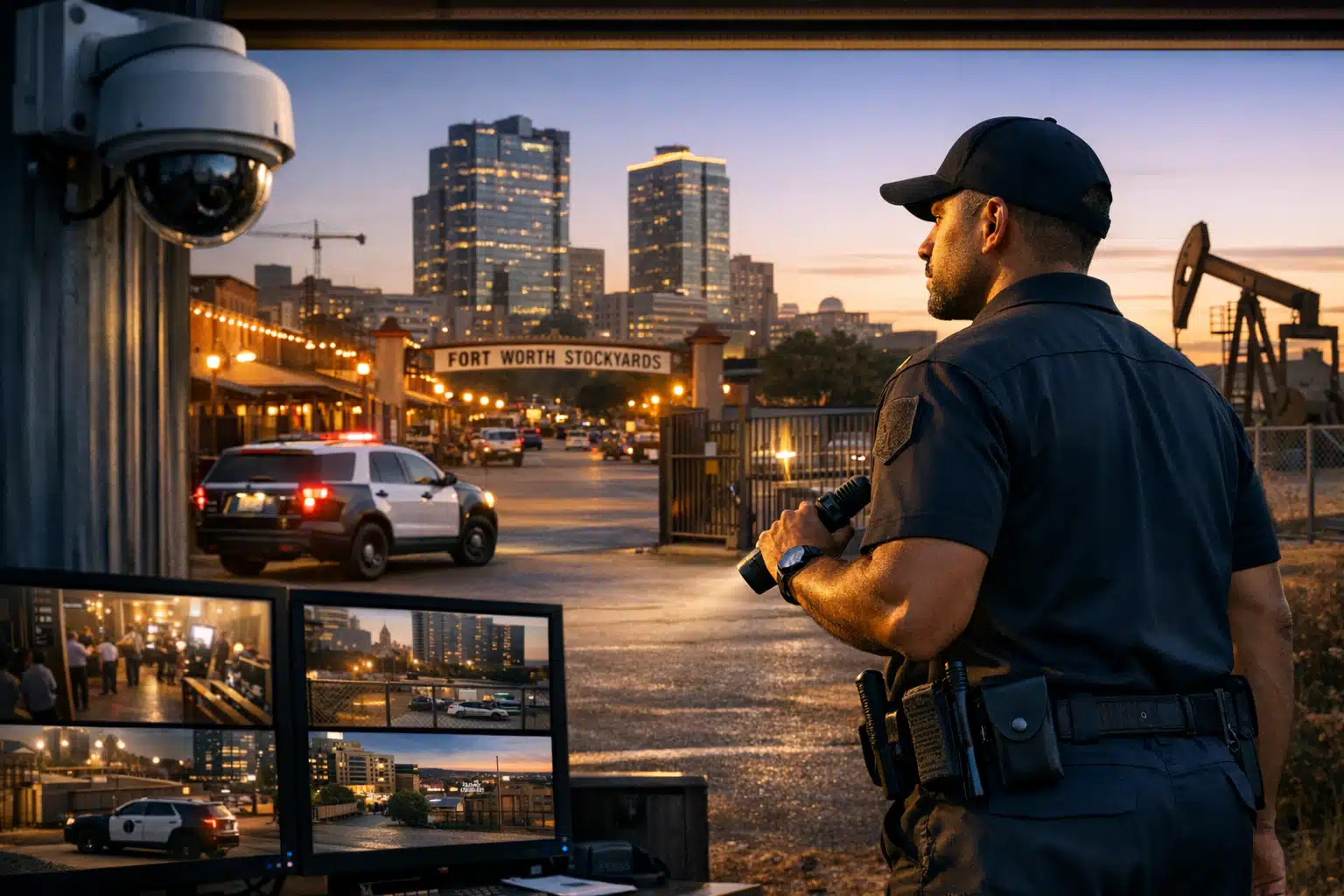
Choosing the right security technology for a Fort Worth high-rise involves assessing the unique needs of the building, including its size, tenant demographics, and visitor traffic. Consider factors such as surveillance systems, access control, and emergency response capabilities to ensure comprehensive safety and security for all occupants.
Why High-Rise Buildings in Fort Worth Need a Different Security Plan
A downtown Fort Worth high-rise can hold 500 tenants, dozens of vendors, and hundreds of daily visitors. That traffic volume changes how security technology must be selected and deployed.
Vertical buildings create blind spots that street-level businesses never face. Stairwells, parking decks, elevator lobbies, and rooftop access points each demand separate coverage.
Fort Worth also brings its own pressures. Property crime reports across Tarrant County stay elevated in dense commercial corridors like West 7th and downtown.
This post walks property managers and building owners through choosing the right security technology for a multi-floor Fort Worth property. The goal is practical: fewer gaps, faster response, lower long-term cost.
Start With a Floor-by-Floor Risk Assessment
Effective high-rise security begins with mapping vulnerabilities by location, not by product. Every floor carries a different risk profile.
What to Document During the Assessment
- Entry points: Main lobby, loading dock, parking garage, and side stairwells.
- Transition zones: Elevator lobbies where tenants and visitors mix.
- Amenity floors: Gyms, rooftop decks, and shared lounges with irregular hours.
- Sensitive areas: Mechanical rooms, electrical closets, and data spaces.
Walk the building at 2 a.m. and again at noon. A West 7th tower behaves differently during a Friday night crowd than on a quiet Sunday morning.
Note where a single unmonitored door lets someone reach ten floors. Those choke points decide where your budget goes first.
Access Control Is the Foundation of High-Rise Security
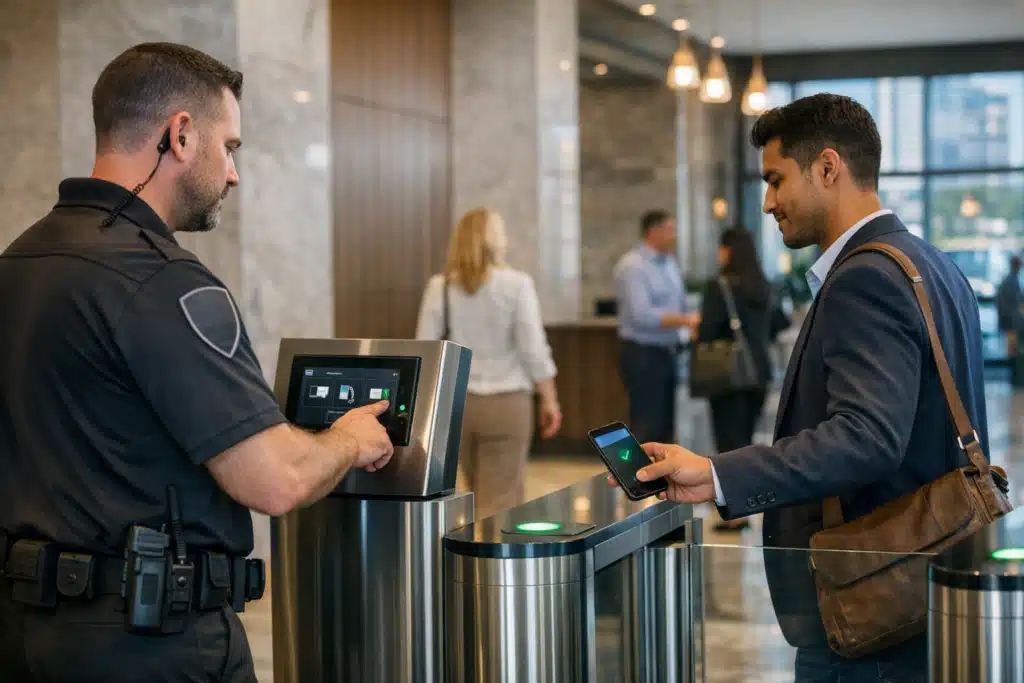
Access control decides who moves where inside your building. For a Fort Worth high-rise, this matters more than cameras.
Cameras record what happened. Access control stops it before it happens.
Access Methods Worth Comparing
- Key fobs and cards: Low cost, easy to issue, but easy to share or lose.
- Mobile credentials: Tenants use their phones. Lost credentials get revoked in seconds.
- Biometric readers: Best for mechanical and data rooms where sharing must be impossible.
- Elevator floor control: Restricts each rider to authorized floors only.
Elevator floor control matters most in mixed-use towers. A resident on floor 12 should never reach a corporate tenant on floor 20.
Set credentials to expire automatically for vendors and short-term contractors. A cleaning crew badge that dies at 6 a.m. removes a common weakness.
Choosing Camera Systems for a Multi-Floor Property
IP cameras form the visual record for any Fort Worth high-rise. Placement and resolution matter more than sheer camera count.
Where Cameras Earn Their Cost
- Lobby and reception: Capture clear faces at eye level, not from the ceiling.
- Parking decks: License plate capture at every entry and exit lane.
- Elevator interiors: One of the highest-value spots in any tower.
- Loading docks: Track deliveries and after-hours access.
- Stairwell doors: Cover every floor’s stairwell entrance.
Resolution and Night Performance
Use at least 4K cameras in lobbies and parking entries. Lower resolution turns a suspect’s face into an unusable blur.
North Texas parking decks stay dark even at midday. Cameras with strong low-light performance prevent grainy footage that helps no one.
Cheap cameras cost more later. A blurry frame during an insurance claim or police report has no value.
Remote Video Monitoring for Off-Hours Coverage
Remote video monitoring watches your building when on-site staff cannot. Trained operators view live feeds and respond to alerts in real time.
For a Fort Worth high-rise, this fills the overnight gap. Most break-ins and vandalism happen between midnight and 5 a.m.
How Remote Monitoring Works in Practice
- Motion or line-crossing triggers an alert at the monitoring center.
- An operator reviews the live feed within seconds.
- If a threat is confirmed, the operator issues a voice warning over speakers.
- Police or on-site staff get dispatched with exact location details.
Voice-down warnings stop most intruders before they act. A live human addressing someone by location and clothing description ends the attempt.
This model costs far less than staffing guards on every floor overnight. Twin City Security Fort Worth pairs remote monitoring with mobile patrols for full coverage.
Planning Security Technology Around North Texas Weather
Fort Worth weather stresses building systems in ways that affect equipment choices. Spring storms and summer heat both create problems.
Heat and Storm Considerations
- Summer heat: Rooftop and parking-deck cameras need housings rated for 100°F-plus conditions.
- Power outages: Battery backup keeps access control and cameras running during grid failures.
- Tornado season: Cloud-based recording protects footage if on-site servers are damaged.
- Hail: Exterior camera housings need impact resistance for North Texas storms.
Cloud storage matters most during severe weather. If a storm damages a mechanical room, local recordings could vanish with the hardware.
Battery backup should carry access control for at least four hours. Tenants must still exit safely when the grid drops.

 Posted on Google
Integrating Systems Instead of Buying Piecemeal
The strongest high-rise security setups connect access control, cameras, and monitoring on one platform. Separate systems create blind spots between them.
What Integration Delivers
- An access denial at a stairwell door pulls up the nearest camera automatically.
- One dashboard shows every entry event and video clip together.
- Operators verify alarms with video before calling police.
Integration cuts false alarms, which carry fines in many Fort Worth jurisdictions. Verified alerts get priority police response.
Ask any vendor whether their platform links all three layers. A quote that ignores integration usually costs more over five years.
Budgeting Security Technology for a Fort Worth High-Rise
Costs scale with building size, camera count, and monitoring hours. A realistic plan spreads spending across phases.
A Phased Rollout That Works
- Phase one: Access control at every exterior and stairwell door.
- Phase two: Cameras at lobbies, elevators, and parking entries.
- Phase three: Remote monitoring for overnight and weekend coverage.
- Phase four: Full integration and analytics.
This order fixes the highest-risk gaps first. A building on West 7th or in the Near Southside can start protected within weeks.
Factor recurring costs, not just install fees. Monitoring, cloud storage, and maintenance shape the true five-year number.
Questions to Ask Before Hiring a Fort Worth Security Provider
- Do you assess my building in person before quoting?
- Can your platform combine access control, cameras, and monitoring?
- Where is your remote monitoring center located and staffed?
- How do you handle Texas storm outages and equipment failures?
- Do you offer both technology and on-site guard support?
A local provider who knows Fort Worth traffic patterns and weather answers these without hesitation. Generic national vendors rarely do.
Conclusion
Choosing the right security technology for a Fort Worth high-rise starts with a floor-by-floor assessment, then layers access control, cameras, and remote monitoring on one integrated platform. Planning for North Texas heat, storms, and power loss keeps that system working when tenants need it most.
Twin City Security Fort Worth builds these setups for downtown towers, West 7th properties, and Near Southside buildings. Call or text 817‑922‑9774, email fortworth@twincitysecurity.com, or visit https://www.twincitysecurityfortworth.com for a Fort Worth security assessment.
Sources
- FBI – Uniform Crime Reporting Program
- Texas Department of Public Safety – Private Security Bureau
- National Weather Service – Fort Worth/Dallas Forecast Office
High-rise buildings in Fort Worth require tailored security plans due to their unique challenges and high traffic. This guide assists property managers in selecting effective security technology to enhance safety and reduce costs.
- A thorough risk assessment is essential to identify vulnerabilities on each floor of a high-rise.
- Access control systems are critical for preventing unauthorized access, often more important than cameras.
- Integrating security technologies into a single platform improves response times and reduces false alarms.