
Protecting Fort Worth’s Historical Sites with Tailored Security Solutions
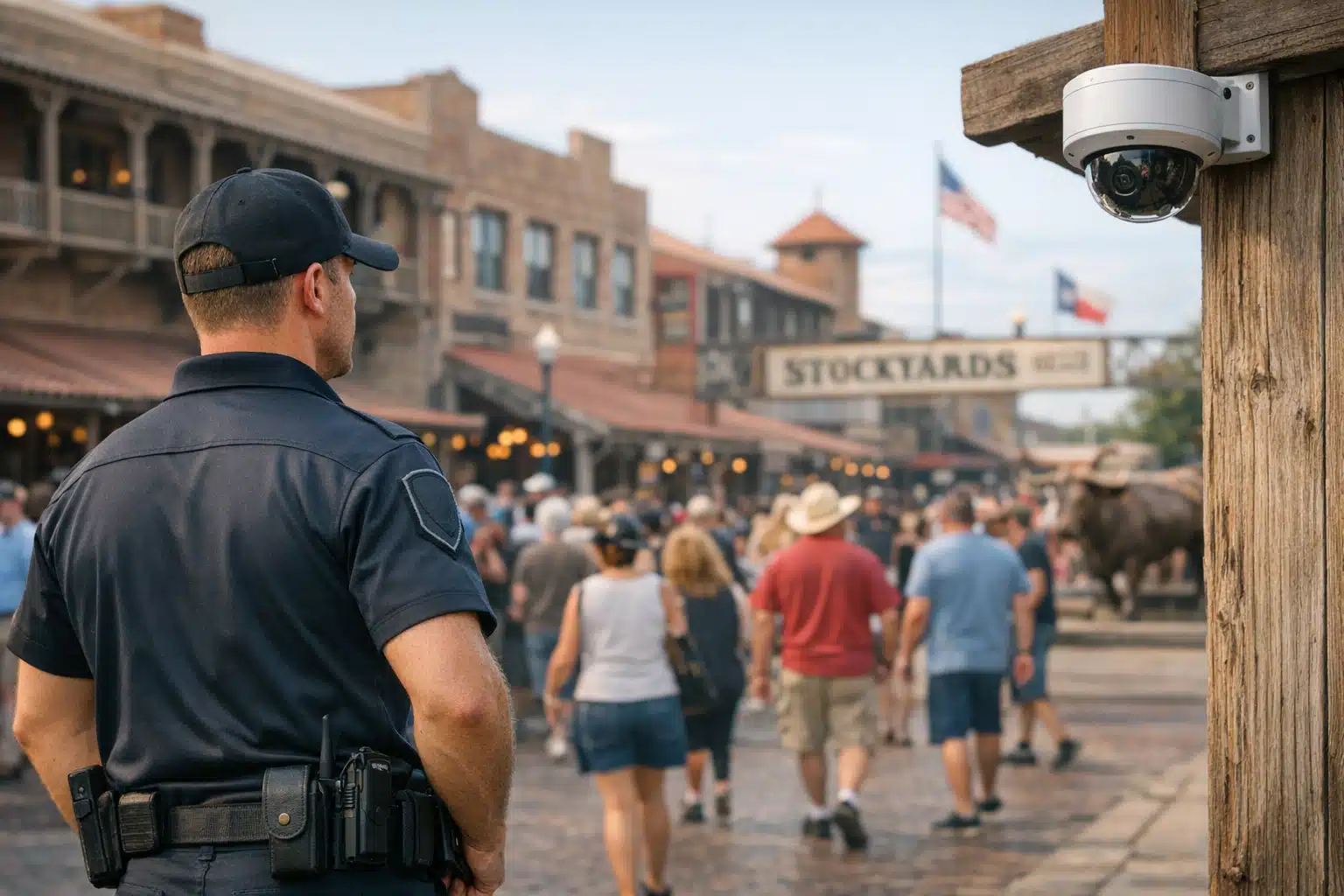
Tailored security solutions for historical sites in Fort Worth involve specialized strategies designed to address unique challenges faced by landmarks like the Stockyards and West 7th heritage buildings. These solutions aim to protect visitors and irreplaceable artifacts while preserving the authentic atmosphere essential to these cultural venues.
Fort Worth’s historic Stockyards, West 7th heritage buildings, and Near Southside cultural landmarks face unique security challenges that standard commercial protection cannot address. Historical site security demands specialized strategies that protect both visitors and irreplaceable artifacts while maintaining the authentic atmosphere these venues require.
Vandalism incidents at Fort Worth historical properties increased 23% between 2022 and 2023, according to Fort Worth Police Department reports. Heritage sites require security approaches that balance public access with asset protection.
Understanding Historical Site Security Risks in Fort Worth
Fort Worth’s historical venues face distinct security threats. The Stockyards National Historic District alone hosts over 2 million visitors annually, creating crowd management challenges that differ from typical retail or office environments.
Primary security concerns include:
- Artifact theft from museum displays and gift shops
- Vandalism targeting original architectural features
- Unauthorized access to restricted preservation areas
- Crowd control during special events and festivals
- Weather-related damage from North Texas storms
Heritage buildings often lack modern security infrastructure. Many structures built in the 1800s and early 1900s have limited electrical capacity for surveillance systems. Security installations must respect historical integrity while providing modern protection.
Stockyards-Specific Security Challenges
The Fort Worth Stockyards present unique security scenarios. Open-air venues, livestock demonstrations, and alcohol service create complex risk profiles. Security personnel must understand both crowd dynamics and historical protocols.
Evening events require different security approaches than daytime tourism. Rodeo nights and concerts can draw crowds exceeding 15,000 people in spaces originally designed for cattle operations.
Remote Surveillance Systems for Fort Worth Preservation Sites
Modern surveillance technology can protect historical sites without compromising their authentic appearance. Discrete camera placement and wireless systems minimize visual impact on heritage structures.
Effective surveillance strategies include:
- Wireless cameras powered by long-life batteries to avoid electrical modifications
- Motion-activated recording systems that conserve storage and power
- Infrared cameras for after-hours monitoring without visible lighting
- Remote monitoring from off-site security centers
- Mobile surveillance units for outdoor events and festivals
Camera placement requires coordination with preservation specialists. Many Fort Worth historical sites have deed restrictions or National Register requirements that limit modifications to original structures.
Weather-Resistant Monitoring Solutions
North Texas weather patterns demand robust surveillance equipment. Hailstorms, tornado warnings, and summer heat exceeding 105°F can damage standard security cameras.
Outdoor historical sites need weatherproof housing and backup power systems. Spring storm seasons often cause power outages lasting several hours, making battery backup systems necessary for continuous protection.
On-Site Security Guards for Historical Site Security
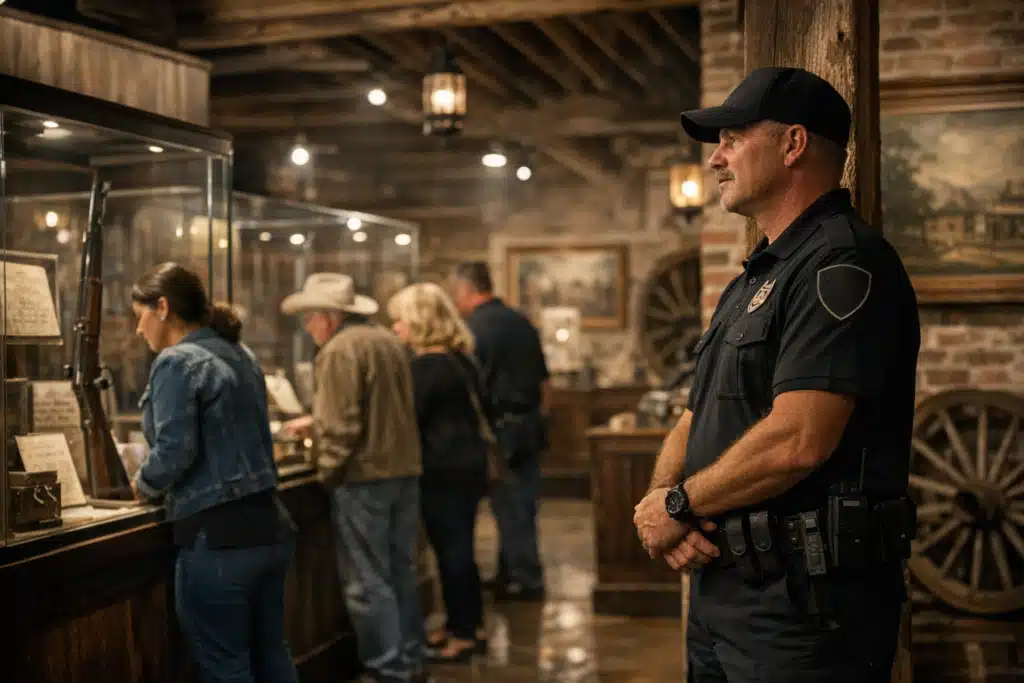
Trained security personnel provide services that technology cannot replicate. Guards serve as visitor ambassadors while maintaining protection protocols specific to historical environments.
Guard responsibilities at heritage sites include:
- Monitoring visitor behavior around fragile displays and structures
- Providing directions and historical information to tourists
- Enforcing photography restrictions in sensitive areas
- Coordinating with local law enforcement during incidents
- Managing crowd flow during peak visitation periods
Security guards at Fort Worth historical sites require specialized training. They must understand preservation protocols, emergency evacuation procedures, and the historical significance of protected areas.
Event Security for Historical Venues
Special events at heritage sites create elevated security needs. Wedding receptions at the Stockyards, corporate events at historic mansions, and cultural festivals require temporary security enhancements.
Event security planning starts 30-60 days before scheduled activities. Coordination with venue management, catering staff, and local authorities prevents security gaps during setup and breakdown periods.
Protecting Artifacts and Collections
Museum collections and historical artifacts require specialized protection protocols. Temperature monitoring, humidity control, and restricted access systems protect irreplaceable items from theft and environmental damage.
Display case security involves both physical locks and electronic monitoring. Motion sensors detect unauthorized movement near valuable exhibits without restricting visitor viewing angles.
Artifact protection measures include:
- Individual item tracking systems for portable artifacts
- Environmental monitoring for temperature and humidity changes
- Discrete alarm systems integrated with display cases
- Backup documentation and photography for insurance purposes
- Restricted key access with electronic logging systems
Fort Worth Preservation Standards
The City of Fort Worth Historic Preservation Office maintains specific guidelines for security installations at designated landmarks. Fort Worth preservation requirements often limit mounting options for cameras and sensors.
Security system installations must receive approval before implementation. The permitting process typically takes 2-4 weeks for minor modifications and up to 3 months for major system installations.

 Posted on Google
Emergency Response Planning for Heritage Sites
Historical buildings often have limited exit routes and narrow corridors that complicate emergency evacuations. Security personnel must understand building layouts and have clear communication protocols with Fort Worth Fire Department and police.
Tornado season requires specific preparations for outdoor historical sites. The Stockyards and other open-air venues need rapid-deployment shelter plans when severe weather threatens large crowds.
Emergency response protocols include:
- Evacuation route mapping for each building or venue area
- Communication systems that function during power outages
- Coordination procedures with Fort Worth emergency services
- Crowd management techniques for panic situations
- Asset protection priorities during emergency evacuations
Cost Considerations for Historical Site Security
Security budgets for heritage sites must balance protection needs with preservation costs. Installing modern security systems in century-old buildings often requires specialized contractors familiar with historical construction methods.
Monthly security costs vary based on site size, visitation levels, and protection requirements. Small museums might spend $2,500-$4,000 monthly on combined guard and surveillance coverage, while large venues like the Stockyards require budgets exceeding $15,000 monthly.
Insurance requirements often mandate specific security measures. Many heritage site insurance policies require 24-hour monitoring and professional guard services to maintain coverage for high-value artifacts and structures.
Funding Sources for Heritage Security
Grant opportunities exist for historical site security improvements. The Texas Historical Commission offers preservation grants that can cover security system installations when tied to overall preservation projects.
Federal historic preservation tax credits may apply to security improvements that meet National Park Service standards for historical integrity.
Choosing Security Providers for Fort Worth Historical Sites
Security companies serving heritage sites need experience with preservation requirements and historical venue operations. Not all security providers understand the balance between protection and public access that historical sites require.
Effective historical site security providers should demonstrate knowledge of Fort Worth preservation standards, insurance requirements for heritage properties, and crowd management techniques for tourism environments.
Evaluation criteria for security providers include:
- Previous experience with museums, historic districts, or cultural venues
- Understanding of Fort Worth Historic Preservation Office requirements
- Guard training programs specific to customer service and historical knowledge
- Technology capabilities that respect historical building limitations
- Emergency response coordination with local Fort Worth authorities
Fort Worth’s historical sites require security approaches that protect both heritage assets and visitor experiences. The right security partner understands preservation priorities while maintaining professional protection standards. Twin City Security Fort Worth provides specialized historical site security designed for Fort Worth’s heritage venues and preservation requirements.
Contact Twin City Security Fort Worth at 817-922-9774 to discuss security assessments for your historical property or heritage venue.
Sources
- National Park Service – National Register of Historic Places
- Texas Historical Commission – Historic Preservation Programs
- City of Fort Worth – Historic Preservation Office
- FBI – Art Theft Program
Fort Worth's historical sites face unique security challenges that require specialized strategies to protect both visitors and irreplaceable artifacts. With a significant increase in vandalism incidents, tailored security solutions are essential to maintain the integrity and atmosphere of these cultural landmarks.
- Fort Worth's historical venues attract millions of visitors, creating distinct crowd management challenges. Security measures must balance public access with the protection of valuable artifacts.
- Many heritage buildings lack modern security infrastructure, necessitating discreet and specialized installations that respect historical integrity.
- Event security planning is crucial for special occasions at heritage sites, requiring coordination with local authorities to prevent security gaps during events.