
Securing Fort Worth’s Office Buildings Against Cyber Threats
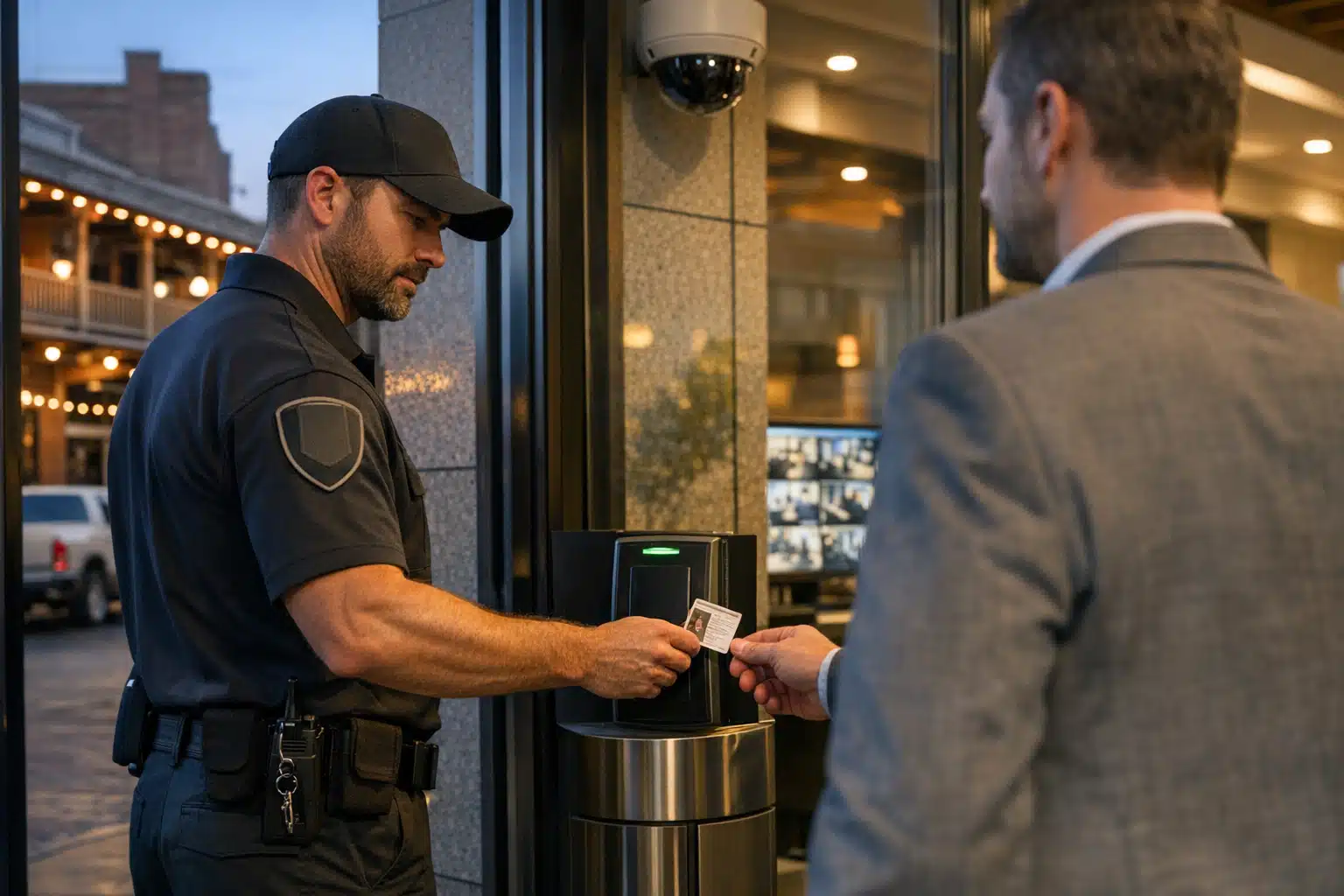
Cyber threats to Fort Worth's office buildings include unauthorized access through open network ports, where intruders can easily connect and steal sensitive information like payroll data. This shift from physical theft to digital breaches highlights the need for enhanced security measures to protect against such vulnerabilities.
Why Office Buildings in Fort Worth Face Two Kinds of Break-Ins
A thief no longer needs a crowbar to rob a Fort Worth office. Many now walk in a side door, plug into an open network port, and leave with payroll data.
This is why cyber security and physical security can no longer sit in separate budgets. For Fort Worth office buildings along West 7th and Downtown, one weakness feeds the other.
This post explains how a property manager can close both gaps at once. You will learn where physical access failures turn into data breaches, and what to fix first.
How Physical Access Failures Become Cyber Security Failures
Most data breaches start with a door, not a keyboard. An unlocked server closet or a tailgated badge reader gives an attacker direct access to hardware.
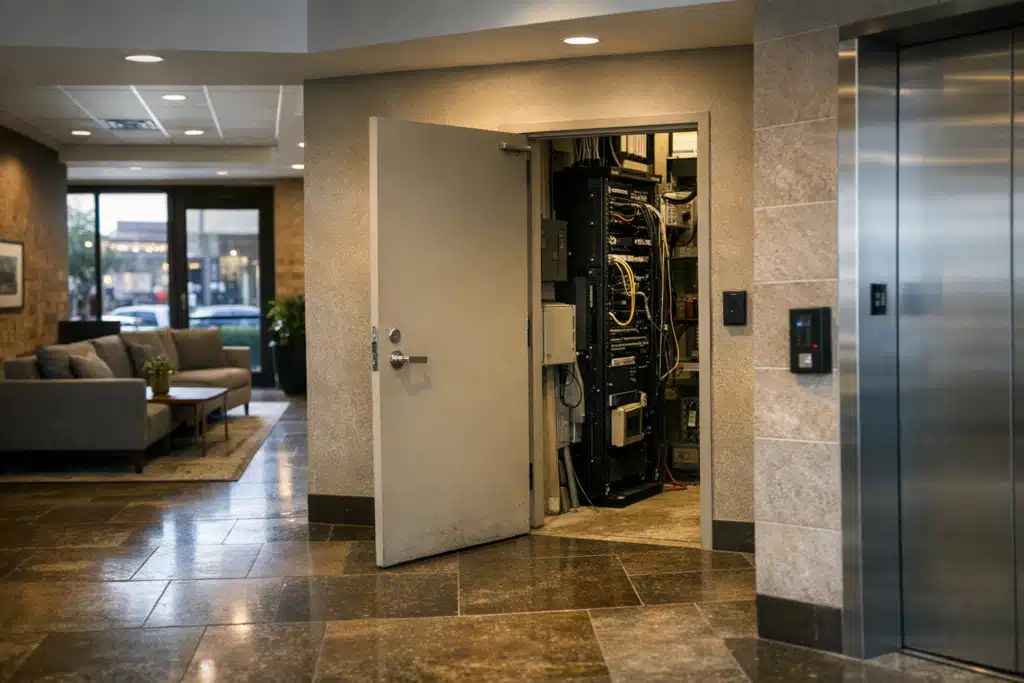
In a multi-tenant office near West 7th, shared lobbies create shared risk. A visitor who slips past the front desk can reach wiring closets on several floors.
Common Weak Points in Fort Worth Office Buildings
- Propped service doors during summer HVAC repairs, common in Texas July heat
- Unmonitored loading docks where network equipment gets delivered
- Shared Wi-Fi closets in buildings with multiple small tenants
- Badge readers that log entries but nobody reviews the logs
- Visitor sign-in sheets with no photo or video confirmation
Each gap above lets a bad actor reach a device. Once they touch hardware, firewalls and passwords matter far less.
Combining Guards and Cyber Security for Real Office Protection
Strong office protection links a trained guard to your digital defenses. The guard watches the front door; the camera system watches the server room; the logs tie both together.
At Twin City Security Fort Worth, we treat an on-site officer as part of your data defense plan. A guard who verifies every delivery stops a fake “IT contractor” before they reach a switch.
What a Trained Officer Catches That Software Misses
Software cannot stop someone from carrying a laptop out the lobby. A guard can.
- A person photographing badge readers or network ports
- An unbadged visitor heading for a wiring closet instead of a tenant suite
- After-hours entry that does not match the access schedule
- A dropped USB drive left in a parking garage as bait
That last one matters. Attackers scatter infected USB drives near Fort Worth office garages, hoping an employee plugs one in.
Steps to Protect Your Fort Worth Office Building
To secure a Fort Worth office against both intruders and data theft, follow these steps in order.
- Map every network closet and server room. Note which doors lock and which stay propped.
- Add access control to each hardware room. Badge logs should name who entered and when.
- Place cameras on server rooms and loading docks. Record, store, and review footage.
- Station a guard at the main lobby during business hours. Require photo verification for visitors.
- Enable remote video monitoring after hours. A live operator can dispatch police on intrusion.
- Review access logs weekly. Match badge entries against camera footage.
- Train staff on USB and tailgating risks. Most breaches start with one careless moment.
Work the list from top to bottom. Hardware rooms carry the highest risk, so lock them first.
Remote Video Monitoring as a Cyber Security Layer
Remote video monitoring guards your building when no guard stands on-site. A live operator watches feeds from a central station and reacts in seconds.
For a Near Southside tech startup, this means after-hours alerts the moment someone enters a server room. The operator can speak over a loudspeaker and call Fort Worth police.
Why Remote Monitoring Fits North Texas Weather
North Texas storms knock out power and trigger false alarms. During spring tornado season, panels fail and doors unlock on battery backup.
A remote operator confirms whether an alert is a real intrusion or a storm glitch. This stops wasted police calls and keeps a human watching when systems wobble.

 Posted on Google
Special Risks for Multi-Tenant and Stockyards-Area Offices
Multi-tenant offices share more than a lobby; they share network infrastructure. One tenant’s weak password can expose a neighbor’s files on shared Wi-Fi.
Near the Stockyards, event crowds spill into nearby office parking. On rodeo and festival nights, foot traffic rises and tailgating through secure doors becomes easier.
Practical Moves for Shared Buildings
- Separate tenant networks so one breach does not spread
- Lock shared wiring closets with access limited to building management
- Add guard patrols on high-traffic event nights near the Stockyards
- Post clear visitor routes that keep guests away from hardware areas
These steps cost little and close the gaps attackers count on. A locked closet and a watching camera stop most opportunists.
Texas Rules That Shape Office Security Decisions
Texas law regulates who may guard your property. Private security personnel must be licensed under the Texas Department of Public Safety Private Security Program.
Data breach rules apply too. Under Texas law, a business must notify affected residents without unreasonable delay after a breach of sensitive data.
Pairing licensed guards with reviewed camera footage helps you meet both duties. Clean records support any investigation that follows an incident.
Conclusion
Office buildings in Fort Worth face intruders at the door and attackers on the network, and the two threats feed each other. Locking hardware rooms, stationing trained guards, and adding remote video monitoring closes both gaps at once.
Twin City Security Fort Worth builds security plans that join on-site officers with live monitoring for stronger office protection. Call or text 817‑922‑9774, email fortworth@twincitysecurity.com, or visit https://www.twincitysecurityfortworth.com for a Fort Worth security assessment.
Sources
- Texas Department of Public Safety – Private Security Program
- Texas Business and Commerce Code – Chapter 521 Breach Notification
- Cybersecurity and Infrastructure Security Agency – Physical Security
- Federal Bureau of Investigation – On the Internet Safety
Fort Worth office buildings are increasingly vulnerable to both physical and cyber threats, necessitating an integrated approach to security. By addressing weaknesses in physical access and enhancing digital defenses, property managers can better protect their assets.
- Many data breaches start with physical access failures, such as unlocked doors or unmonitored areas. This allows attackers to reach sensitive hardware easily.
- Combining trained guards with cyber security measures creates a more robust defense against intrusions and data theft.
- Implementing steps like locking hardware rooms, using remote monitoring, and reviewing access logs can significantly improve security in office buildings.