
How Weather Patterns Affect Security Patrols in Fort Worth
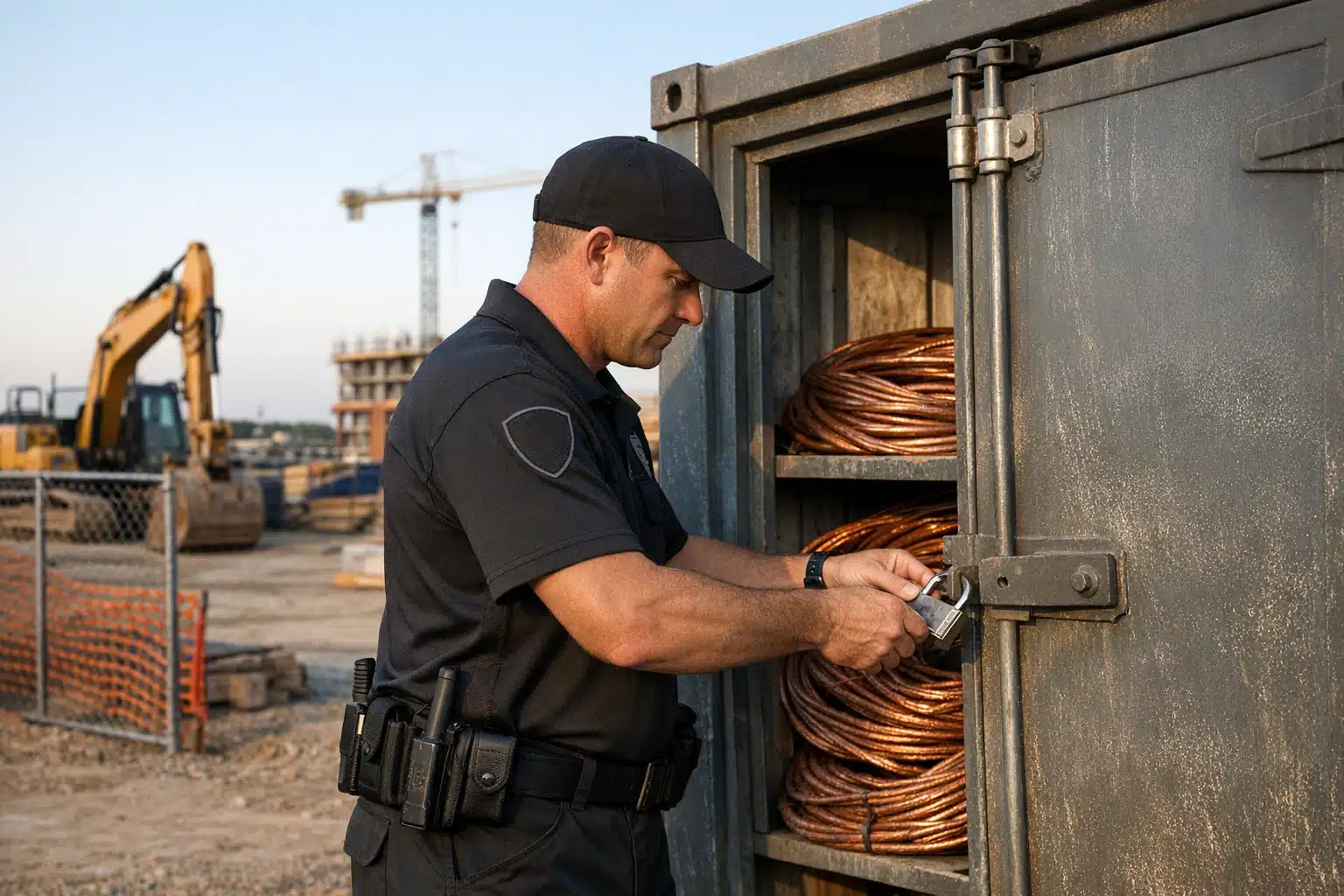
Weather significantly impacts security patrols in Fort Worth by influencing patrol timing, equipment placement, and camera reliability. With extreme temperatures and the potential for severe storms, security teams must adapt their strategies to ensure effective monitoring and response across various properties in the area.
Fort Worth sees roughly 40 days per year above 100°F and sits inside Tornado Alley, where spring storms roll in fast. Both extremes change how security teams work. The weather impact on security shapes patrol timing, equipment placement, and camera reliability across every Fort Worth property type.
This post breaks down how North Texas climate conditions affect on-site guards and remote surveillance. You will learn practical patrol adjustments for heat, storms, ice, and wind at construction sites, Stockyards venues, and oil & gas facilities.
Why Weather Impact on Security Matters in Fort Worth
Fort Worth weather swings hard between seasons. A 105°F July afternoon can give way to a hailstorm by evening. Security plans built for mild climates fail here.
Criminals read weather too. Property crime rises during storms when visibility drops and alarms get blamed on lightning. Theft at job sites climbs when crews leave early ahead of bad weather.
Three weather realities drive Fort Worth security planning:
- Extreme summer heat that limits how long guards can patrol outdoors safely
- Severe spring storms with hail, high wind, and tornado risk from March to June
- Winter ice events like the February 2021 freeze that shut down power statewide
Each condition demands different patrol adjustments. Ignoring them leaves gaps that thieves and trespassers exploit.
Protecting Fort Worth Construction Sites During Storm Season
Construction sites face the sharpest weather impact on security in North Texas. Open perimeters, stored copper, and idle equipment make easy targets. Storms multiply the risk.
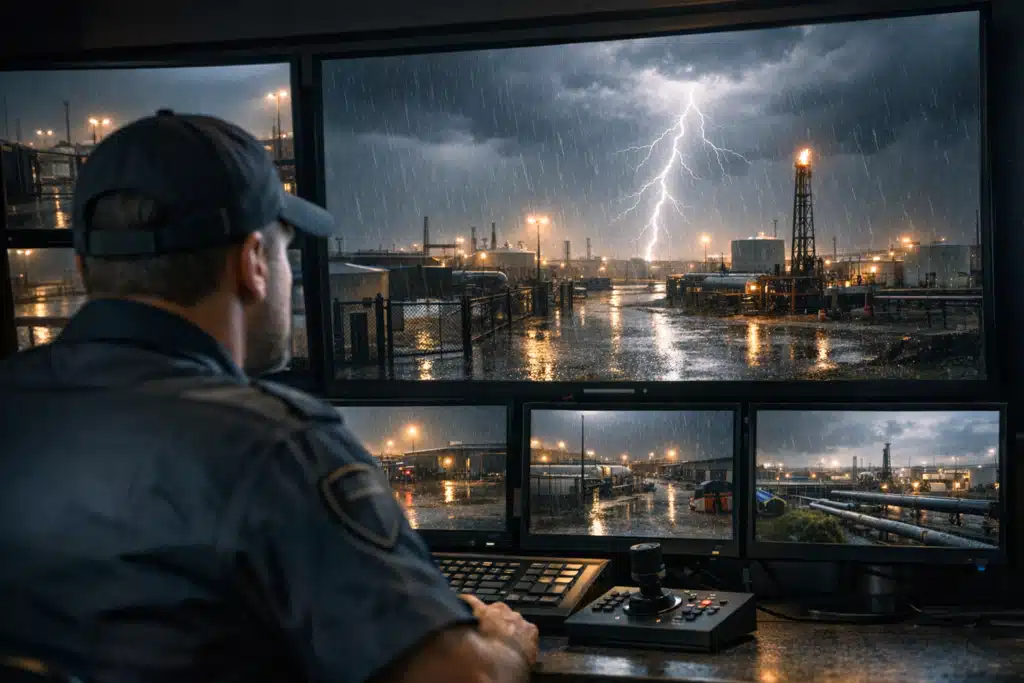
When crews evacuate ahead of a severe weather warning, sites sit empty for hours. Thieves track forecasts and strike during that window.
Steps to Secure a Site Before a Storm
- Lock down materials early. Move copper wire, tools, and fuel into secured containers before the first alert.
- Verify camera power backup. Battery and cellular cameras keep recording when storms knock out grid power.
- Increase remote monitoring frequency. Shift video review to continuous during the evacuation window.
- Stage guard coverage for the all-clear. Position staff to return the moment conditions allow.
Sites near the Trinity River and West 7th corridor flood fast during heavy rain. Standing water damages ground-level equipment and blocks vehicle patrol routes. Mounting cameras higher and mapping alternate access roads keeps coverage intact.
Managing Summer Heat and Guard Patrol Adjustments
Fort Worth summers test human endurance. Guards patrolling asphalt lots or metal-heavy oil & gas yards face real heat illness danger above 100°F.
Smart patrol adjustments protect both staff and the property. A guard who collapses from heat leaves a site unwatched.
How to Adapt Patrols for Triple-Digit Heat
- Rotate outdoor rounds with indoor or vehicle-based monitoring every 30 to 45 minutes
- Shift heavy foot patrols to early morning and evening hours
- Lean on remote video surveillance during peak afternoon heat to cover exposed areas
- Stock water and shade points at fixed posts across large facilities
Remote monitoring earns its value in July and August. Cameras never overheat the way a patrolling guard does. Pairing live video review with reduced outdoor rounds keeps oil & gas tank batteries and apartment parking lots covered without risking staff.
Stockyards Event Security in Variable Weather
Stockyards event security requires weather planning most venues overlook. Outdoor crowds at the Stockyards shift fast when storms approach or heat spikes.
A rodeo crowd heading for cover during lightning creates crush points and exits chaos. Guards need to manage flow, not just watch for trouble.
Weather Scenarios Stockyards Operators Should Plan For
- Sudden storms: Pre-plan covered gathering points and clear evacuation lanes
- Extreme heat at daytime events: Add cooling stations and watch for medical emergencies
- Wind events: Secure signage, tents, and vendor setups before they become hazards
- Icy winter nights: Salt walkways and slow guest flow to prevent falls
Crowd behavior changes with the sky. A guard team briefed on the day’s forecast reacts faster than one caught off guard. Pre-event weather briefings belong in every Stockyards security plan.
Oil & Gas Perimeter Protection Through North Texas Weather
Oil & gas facilities around Fort Worth and the greater Barnett Shale sit in open country. Wind, dust, and lightning hit these sites hard.
Perimeter breaches happen more during storms when fence damage goes unnoticed. Flying debris can knock down sections, and a down fence invites trespassers and copper thieves.
Weather-Resistant Monitoring Practices
- Inspect perimeters after every major wind event for breached fencing and downed gates
- Use thermal cameras that read heat signatures through dust and low light
- Protect camera housings rated for Texas heat and freezing extremes
- Keep cellular connectivity as backup when storms cut landline and power service
The 2021 winter freeze proved how fast grid failure exposes remote sites. Battery-backed, cellular-connected cameras kept watching when wired systems went dark. Any Fort Worth facility in open terrain needs that redundancy.

 Posted on Google
Winter Ice and Freeze Response for Fort Worth Properties
North Texas winters are mild until they are not. Ice storms arrive a few times each season and catch unprepared sites off guard.
Frozen walkways create liability at apartment communities and retail centers. Power outages disable unprotected camera systems. Both raise security risk at the worst time.
Freeze-ready security checklist:
- Confirm all cameras run on battery or generator backup
- Pre-treat walkways and lot entrances before forecasted ice
- Reduce guard patrol speed on foot to prevent injury
- Monitor vacant units and closed businesses more closely during outages
Near Southside and Arlington Heights properties saw real losses during past freezes. Burst pipes and empty buildings drew break-ins. Remote monitoring filled the gap when physical access turned dangerous.
Building a Weather-Adaptive Security Plan
A fixed security schedule fails in Fort Worth’s climate. The best plans flex with the forecast. Guards and cameras shift roles as conditions change.
Key elements of a weather-adaptive plan:
- Daily forecast review built into shift briefings
- Clear thresholds that trigger patrol adjustments
- Remote surveillance that covers gaps when outdoor patrols pause
- Backup power and connectivity on every camera
- Defined storm and freeze response steps for each site type
This approach keeps coverage steady whether it is 105°F or 25°F. Weather should never create a blind spot a thief can use.
Partner With Twin City Security Fort Worth
Fort Worth weather shapes every effective security plan, from Stockyards crowds to open oil & gas yards. Adapting patrols to heat, storms, and ice keeps people and property protected year-round.
Twin City Security Fort Worth builds weather-ready plans for local businesses, construction sites, and event venues. Call or text 817‑922‑9774, email fortworth@twincitysecurity.com, or visit https://www.twincitysecurityfortworth.com for a Fort Worth security assessment.
Sources
- National Weather Service – Fort Worth/Dallas Forecast Office
- OSHA – Heat Illness Prevention
- Ready.gov – Winter Weather Preparedness
- NOAA National Centers for Environmental Information – Climate Data
Fort Worth's extreme weather conditions significantly influence security operations, necessitating tailored strategies for effective patrols. The company emphasizes the importance of adapting security measures to address challenges posed by heat, storms, and ice.
- Fort Worth experiences around 40 days annually with temperatures exceeding 100°F and is located in Tornado Alley, impacting security protocols.
- Security teams must adjust patrol timing, equipment placement, and monitoring practices based on weather conditions to prevent vulnerabilities.
- The company provides strategies for managing security during various weather scenarios, ensuring safety and protection for properties and personnel.