
How to Protect Your Fort Worth Apartment Community During Summer Break
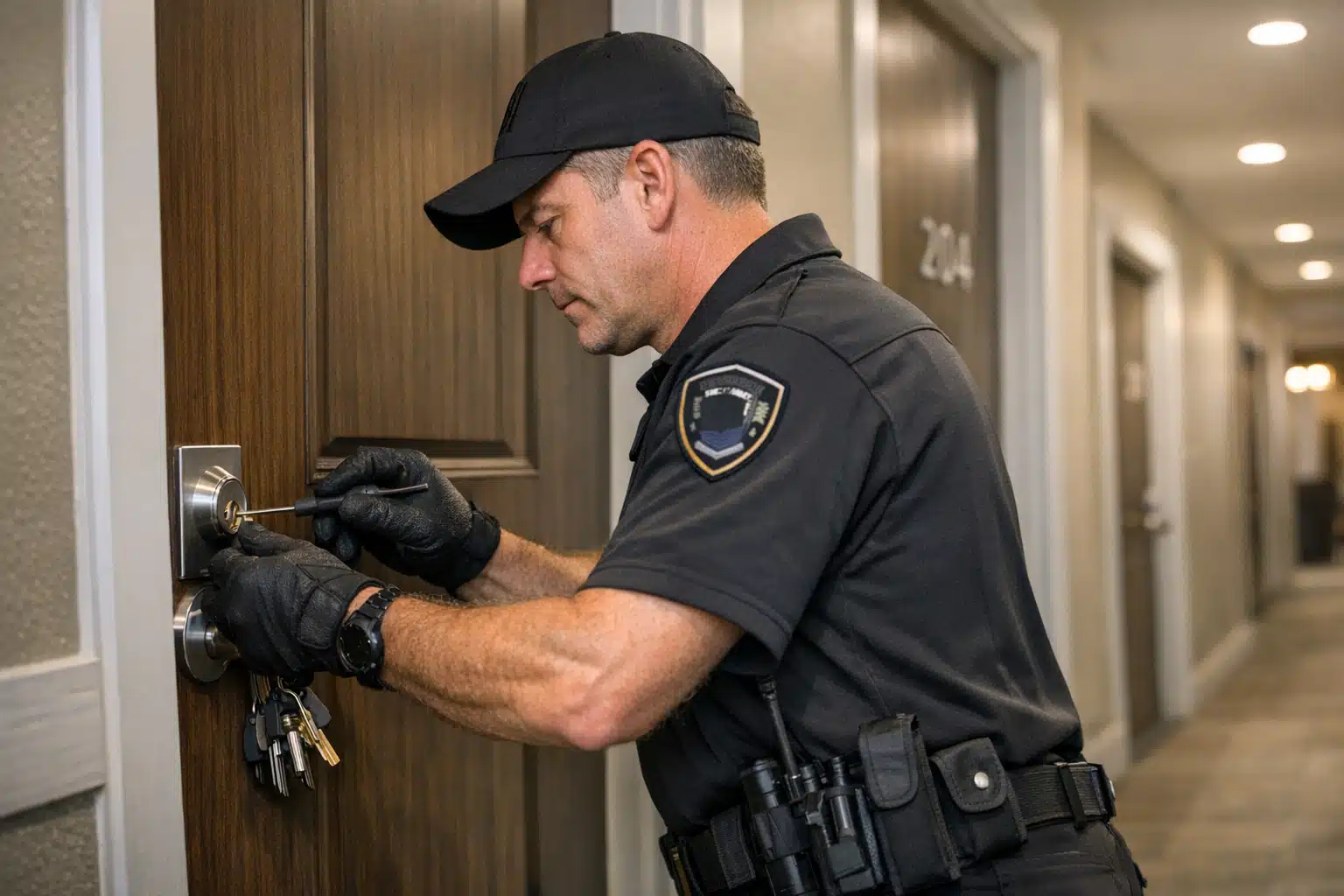
To protect your Fort Worth apartment community during summer break, address security vulnerabilities by monitoring vacant units, securing pool gates, and ensuring clear sightlines. Implementing measures like increased lighting, regular patrols, and tenant awareness programs can significantly reduce the risk of theft and trespassing during this high turnover period.
Apartment security gaps widen every June, when Fort Worth communities see peak tenant turnover and empty units. Vacant apartments, propped-open pool gates, and moving trucks blocking sightlines create easy targets for theft and trespassing. This post breaks down where summer break exposes your Fort Worth property and how to close those gaps before they cost you.
Why Summer Turnover Raises Apartment Security Risks in Fort Worth
Lease turnover in Fort Worth clusters between May and August. College students at TCU and UTA vacate units, families relocate before the school year, and short-term renters cycle out.
Each move-out leaves a unit empty and a keypad code unchanged. Each move-in brings unfamiliar faces onto your property with legitimate reasons to be there.
That mix confuses residents and staff alike. A stranger loading a truck at 9 p.m. looks the same whether they are a new tenant or a burglar clearing a vacant unit.
Property crime in Texas concentrates in warmer months. Longer daylight and open windows give thieves more working hours and more entry points.
The Specific Weak Points During Break
- Vacant units with unchanged locks and no interior activity
- Pool areas that stay open late and draw non-residents
- Parking lots crowded with moving trucks and open trailers
- Mail and package rooms flooded with forwarded deliveries
- Leasing offices holding keys and personal data during rushed applications
How to Improve Apartment Security During Summer Break
To protect your Fort Worth apartment community during turnover, follow these steps in order of urgency.
1. Re-Key or Re-Code Every Vacated Unit Immediately
Change locks the same day a tenant hands back keys. A departed resident, subletter, or their friend may still hold a copy.
For electronic locks, delete old codes and assign new ones per lease. Never reuse a code across tenants.
2. Track Vacant Units on a Single List
Keep a running log of empty apartments by building and floor. Share it with your patrol staff or monitoring provider each week.
Vacant units draw copper theft and squatting. A guard who knows unit 214 should be dark can flag a light inside at 2 a.m.
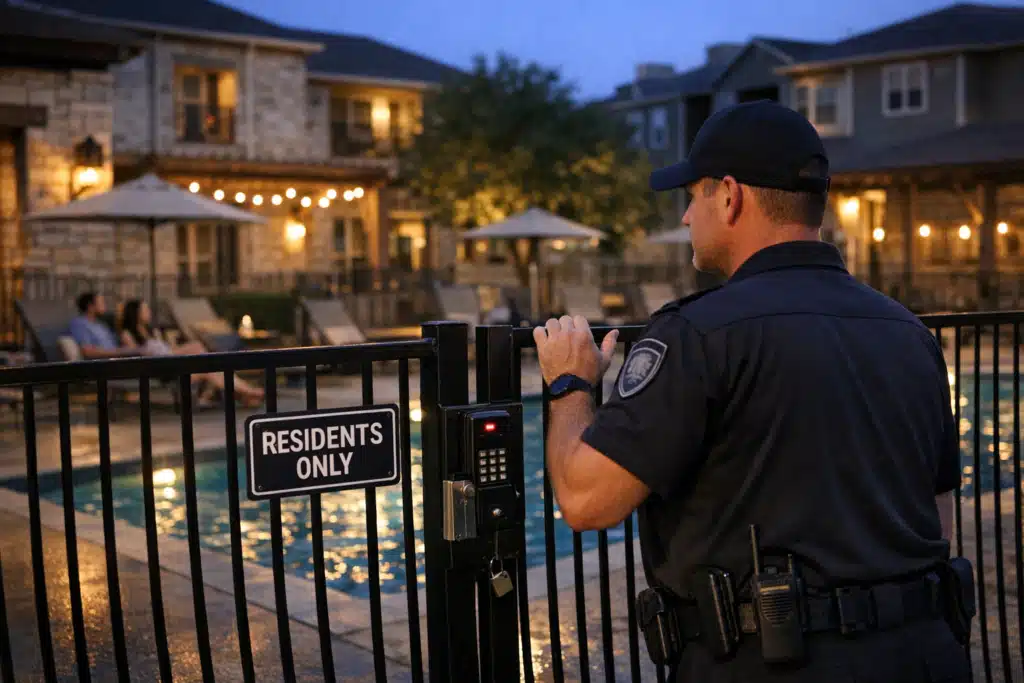
3. Set Firm Pool Hours and Post Them
Pools in Arlington Heights and Near Southside communities pull crowds after dark in July. Non-residents climb fences when gates fail.
- Lock gates with a code that changes each season
- Post closing hours in English and Spanish
- Add camera coverage on the pool gate and deck
Texas drowning risk climbs in summer, and an unattended pool raises your liability. Monitored access protects both safety and your legal position.
4. Control Parking Lot Chaos During Move Weeks
Moving trucks block camera views and hide activity behind trailers. Assign temporary loading zones away from resident parking.
Require moving reservations at the leasing office. Staff then know which trucks belong on-site and which do not.
On-Site Guards vs. Remote Video Surveillance for Fort Worth Apartments
Both methods work. The right choice depends on your property size, budget, and problem hours.
When On-Site Guards Make Sense
A uniformed guard deters trespassers who test unlocked gates and empty units. Guards handle live incidents: a fight at the pool, a stranger in a hallway, a lockout.
Larger communities near West 7th with active nightlife spillover benefit from a physical presence Friday and Saturday nights.
When Remote Video Surveillance Fits Better
Remote monitoring covers more ground for less cost. Trained operators watch live feeds and speak through on-site speakers when they spot trouble.
A voice-down warning stops most trespassers before they act. Someone climbing the pool fence hears a live operator and leaves.
Remote surveillance suits properties with:
- Multiple entry points across scattered buildings
- Predictable problem hours, like late nights and early mornings
- A need for recorded evidence for police reports
- Budget limits that rule out round-the-clock guards
The Hybrid Model Most Fort Worth Properties Choose
Many communities pair weekend guards with nightly remote monitoring. Cameras watch vacant units and pools every night. Guards cover peak social hours.
This split matches coverage to actual risk and keeps costs predictable during a heavy-turnover summer.
North Texas Heat and Storm Threats to Your Camera System
Fort Worth summers punish equipment. Triple-digit heat and sudden storms both threaten your surveillance setup.
Heat Effects on Cameras
Direct sun on a poorly rated camera housing degrades image sensors over time. Verify your cameras carry an operating range above 120°F.
Rooftop and south-facing units take the worst of it. Schedule a pre-summer inspection to catch fading or overheating gear.
Storm and Power Loss Risk
North Texas storms bring wind, hail, and outages. A camera system without backup power goes dark exactly when you need it.
- Add battery backup to recorders and key cameras
- Use cellular backup for internet failures
- Confirm your provider still receives feeds during an outage
Remote monitoring flags a downed camera in real time. You learn about a blind spot in minutes, not after a break-in.

 Posted on Google
Summer Safety Steps for Residents and Staff
Your team and tenants form your first line of defense. Clear rules reduce confusion during high-traffic move weeks.
For Leasing Staff
- Verify photo ID against every application before handing over keys
- Lock the key cabinet and log every key checkout
- Report any vacant unit showing lights or movement
- Escort late-evening tours instead of sending applicants alone
For Residents
Send a short summer safety notice at move-out season. Ask residents to report propped gates, strange vehicles, and unfamiliar people in vacant hallways.
A tenant who knows unit 118 is empty becomes another set of eyes. That neighborly reporting stops more crime than any single camera.
What a Fort Worth Apartment Security Assessment Covers
A walkthrough finds gaps before criminals do. A good assessment reviews your property against summer-specific risks.
- Access points: gates, pedestrian doors, garage entries
- Vacant unit tracking: lock policy and re-key timing
- Camera coverage: blind spots at pools, mailrooms, and lots
- Lighting: dark stairwells and parking corners
- Response plan: who acts when an alert fires at 3 a.m.
The goal is a coverage map matched to your actual turnover schedule and problem hours.
Protect Your Community Before the Next Move-In Wave
Summer turnover exposes vacant units, pools, and parking lots across Fort Worth apartment communities. Re-keying, vacant-unit tracking, and monitored cameras close the gaps that thieves count on. The right mix of guards and remote surveillance keeps costs steady during your busiest season.
Twin City Security Fort Worth builds coverage plans around your property and turnover calendar. Call or text 817‑922‑9774, email fortworth@twincitysecurity.com, or visit https://www.twincitysecurityfortworth.com for a Fort Worth security assessment.
Sources
- City of Fort Worth – Police Department
- FBI – Crime in the United States (Uniform Crime Reporting)
- CDC – Drowning Facts and Prevention
- Texas Department of Licensing and Regulation – Private Security
Fort Worth apartment communities face increased security risks during summer break due to tenant turnover and vacant units. This article outlines strategies to enhance security and protect properties from theft and trespassing.
- Re-key or re-code vacant units immediately to prevent unauthorized access. A log of empty apartments helps patrol staff monitor potential threats.
- Set firm pool hours and secure access to prevent non-residents from entering. Adding camera coverage enhances safety and liability protection.
- Control parking chaos during move weeks by designating temporary loading zones. This helps maintain visibility and security on the property.