
The Role of Remote Surveillance in Protecting Fort Worth’s Construction Sites
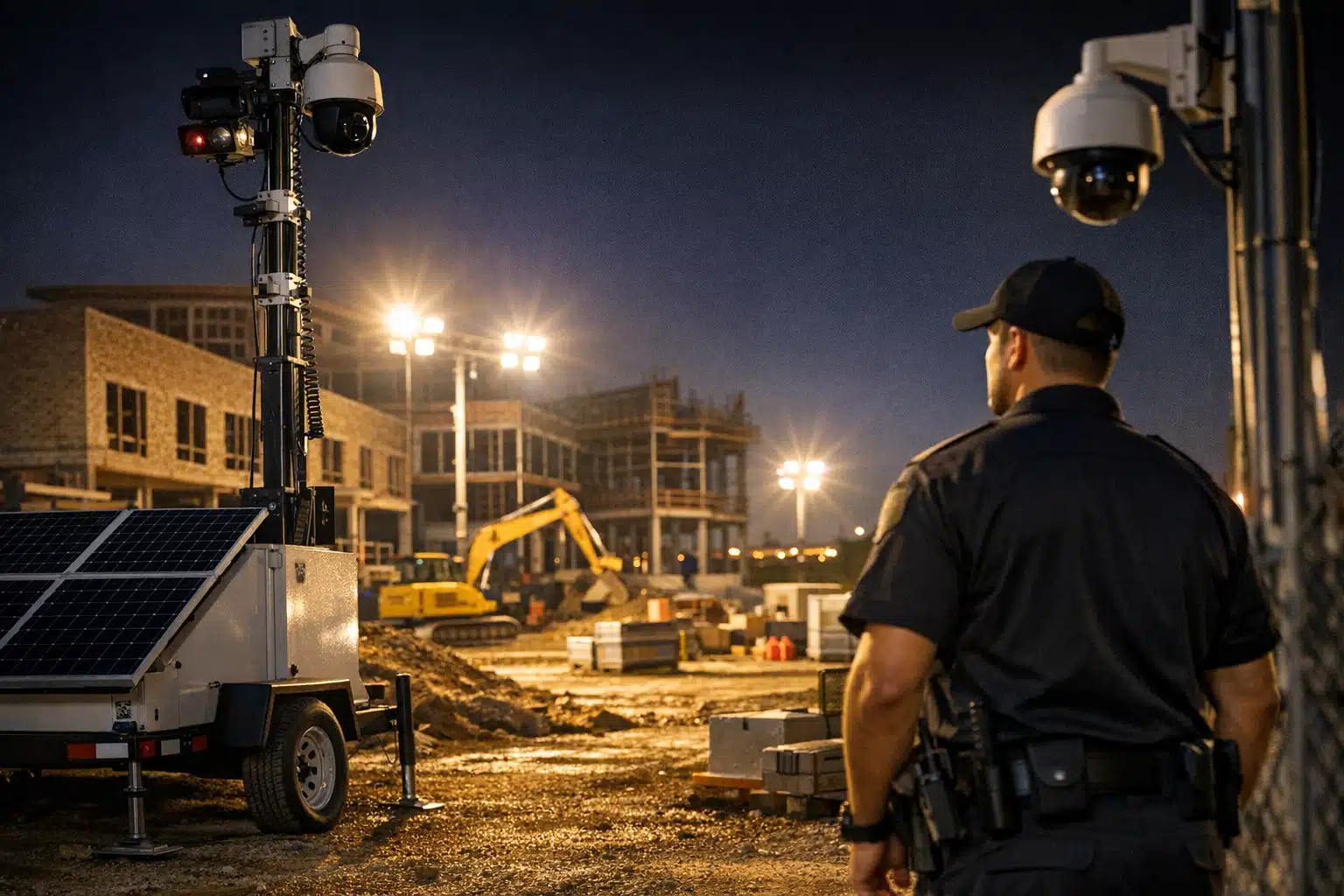
Remote surveillance plays a significant role in safeguarding construction sites in Fort Worth by deterring theft and vandalism. By utilizing cameras and monitoring systems, construction companies can keep a constant watch over their sites, quickly identifying suspicious activities and responding to incidents, ultimately reducing losses associated with theft.
Why Fort Worth Construction Sites Face a Growing Theft Problem
Construction theft costs the U.S. building sector an estimated $1 billion each year, and Fort Worth job sites are not immune. Copper wire, catalytic converters, and unsecured equipment vanish overnight from projects across North Texas.
Remote surveillance gives Fort Worth builders a way to watch active sites around the clock without stationing a guard at every corner. It pairs live video monitoring with human response to stop theft before crews arrive at 6 a.m. to missing tools.
This post explains how remote monitoring works, where it fits alongside traditional guards, and what Fort Worth contractors should expect from a job-site security setup.
How Remote Surveillance Protects Fort Worth Construction Sites
Remote surveillance uses fixed and mobile cameras connected to a live monitoring center. Trained operators watch feeds in real time and respond when motion triggers an alert.
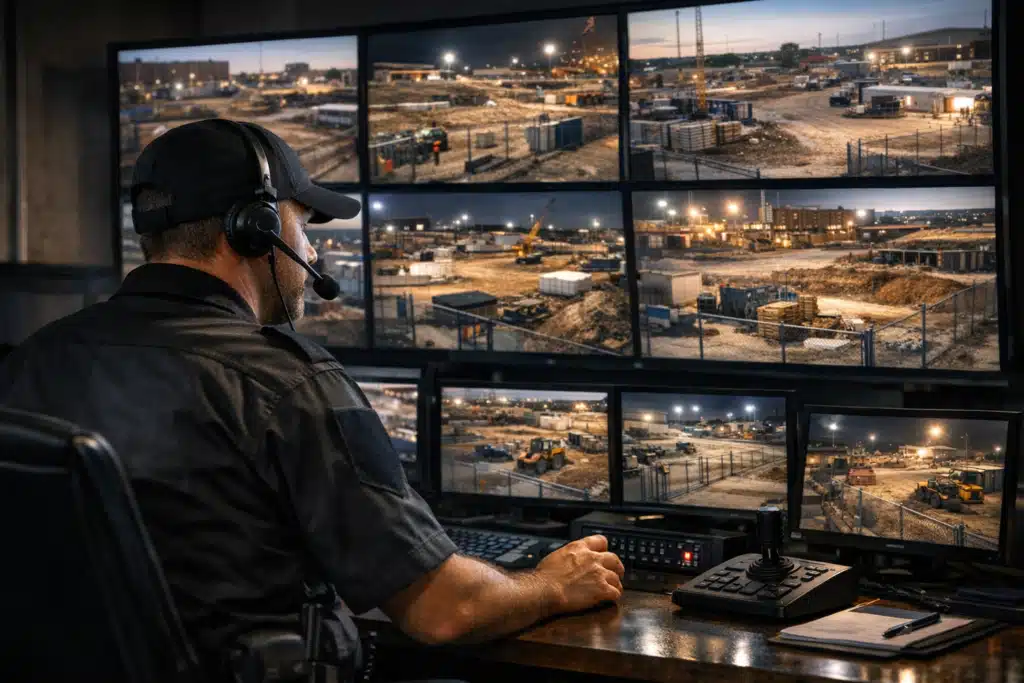
On a Fort Worth job site, the setup usually includes:
- Solar-powered mobile trailers with mast-mounted cameras for sites without grid power
- Thermal and infrared cameras that detect body heat in total darkness
- Two-way speakers so operators can warn intruders by voice
- Motion analytics that separate people from stray dogs or wind-blown debris
When a person crosses a line after hours, the system flags it. An operator confirms the threat, issues a live audio warning, and dispatches police or an on-call guard.
Where Remote Monitoring Beats Static Cameras
Standard DVR cameras only record. Nobody watches until after the crime happens.
Remote monitoring adds a live human at the moment of intrusion. That voice-down warning often ends the attempt within seconds, before wire gets cut or a skid steer rolls off a trailer.
Integrating Technology With On-Site Guards
Cameras cannot physically stop a determined thief. Guards cannot watch a 20-acre pad site at once. The strongest job-site security uses both.
A layered setup for a Fort Worth commercial build might look like this:
- Perimeter cameras monitor fence lines and gates overnight
- A roving guard checks locked containers and equipment on set patrol times
- The monitoring center directs the guard to any camera-triggered event
- Access logs record every vehicle entering the gate during work hours
This model lowers cost. One monitoring operator can cover several sites, so you pay for fewer guard hours without leaving gaps.
A Near Southside Example
Multi-family projects around Near Southside and Magnolia Avenue stack materials on tight lots close to public sidewalks. Foot traffic makes daytime theft easy and nighttime access simple.
Camera coverage on the lumber and appliance staging areas, plus a guard during delivery windows, closes the two windows thieves use most.
Protecting Job Sites During North Texas Weather Extremes
North Texas weather tests construction security equipment hard. Summer heat, spring hail, and tornado-season winds all affect camera systems.
Fort Worth summers push past 100°F for weeks. Camera enclosures and solar batteries must be rated for that heat, or feeds drop out during the hours thieves prefer.
Spring brings a different risk. Storms and tornado watches empty job sites fast, and abandoned equipment becomes a target.
Steps to Keep Coverage During Storm Season
- Confirm battery backup so cameras run after a power hit
- Use cellular uplinks that stay live when local internet fails
- Lower or secure camera masts ahead of severe wind warnings
- Verify remote access so operators watch the site while crews shelter
A monitored site stays protected even when nobody can safely stand on it. That matters most on the days a storm clears everyone out early.

 Posted on Google
What Fort Worth Contractors Should Ask Before Hiring
Not all monitoring setups match every project. A Stockyards-area renovation has different needs than a large oil and gas pad site west of town.
Before signing a contract, ask these questions:
- Is the monitoring center staffed live overnight, or does it only record?
- How fast do operators respond to a confirmed alert?
- Are cameras rated for Texas heat and storm exposure?
- Can guards and cameras coordinate in one plan?
- Does the setup scale as the site expands to new phases?
The answers separate a real security program from a box of cameras nobody watches.
Matching Coverage to Project Phase
Early groundwork needs perimeter watch and equipment tracking. Vertical construction adds material theft risk as copper, HVAC units, and appliances arrive.
A monitoring plan should shift camera placement as the build moves through each phase, not stay frozen at the layout from week one.
The Cost Case for Construction Security in Fort Worth
A single stolen mini-excavator can cost $40,000 to replace and stall a schedule for weeks. Insurance deductibles and lost days add up faster than a monitoring contract.
Remote surveillance spreads one watch team across multiple feeds. That keeps construction security affordable for mid-size Fort Worth builders, not just national firms.
Reduced theft claims can lower insurance costs over time. Documented monitoring also strengthens any claim you do file.
Get a Fort Worth Job-Site Security Assessment
Remote surveillance protects Fort Worth construction sites by putting a live watch on your equipment day and night. Paired with on-site guards, it stops theft that recorded-only cameras miss entirely.
Twin City Security Fort Worth builds monitoring plans around your site’s phase, location, and weather exposure. Call or text 817‑922‑9774, email fortworth@twincitysecurity.com, or visit https://www.twincitysecurityfortworth.com for a job-site assessment and monitoring quote.
Sources
- National Insurance Crime Bureau – Equipment Theft Reports
- National Weather Service – Fort Worth/Dallas Forecast Office
- Occupational Safety and Health Administration – Construction Industry
Fort Worth construction sites are increasingly vulnerable to theft, costing the industry around $1 billion annually. Remote surveillance offers builders a way to monitor sites continuously, combining live video feeds with human response to deter theft before it occurs.
- Construction theft in Fort Worth includes stolen copper wire and equipment, impacting project timelines and budgets.
- Remote surveillance uses advanced technology like thermal cameras and motion analytics to detect intrusions in real time.
- A combination of remote monitoring and on-site guards provides a layered security approach that is more effective and cost-efficient.