
Enhancing Nighttime Security for Fort Worth’s Entertainment Districts
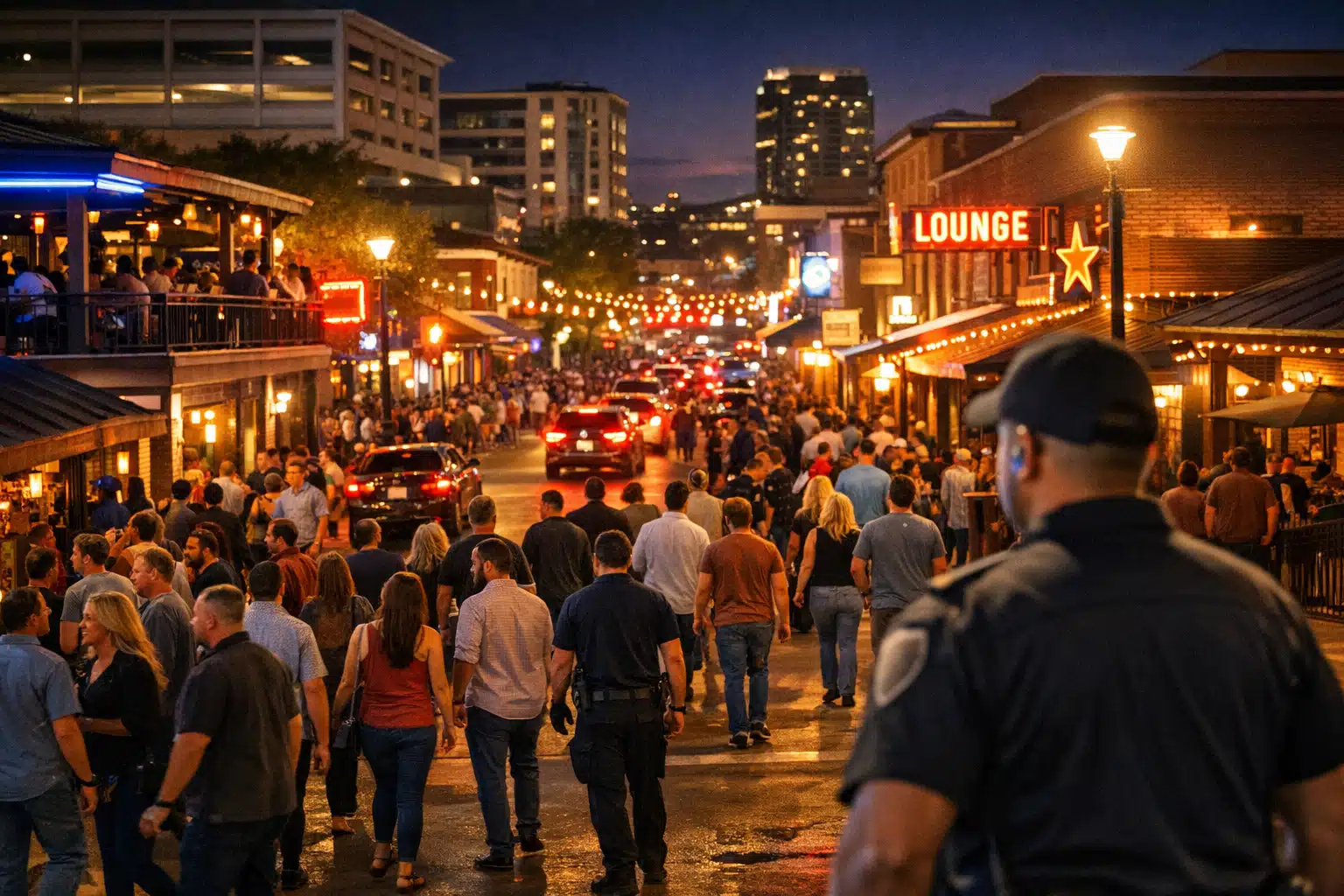
Fort Worth's entertainment districts face significant nighttime security challenges due to increased incidents after 10 PM. Crowded venues, alcohol service, and limited parking contribute to a rise in disturbances, making standard daytime security measures inadequate for addressing these unique issues.
Fort Worth Entertainment Districts Face Rising Security Challenges After Dark
Fort Worth’s entertainment districts see a sharp spike in security incidents after 10 PM, with West 7th Street and the Historic Stockyards reporting the highest concentrations of late-night disturbances. The combination of crowded venues, alcohol service, and limited parking creates unique nighttime security challenges that standard daytime protection cannot address.
Entertainment venues in these districts need specialized security strategies that account for Texas-sized crowds, outdoor events, and the flow of visitors between multiple establishments. A one-size-fits-all approach fails when dealing with the distinct security needs of honky-tonk bars, upscale restaurants, and outdoor concert venues operating in the same area.
Modern Fort Worth entertainment security requires layered protection that combines visible deterrence with advanced monitoring technology. This approach addresses both immediate crowd management needs and broader area surveillance that traditional security models miss.
West 7th Street Security Requires Coordinated Coverage
West 7th Street’s dense concentration of restaurants, bars, and entertainment venues creates security blind spots between properties. Individual venue security often stops at property lines, leaving sidewalks, parking areas, and transition zones vulnerable.
Effective coverage for this district requires security teams that understand the flow patterns of weekend crowds. Friday and Saturday nights see pedestrian traffic peak between 9 PM and 2 AM, with the highest incident rates occurring during venue closing times when multiple establishments release patrons simultaneously.
Key West 7th Security Zones
Three critical areas demand focused attention:
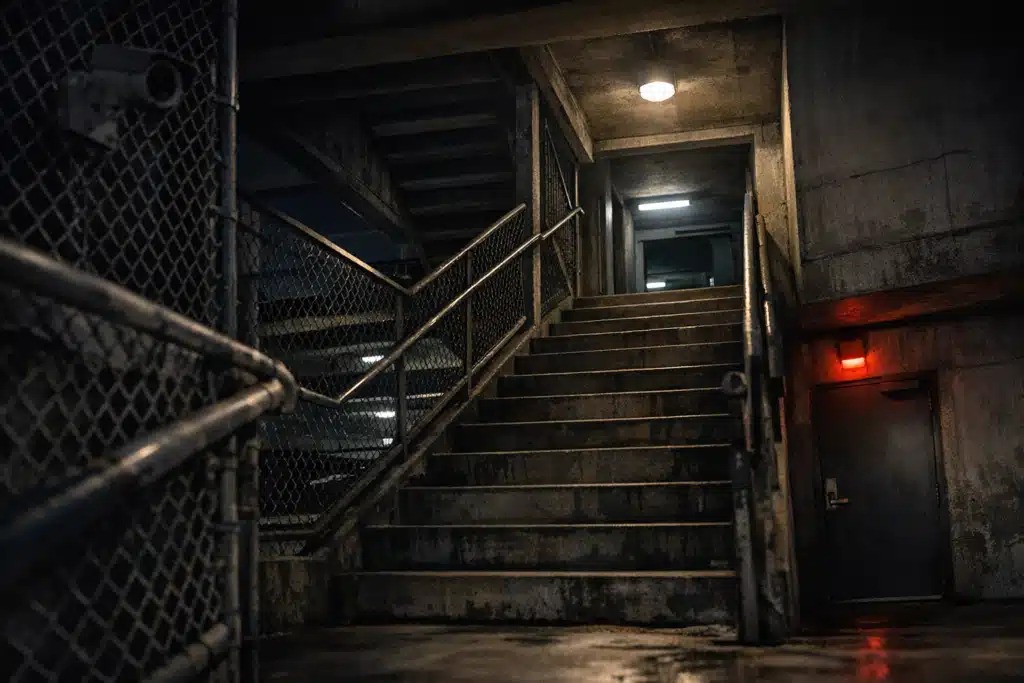
- Parking structures – Isolated stairwells and vehicle break-ins increase after midnight
- Sidewalk corridors – Foot traffic bottlenecks create conflict opportunities
- Ride pickup zones – Confusion and wait times lead to confrontations
Remote video monitoring systems positioned at these transition points provide continuous coverage that roving patrols alone cannot match. High-definition cameras with night vision capabilities capture incidents as they develop, enabling faster response times.
Historic Stockyards Present Unique Nighttime Security Demands
The Stockyards entertainment area combines tourist attractions with working venues, creating security complexity that requires specialized knowledge. Visitors unfamiliar with the area mix with regular patrons, while outdoor events and seasonal activities change crowd dynamics throughout the year.
Billy Bob’s Texas and surrounding honky-tonk venues draw crowds that can exceed 10,000 people on major event nights. This volume requires security coordination between multiple properties and understanding of country music crowd behavior patterns.
Stockyards-Specific Security Considerations
The district’s unique layout creates distinct challenges:
- Open-air design makes perimeter control difficult compared to enclosed venues
- Historical building constraints limit camera placement and lighting options
- Mixed-use spaces blur lines between public areas and private property
- Tourist unfamiliarity increases confusion and potential conflicts
Security guards familiar with Stockyards geography and crowd patterns prevent minor issues from escalating. Knowledge of which establishments serve what demographics helps predict and prevent conflicts before they develop.
Technology Integration Enhances Guard Effectiveness
Remote surveillance systems multiply the effectiveness of on-site security personnel by providing comprehensive area coverage. Modern systems integrate multiple camera feeds with real-time monitoring capabilities that alert guards to developing situations.
License plate recognition technology tracks vehicle movement through entertainment districts, identifying repeat problem vehicles or persons of interest. This capability proves particularly valuable during large events when temporary parking areas see increased theft activity.
Communication System Requirements
Effective nighttime security depends on seamless communication between all security elements:
- Direct radio contact between guards and monitoring stations
- Mobile alerts that provide real-time incident updates
- Venue coordination channels for multi-property incidents
- Emergency services integration for serious situations
Digital incident reporting captures details while events remain fresh in memory. Time-stamped reports with photo documentation provide valuable data for identifying patterns and improving security protocols.
Crowd Management During Peak Entertainment Hours
Fort Worth entertainment districts see predictable crowd surge patterns that experienced security teams can anticipate and manage. Sporting events at nearby venues, concert schedules, and seasonal celebrations all influence crowd size and behavior.
Effective crowd management starts before peak hours arrive. Pre-positioning security personnel at known bottleneck locations prevents small gatherings from becoming larger problems.
Traffic Flow Management Strategies
Strategic positioning controls foot traffic movement:
- Entry point monitoring identifies potential troublemakers early
- Corridor management prevents sidewalk bottlenecks
- Parking area supervision reduces vehicle-related incidents
- Exit coordination manages departure surges safely
Visible security presence at key locations deters problematic behavior while reassuring legitimate patrons. Uniformed guards positioned strategically provide both crime prevention and customer service functions.
Weather Considerations for Texas Entertainment Security
Texas weather significantly impacts entertainment district security needs. Severe thunderstorms can rapidly change crowd dynamics, while extreme heat affects both patron behavior and security equipment performance.
Summer temperatures exceeding 100°F create heat-related health emergencies among patrons consuming alcohol. Security personnel need training in heat illness recognition and response procedures specific to entertainment environments.
Seasonal Security Adjustments
Different seasons require modified security approaches:
- Summer heat increases medical emergencies and aggressive behavior
- Storm season creates rapid evacuation needs and power outages
- Winter cold snaps drive crowds indoors, increasing venue capacity strain
- Holiday periods bring larger crowds and extended operating hours
Backup power systems ensure surveillance equipment continues operating during weather-related power disruptions. Battery-powered cameras maintain coverage when primary power fails.

 Posted on Google
Multi-Venue Coordination Strategies
Individual venue security works best when coordinated with neighboring establishments. Information sharing about problem patrons, suspicious activity, and crowd conditions benefits all businesses in entertainment districts.
Shared security protocols enable rapid response when incidents affect multiple properties. A coordinated approach prevents problems from simply moving from one venue to another without resolution.
Information Sharing Systems
Effective coordination requires structured communication:
- Incident alerts warn neighboring venues of developing problems
- Person of interest notifications help prevent problem individuals from venue-hopping
- Crowd condition updates enable proactive capacity management
- Emergency coordination ensures unified response to serious incidents
Digital platforms enable real-time information sharing while maintaining necessary documentation for law enforcement cooperation.
Cost-Effective Security Solutions for Entertainment Venues
Entertainment venue security budgets must balance comprehensive coverage with operational profitability. The most effective approaches combine permanent technology installations with flexible staffing that scales with crowd size.
Remote monitoring reduces the number of on-site guards needed while maintaining comprehensive coverage. A single monitoring station can oversee multiple camera locations, reducing per-hour security costs during slower periods.
Budget Optimization Strategies
Smart security spending focuses resources where they provide maximum impact:
- Peak hour staffing concentrates personnel during highest-risk periods
- Technology multiplication extends guard effectiveness through remote systems
- Shared resources reduce individual venue costs through coordination
- Preventive positioning stops problems before they require expensive responses
Documented incident reduction provides measurable return on security investment. Lower insurance premiums, reduced liability exposure, and increased customer confidence offset security system costs.
Emergency Response Integration
Entertainment district security must integrate seamlessly with Fort Worth Police Department and emergency medical services. Quick response times during serious incidents protect both patrons and business reputations.
Pre-established protocols with local emergency services streamline response during high-stress situations. Security personnel trained in emergency coordination serve as valuable first responders until official services arrive.
Emergency Preparedness Requirements
Comprehensive emergency planning addresses multiple scenarios:
- Medical emergencies requiring immediate first aid and ambulance coordination
- Violence incidents needing police response and scene preservation
- Weather emergencies demanding rapid patron evacuation or sheltering
- Fire situations requiring immediate evacuation and fire department access
Regular emergency drills ensure security personnel maintain readiness for various scenarios. Coordination with venue management ensures emergency procedures align with business operations.
Measuring Security Program Effectiveness
Effective entertainment district security programs demonstrate measurable results through incident tracking and analysis. Detailed reporting reveals patterns that guide security strategy improvements.
Key performance indicators include incident frequency, response times, and customer complaint trends. Successful security programs show decreasing incident rates over time while maintaining high customer satisfaction scores.
Performance Metrics for Entertainment Security
Meaningful measurements track security program success:
- Incident reduction rates demonstrate program effectiveness
- Response time improvements show coordination success
- Customer satisfaction scores reflect patron confidence levels
- Insurance claim reductions provide financial validation
Monthly reporting provides venue owners with concrete data about security investment returns. Trend analysis identifies emerging issues before they become major problems.
Enhancing Fort Worth Entertainment Security Through Professional Partnership
Effective nighttime security for Fort Worth’s entertainment districts requires specialized expertise that understands local crowd dynamics, venue layouts, and coordination challenges. The combination of experienced security personnel with advanced monitoring technology provides comprehensive protection that single-approach solutions cannot match.
Twin City Security Fort Worth brings extensive experience securing West 7th Street venues, Stockyards establishments, and special events throughout the entertainment districts. Our integrated approach combines visible security presence with remote monitoring capabilities tailored to each venue’s specific needs.
For a customized security assessment of your entertainment venue or district property, contact Twin City Security Fort Worth at 817-922-9774 or email fortworth@twincitysecurity.com. Our team provides detailed security evaluations that address your specific operational requirements and budget considerations.
Sources
- Fort Worth Police Department – Crime Statistics and Community Safety
- Bureau of Justice Assistance – Managing Major Events: Best Practices from the Field
- Department of Homeland Security – Soft Targets and Crowded Places Security Plan Overview
Fort Worth's entertainment districts face increasing security challenges after dark, particularly in areas like West 7th Street and the Historic Stockyards. They require specialized security strategies to manage unique crowd dynamics and ensure safety during peak hours.
- Security incidents spike after 10 PM, necessitating tailored strategies for crowded venues. West 7th Street and the Stockyards present distinct challenges due to their unique layouts and high visitor volumes. Effective security combines visible deterrence with advanced monitoring technology to enhance safety and response times.
- Fort Worth Entertainment Districts Face Rising Security Challenges After Dark Fort Worth’s entertainment districts see a sharp spike in security incidents after 10 PM, with West 7th Street and the Historic Stockyards reporting the highest concentrations of late-night disturbances.
- The combination of crowded venues, alcohol service, and limited parking creates unique nighttime security challenges that standard daytime protection cannot address.