
Enhancing Security for Fort Worth’s Historic Districts
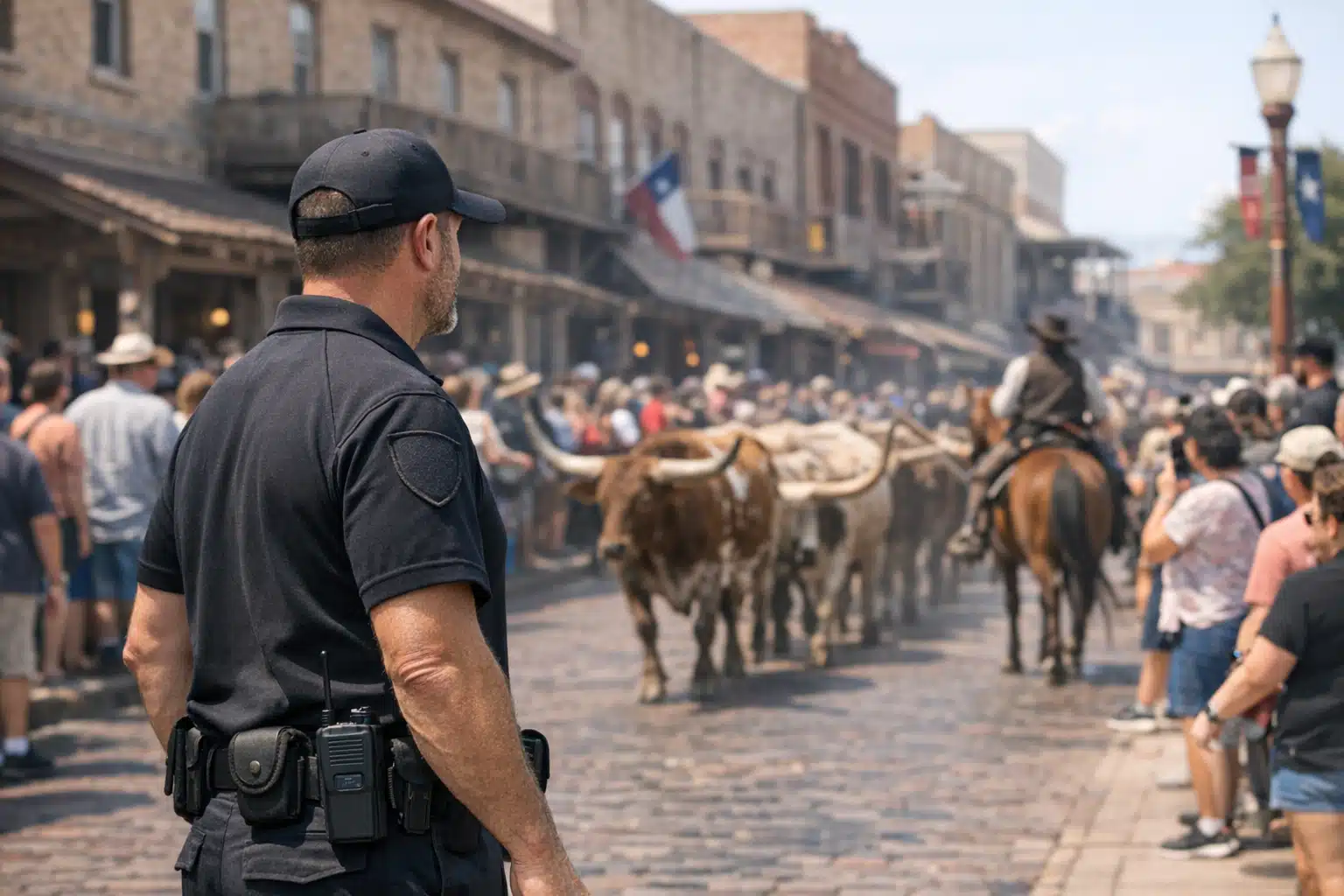
Enhancing security in Fort Worth's historic districts is vital to protect against theft, vandalism, and unauthorized access, especially given the high visitor traffic of over 9 million annually. Improved security measures help safeguard the area's cultural heritage while ensuring a safe environment for both tourists and residents.
Why Historic Districts Face Different Security Risks
The Fort Worth Stockyards draws more than 9 million visitors each year. That foot traffic brings revenue, but it also brings theft, vandalism, and after-hours trespassing.
Historic district security asks a harder question than modern property protection. You must stop crime without drilling into 1900s brick or hanging cameras across a landmark facade.
This post breaks down how Fort Worth property owners protect heritage buildings, manage crowds, and meet insurance demands. It covers the Stockyards, Near Southside, and West 7th districts specifically.
What Makes Historic District Security Harder in Fort Worth
Old buildings were built for a different era. Their construction limits where you can mount equipment and run wiring.
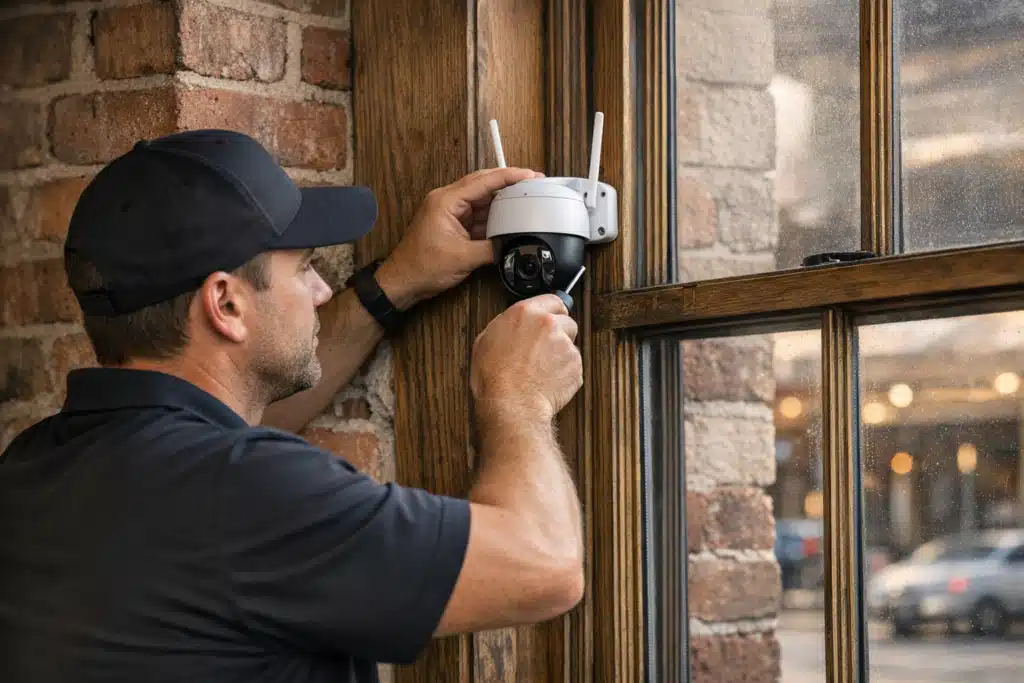
Fort Worth heritage properties share three traits that complicate protection:
- Protected facades that restrict visible camera placement
- Wood-frame and masonry construction with limited conduit paths
- Public access hours that expose interiors to large daytime crowds
The Stockyards National Historic District adds another wrinkle. Any exterior change may face review under preservation rules.
Fort Worth Preservation Rules Shape Every Install
Fort Worth preservation ordinances govern exterior alterations in designated districts. Camera brackets, floodlights, and signage can all trigger review.
Smart operators plan around this early. Wireless cameras and interior-mounted units avoid facade penetration entirely.
We routed a recent Exchange Avenue install through a rear service alley. That kept every mount off the historic street frontage.
Stockyards Event Security Requires Crowd-Specific Planning
Stockyards event security handles cattle drives, rodeos, bar districts, and festival crowds. Each pulls a different risk profile.
The twice-daily cattle drive on Exchange Avenue creates dense pedestrian clusters. Pickpocketing and lost-child incidents spike during these windows.
Weekend nights shift the concern to the bar corridor. Intoxicated patrons, fights, and parking-lot break-ins dominate call volume.
How to Staff a Stockyards Venue Event
To protect a Stockyards venue during a large event, follow these steps:
- Map choke points at entrances, stages, and alleyways before doors open
- Post fixed guards at cash-handling and alcohol-service points
- Deploy roving patrols across parking areas and side streets
- Position surveillance to cover blind corners between buildings
- Set a radio protocol linking guards to a monitoring operator
Fixed and roving coverage together close the gaps a single approach leaves open.
Remote Surveillance Protects Empty Historic Buildings
Most theft and vandalism in heritage districts happens after closing. Remote video monitoring covers those hours without a full guard roster.
Live operators watch camera feeds and respond to motion in real time. When a trespasser enters a closed courtyard, the operator issues a voice-down warning immediately.
That spoken warning stops most intrusions before police arrive. It also creates a timestamped record for insurance and prosecution.
Where Cameras Belong in a Historic Property
Camera placement in Fort Worth heritage buildings works best at these points:
- Rear service doors and loading areas away from public frontage
- Interior stairwells and storage rooms holding valuables
- Parking lots and alleys where vehicle break-ins cluster
- Rooftop access points vulnerable to copper and HVAC theft
Rooftop mechanical theft hits older commercial buildings hard. Copper wiring and condenser units draw repeat offenders.
North Texas Weather Adds Physical Risk
Fort Worth summers push past 100 degrees for weeks at a time. That heat strains outdoor cameras and the guards who patrol on foot.
Equipment rated for Texas heat matters. Cameras without proper housings fail in direct August sun on a brick wall.
Spring brings a second concern. North Texas tornado and hail season runs March through June, damaging exposed equipment and creating unsecured openings after storms.
Storm-Season Steps for Historic Properties
Before severe weather season, take these actions:
- Inspect camera housings for weather sealing and secure mounting
- Confirm backup power keeps monitoring live during outages
- Schedule post-storm patrols to check for broken windows and forced entry
- Document damage on camera for faster insurance claims
Post-storm looting targets buildings with broken windows. A patrol within hours of a storm closes that opening.

 Posted on Google
What Fort Worth Historic District Security Costs
Pricing depends on coverage hours, guard count, and camera scale. A single overnight remote-monitored site costs far less than staffed event coverage.
Three common setups for heritage properties:
- Remote monitoring only for closed after-hours periods
- Guard plus surveillance for public venues during operating hours
- Event staffing scaled to expected crowd size and alcohol service
A quiet Near Southside gallery needs different coverage than a Stockyards saloon on a Saturday night. Pricing follows that gap.
Protecting Specific Fort Worth Districts
Each district carries its own pattern. Coverage plans should match that pattern, not a generic template.
Stockyards National Historic District
High tourist volume and a dense bar scene drive daytime petty crime and nighttime disorder. Mixed guard and camera coverage fits best here.
Near Southside and the Hospital District
Near Southside mixes restored bungalows, medical facilities, and small venues. Parking-lot security and after-hours monitoring carry the most weight.
West 7th and Arlington Heights
West 7th blends retail, dining, and residential blocks. Vehicle break-ins and late-night foot traffic define the risk profile.
Arlington Heights leans residential and older. Property managers there favor patrol checks over fixed guard posts.
How to Choose a Fort Worth Security Provider
Ask any provider these questions before signing:
- Are your guards licensed under Texas DPS Private Security regulations?
- Do you carry liability coverage sized for event crowds?
- Can your cameras mount without altering a protected facade?
- Do live operators respond, or do you only record footage?
- Have you worked inside Fort Worth preservation districts before?
Texas requires security personnel to hold state licensing. Verify that credential before any contract.
Conclusion
Historic district security in Fort Worth balances heritage protection with real crime prevention. The Stockyards, Near Southside, and West 7th each need coverage matched to their crowds, buildings, and weather exposure.
Twin City Security Fort Worth builds guard and remote surveillance plans that respect preservation rules. Call or text 817‑922‑9774, email fortworth@twincitysecurity.com, or visit https://www.twincitysecurityfortworth.com for a district-specific assessment.
Sources
- Texas Department of Public Safety – Private Security Program
- City of Fort Worth – Historic Preservation
- National Park Service – National Register of Historic Places
- National Weather Service – Fort Worth/Dallas Forecast Office
Fort Worth's historic districts face unique security challenges due to their architectural features and high visitor traffic. Effective security strategies must balance crime prevention with preservation regulations.
- The Fort Worth Stockyards attracts over 9 million visitors annually, increasing risks of theft and vandalism. Security measures must avoid altering historic facades.
- Historic buildings limit equipment installation options, requiring creative solutions like wireless cameras and interior monitoring.
- Each district has distinct security needs, with the Stockyards needing mixed guard and camera coverage while other areas may focus on after-hours monitoring.