
How to Prevent Theft in Fort Worth’s Art Galleries
To prevent theft in Fort Worth's art galleries, implement security measures such as surveillance cameras, alarm systems, and secure display cases. Additionally, training staff to recognize suspicious behavior and conducting regular inventory checks can help deter potential theft and protect valuable artworks.
Why Fort Worth Galleries Face Rising Theft Risk
Fort Worth reported more than 20,000 property crimes in a recent year, according to city police data. Galleries hold concentrated value in small spaces.
A single canvas in the Near Southside arts district can be worth six figures. That value attracts planned theft, not random smash-and-grab.
Art gallery security in Fort Worth requires more than a locked front door. It demands layered protection built around how thieves target fine art.
This post breaks down practical steps for gallery owners across West 7th, the Cultural District, and Arlington Heights. Each step reflects real risks local venues face.
What Makes Art Gallery Security Different in Fort Worth
Fine art theft rarely looks like a typical burglary. Pieces are chosen ahead of time, sometimes on commission for private buyers.
Fort Worth galleries face three risks that standard retail stores do not.
- High value per square foot: One wall may hold $500,000 in inventory.
- Public foot traffic: Openings and First Friday events invite crowds and cover for thieves.
- North Texas weather: Heat, humidity, and spring storms threaten both art and alarm systems.
The Cultural District near the Kimbell and Modern draws visitors from across North Texas. That exposure widens the pool of people who study your layout.
Event Nights Are the Highest-Risk Window
Gallery openings pack rooms with strangers. Staff focus on wine, sales, and conversation, not door counts.
Thieves know this. A distracted crowd gives cover to lift smaller framed works or damage a display for later return.
West 7th galleries hosting monthly receptions should treat event nights as separate security assignments. Daytime coverage rarely fits crowd conditions.
Physical Theft Prevention Steps for Gallery Owners
Strong theft prevention starts with the building itself. Follow these steps before adding technology.
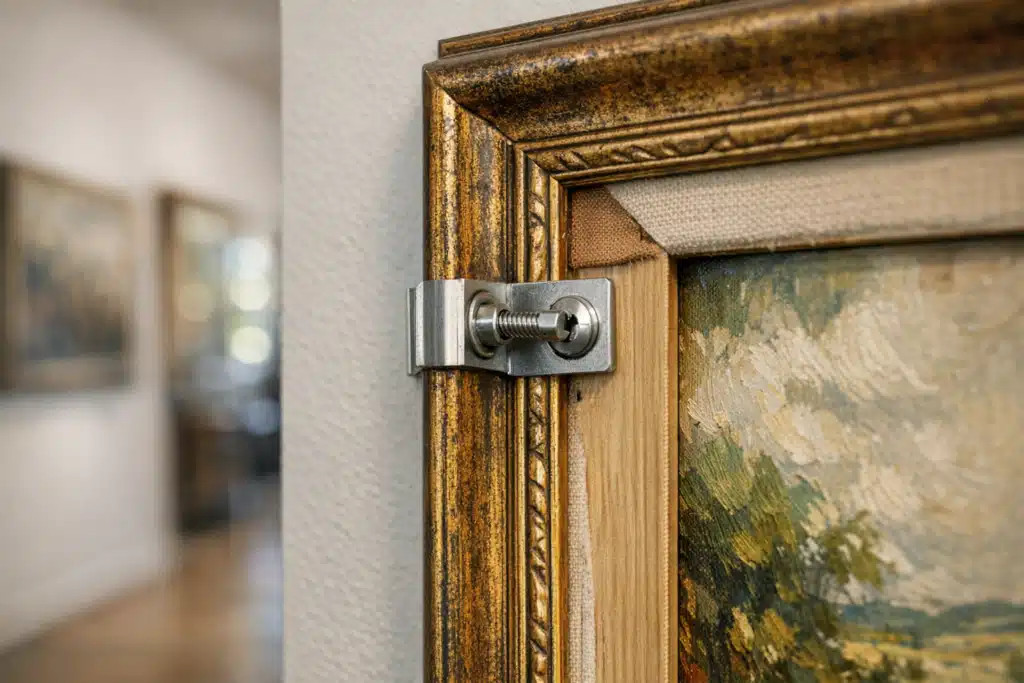
- Anchor high-value pieces: Use security hangers and tamper-resistant hardware, not standard wall hooks.
- Zone your floor plan: Keep your most valuable works away from exits and blind corners.
- Control the back door: Loading and storage areas are common entry points during off-hours.
- Log every movement: Track art in and out with dated records and photos.
- Limit key access: Fewer keyholders means fewer weak links.
Storage rooms deserve as much attention as display walls. Many pieces are stolen before they ever hang.
Lighting Deters More Than It Reveals
Dark exteriors invite after-hours attempts. Motion-activated lighting around rear entrances signals that someone is watching.
Interior lighting matters too. Cameras need consistent light to capture faces during evening events.
Camera and Remote Monitoring for Art Gallery Security
Cameras alone do not stop theft. Live monitoring turns footage into a real deterrent.
Recorded video helps after a loss. Monitored video prevents the loss from happening.
At Twin City Security Fort Worth, remote agents watch feeds in real time. When someone lingers near a rear door at 2 a.m., an agent responds before entry.
What Effective Camera Coverage Looks Like
Gallery camera placement follows the art, not the walls. Cover these points:
- Every entry and exit, including loading docks and roof access
- Each high-value display wall at a face-capturing angle
- Storage and framing rooms where inventory sits unattended
- Parking areas where thieves stage vehicles
Placement should account for glare from large front windows. Afternoon Texas sun washes out poorly angled lenses.
Why Remote Monitoring Fits Small Galleries
Many Fort Worth galleries run lean. A full guard roster stretches tight budgets.
Remote video monitoring covers off-hours at a fraction of on-site staffing cost. Agents speak through on-site speakers to warn intruders directly.
That verbal warning stops most attempts before police arrive. It also creates a record for prosecution.
On-Site Guards for Openings and High-Value Shows
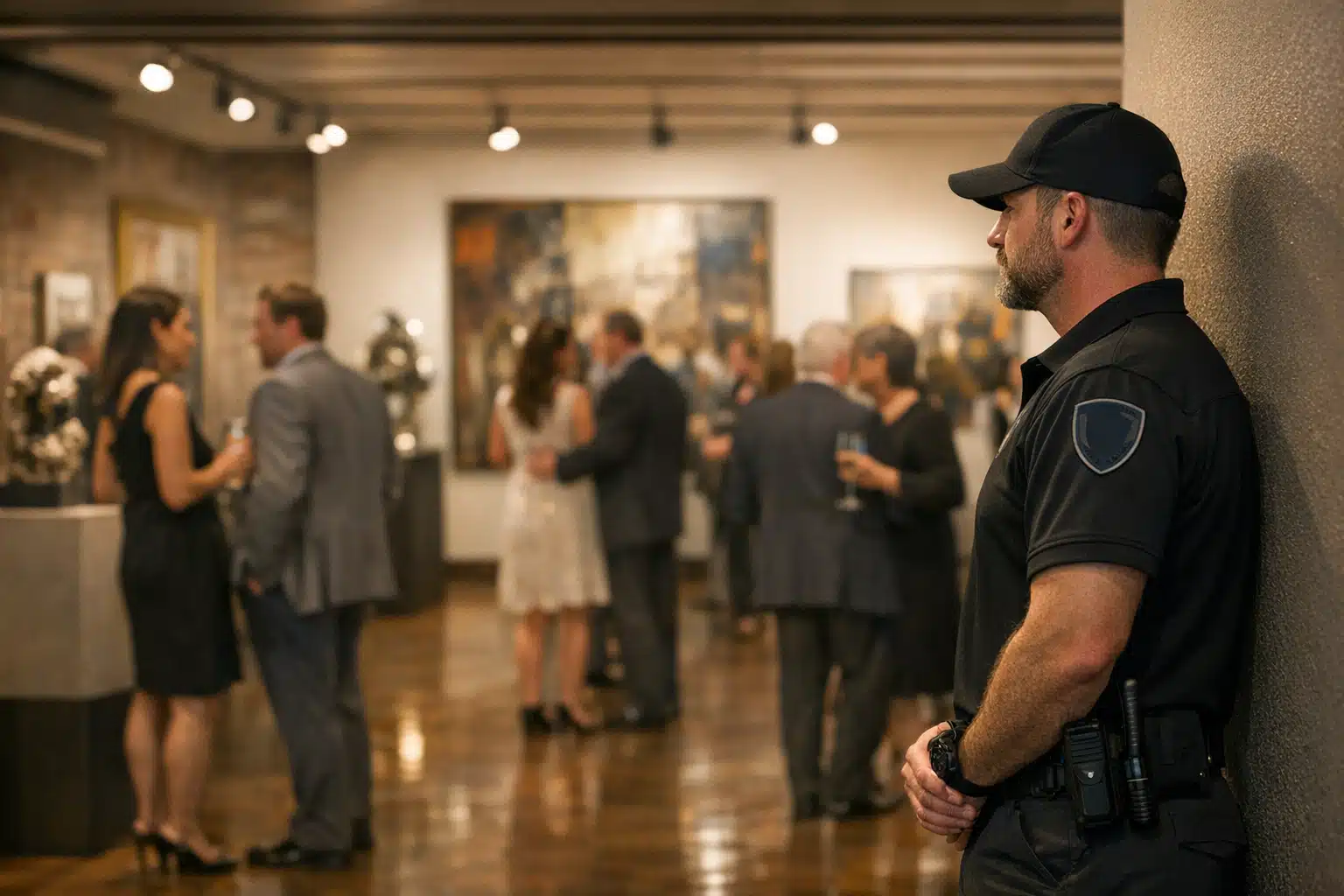
Some situations call for a person on the floor. A visible guard changes crowd behavior at events.
On-site coverage makes sense when:
- You host a reception with 50 or more guests
- A single show features pieces valued above $250,000
- You display work on loan with contractual security requirements
- Recent incidents hit nearby West 7th or Cultural District venues
Guards also manage the practical side of events. They watch exits, note suspicious behavior, and keep crowds away from restricted areas.
Trained for Art, Not Just Retail
A gallery guard needs different skills than a mall officer. They must protect art without disturbing the visitor mood.
Our Fort Worth guards learn to monitor without hovering. They read a room, spot repeated visits, and act quietly.

 Posted on Google
North Texas Weather and Alarm Reliability
Fort Worth storms create security gaps most owners overlook. Spring brings hail, high wind, and power outages.
A power loss can disable cameras and alarms at once. Thieves watch weather reports for these windows.
Protect against outage-driven theft with these measures:
- Battery backup for cameras, alarms, and monitoring equipment
- Cellular alarm communication that works when internet drops
- Climate alerts that flag humidity spikes threatening art
- Post-storm checks to confirm every sensor came back online
Summer heat adds another layer. Attic-mounted equipment fails faster in triple-digit Texas temperatures.
Humidity Threatens Value Directly
North Texas humidity swings damage canvas, paper, and frames. Monitored climate sensors protect value as much as any camera.
A ruined piece is a loss whether stolen or warped. Environmental monitoring belongs in any gallery security plan.
Insurance and Documentation Requirements
Fine art insurers expect proof of protection. Better security lowers premiums and speeds claims.
Keep these records current for every valuable piece:
- Dated appraisals and provenance documents
- Photographs from multiple angles
- Serial or catalog numbers where they exist
- Records of your camera and alarm coverage
Insurers ask what monitoring you use. A documented remote monitoring contract strengthens your position at renewal.
Building a Layered Plan for Your Fort Worth Gallery
No single tool stops fine art theft. Protection comes from stacking measures that cover each other’s gaps.
A workable Fort Worth gallery plan combines:
- Physical barriers: Anchored art, controlled doors, zoned floors
- Monitored cameras: Real-time response, not just recordings
- Event guards: On-site coverage for high-risk nights
- Weather resilience: Backup power and climate alerts
- Documentation: Records that satisfy insurers
Start with your highest-value wall and your least-watched door. Those two points carry most of your risk.
Protect Your Collection With Twin City Security Fort Worth
Fort Worth galleries hold irreplaceable work in a city with real property crime. Layered art gallery security keeps collections and reputations intact.
Twin City Security Fort Worth designs monitoring and guard coverage around your gallery’s risk profile. We know the Cultural District, West 7th, and Near Southside firsthand.
Call or text us at 817‑922‑9774, email fortworth@twincitysecurity.com, or visit https://www.twincitysecurityfortworth.com for a Fort Worth security assessment.
Sources
- FBI – Art Theft Program
- City of Fort Worth – Police Department
- National Weather Service – Fort Worth/Dallas Forecast Office
- National Park Service – Conserve O Gram Museum Care Series
Fort Worth's art galleries face significant theft risks due to high-value inventory and public events. Effective security requires a layered approach that includes physical barriers, monitored cameras, and trained personnel.
- Galleries often hold valuable pieces that attract planned theft rather than random burglaries. They must implement strategies tailored to their unique risks.
- Event nights are particularly vulnerable, as crowds can distract staff and provide cover for thieves. Security measures should be heightened during these times.
- Environmental factors like weather can impact both art and security systems, necessitating backup power and climate monitoring to protect valuable collections.