How to Safeguard Your Fort Worth Warehouse from Summer Heat Risks
To protect your Fort Worth warehouse from summer heat risks, implement measures such as installing reflective window films, ensuring proper ventilation, and regularly maintaining security equipment. These steps help mitigate heat-related damage and maintain effective surveillance, ultimately enhancing the security of your facility during the intense summer months.
Fort Worth summers push past 100°F for weeks at a time, with July highs averaging 96°F and heat indexes climbing well above that. That heat does more than stress your workers. It degrades your warehouse security equipment, opens gaps in your camera coverage, and creates conditions criminals watch for across North Texas facilities. This post breaks down the exact heat-related risks your Fort Worth warehouse faces and the steps that keep your property protected from June through September.
Why Summer Heat Risks Threaten Fort Worth Warehouse Security
Summer heat risks hit warehouse operations in ways most owners never plan for. Equipment overheats. Staffing thins out. Response times slow when temperatures climb.
Fort Worth warehouses in areas like the Meacham Airport corridor and the industrial zones off I-35W run large, open properties. Those wide perimeters depend on cameras, sensors, and lighting that all react badly to extreme heat.
Heat-Related Equipment Failures
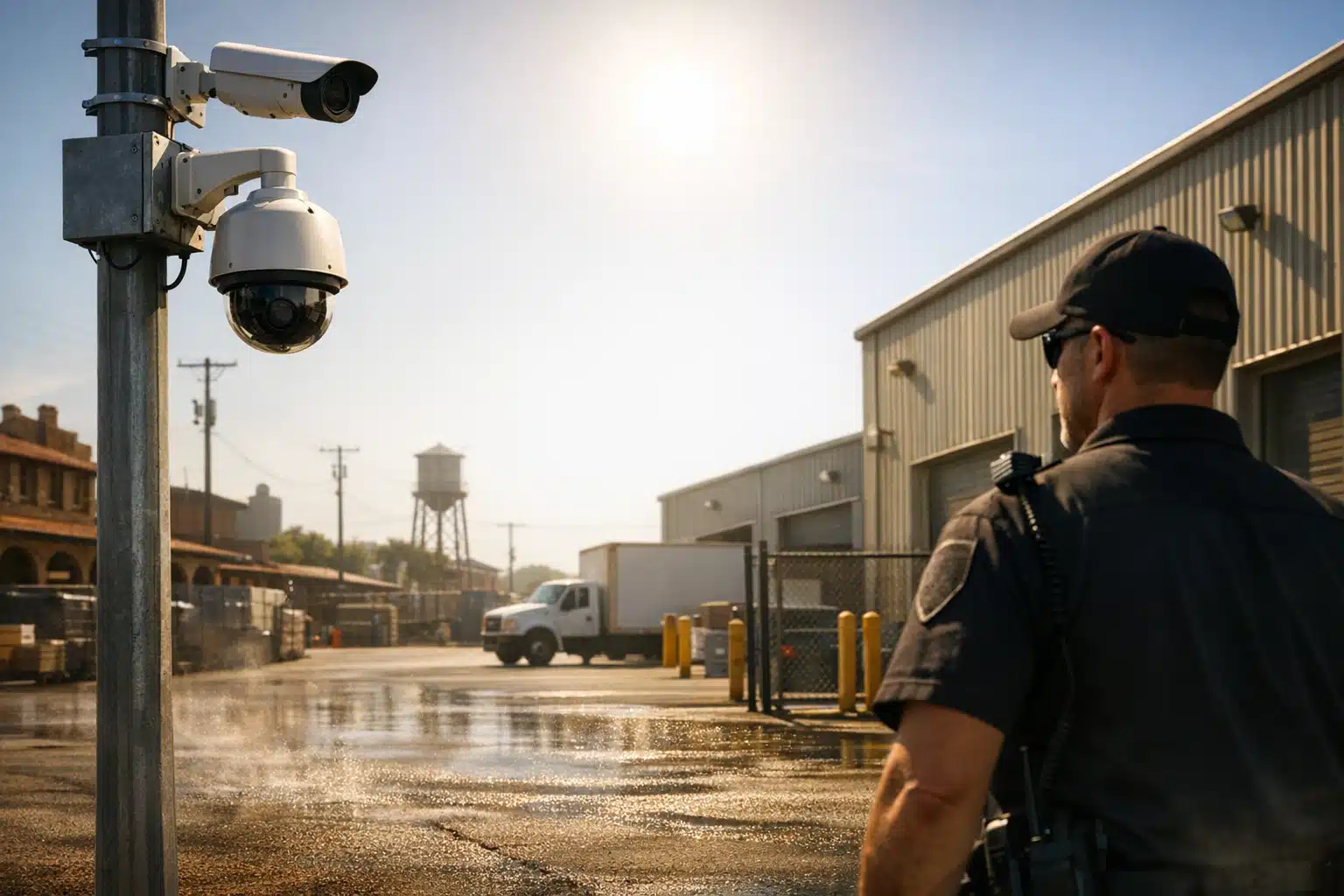
Outdoor security cameras carry operating temperature limits. Many consumer-grade units cap out around 113°F. On a Fort Worth loading dock in direct August sun, surface temperatures pass that mark by early afternoon.
When cameras overheat, you lose footage during peak daylight hours. Common failures include:
- Image sensor distortion that blurs license plates and faces
- Automatic shutdowns when internal temperatures trip safety cutoffs
- Lens fogging from rapid cooling when clouds pass
- Storage drive failure in NVRs kept in unconditioned rooms
A camera that shuts down at 2 p.m. leaves your dock blind during shift changes. Thieves who scout properties know this pattern.
Power Grid Strain and Blackouts
ERCOT issues conservation appeals almost every Texas summer. Rolling outages and brownouts knock out powered security systems without warning.
A warehouse relying only on wired cameras goes dark the moment the grid dips. Battery backups and cellular failover keep coverage alive when power drops.
How Heat Changes Criminal Activity Patterns in Fort Worth
Property crime shifts with the seasons across Tarrant County. Warmer months bring longer daylight, more foot traffic, and predictable staffing gaps.
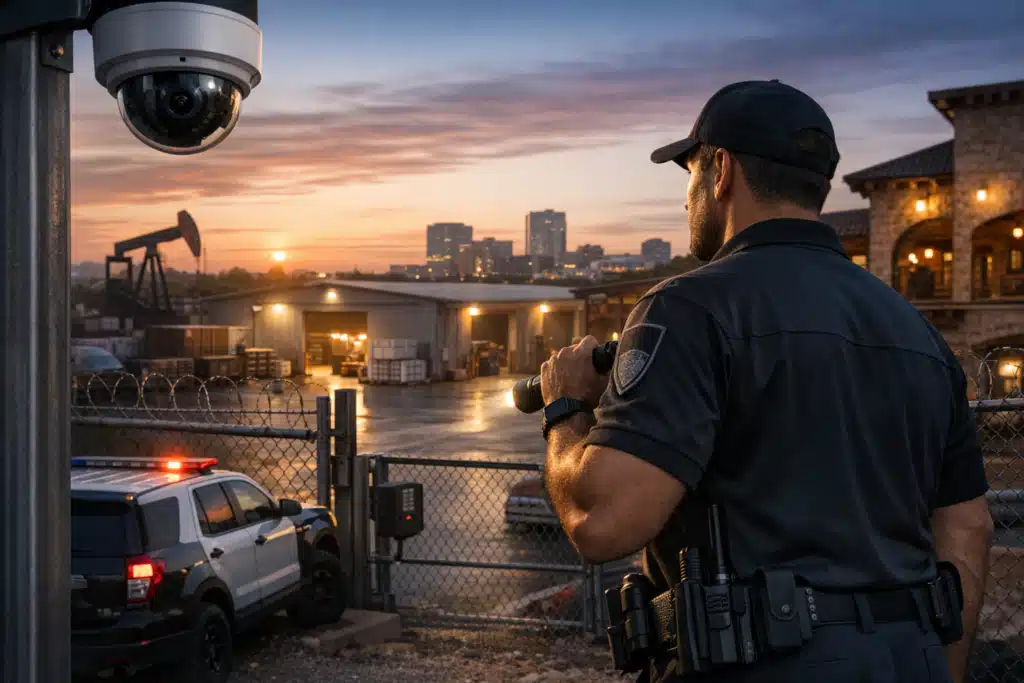
Warehouse theft in Fort Worth clusters around a few conditions:
- Reduced staffing during vacation-heavy July and August
- Propped doors workers use to fight indoor heat
- Copper and metal theft that spikes when scrap prices rise
- Extended twilight hours that give cover for perimeter probing
Propped exterior doors are the quiet culprit. Crews open bay doors and side entries to move hot air. Every open door is an unmonitored entry point.
Copper and Equipment Theft Season
Metal theft rises when scrap prices climb, and summer construction demand drives those prices up. Fort Worth warehouses storing HVAC units, wiring, and pallets of raw metal become targets.
Thieves often strike during the hottest afternoon hours when they expect gaps in coverage. Active monitoring closes that window.
Steps to Protect Your Warehouse Security During Summer Heat
To protect your Fort Worth warehouse from summer heat risks, follow these steps in order of impact.
Step 1: Audit Your Camera Heat Ratings
Check the operating temperature range on every outdoor camera. Anything rated below 122°F needs shade, ventilation, or replacement.
Mount cameras under eaves or in vented housings. Direct August sun on a dark camera body adds 20°F or more to its internal temperature.
Step 2: Add Cellular and Battery Backup
Wire-dependent systems fail during ERCOT strain. Install battery backup on your recorder and cellular failover for alerts.
A warehouse near Alliance or the Railhead district can lose primary internet during a heat-driven outage. Cellular backup keeps footage streaming to monitoring stations.
Step 3: Move Recording Equipment to Climate Control
Network video recorders overheat in unconditioned storage rooms. Relocate them to an air-conditioned office or add a dedicated cooling unit.
Hard drives fail faster above 95°F. A failed drive means no footage when you need it most.
Step 4: Set Door and Perimeter Alerts
Install sensors that flag propped or held-open doors. When a bay door stays open past a set time, the system alerts your team or a monitoring center.
This step targets the exact heat behavior that creates warehouse security gaps in Fort Worth.
Step 5: Switch to Remote Video Monitoring
Live remote monitoring catches problems your equipment might miss. Trained operators watch feeds, verify alarms, and call police on active threats.
Remote monitoring runs day and night without heat exhaustion or vacation gaps. For large Fort Worth warehouse perimeters, it covers ground no single on-site officer can.
Remote Monitoring vs. On-Site Guards for Fort Worth Warehouses
Both approaches protect your property. The right mix depends on your warehouse size, layout, and risk level.
When On-Site Guards Make Sense
On-site officers work best for warehouses with heavy foot traffic, gated entries, or valuable inventory needing physical checks. A guard responds to fires, disputes, and medical calls in person.
Fort Worth summer heat demands rotation and hydration plans for outdoor posts. Twin City Security Fort Worth staffs officers trained for Texas heat conditions.
When Remote Monitoring Wins
Remote video monitoring covers wide perimeters at lower cost than round-the-clock guards. It works well for facilities with defined entry points and reliable camera coverage.
Many Fort Worth warehouses use both. Cameras and remote operators handle the perimeter. On-site officers manage the gate and interior.

 Posted on Google
Common Warehouse Security Mistakes During Fort Worth Summers
Avoid the errors that cost Fort Worth facilities coverage every summer:
- Skipping camera heat audits until footage fails during an incident
- Leaving NVRs in hot server closets with no cooling
- Ignoring propped doors as a normal summer habit
- Relying on grid power alone during ERCOT conservation days
- Cutting monitoring hours to save money during slow months
Each mistake creates a predictable gap. Criminals who scout Fort Worth industrial zones look for exactly this.
Building a Summer-Ready Warehouse Security Plan
A strong summer plan combines heat-rated equipment, backup power, and live monitoring. Start with an on-site assessment of your current coverage.
Map your blind spots. Note which cameras face direct sun. Check where power fails first during an outage.
A Fort Worth security assessment identifies these weak points before August heat exposes them. From there, you match protection to your budget and layout.
Protect Your Fort Worth Warehouse Before Summer Peaks
Fort Worth summer heat degrades cameras, strains power, and opens doors that criminals watch. Heat-rated equipment, battery backup, and remote monitoring close those gaps before they cost you inventory. Match your protection to your warehouse layout, and audit your coverage before the hottest weeks arrive.
Twin City Security Fort Worth builds warehouse security plans for North Texas heat and North Texas threats. Call or text 817‑922‑9774, email fortworth@twincitysecurity.com, or visit https://www.twincitysecurityfortworth.com for a Fort Worth security assessment.
Sources
- National Weather Service – Fort Worth/Dallas Forecast Office
- ERCOT – Electric Reliability Council of Texas
- FBI – Uniform Crime Reporting Program
- Texas Department of Public Safety – Private Security Bureau
Fort Worth warehouses face significant risks during the summer heat, which can compromise security systems and create vulnerabilities for theft. This article outlines the specific threats posed by high temperatures and offers actionable steps to enhance warehouse security from June through September.
- Fort Worth summers can exceed 100°F, stressing both workers and security equipment. High temperatures lead to equipment failures and gaps in camera coverage.
- Criminal activity increases during summer due to reduced staffing and propped doors, making warehouses more vulnerable to theft.
- To mitigate risks, warehouses should audit camera heat ratings, implement battery backups, and consider remote monitoring for enhanced security.