The Benefits of Remote Surveillance for Fort Worth’s Industrial Parks
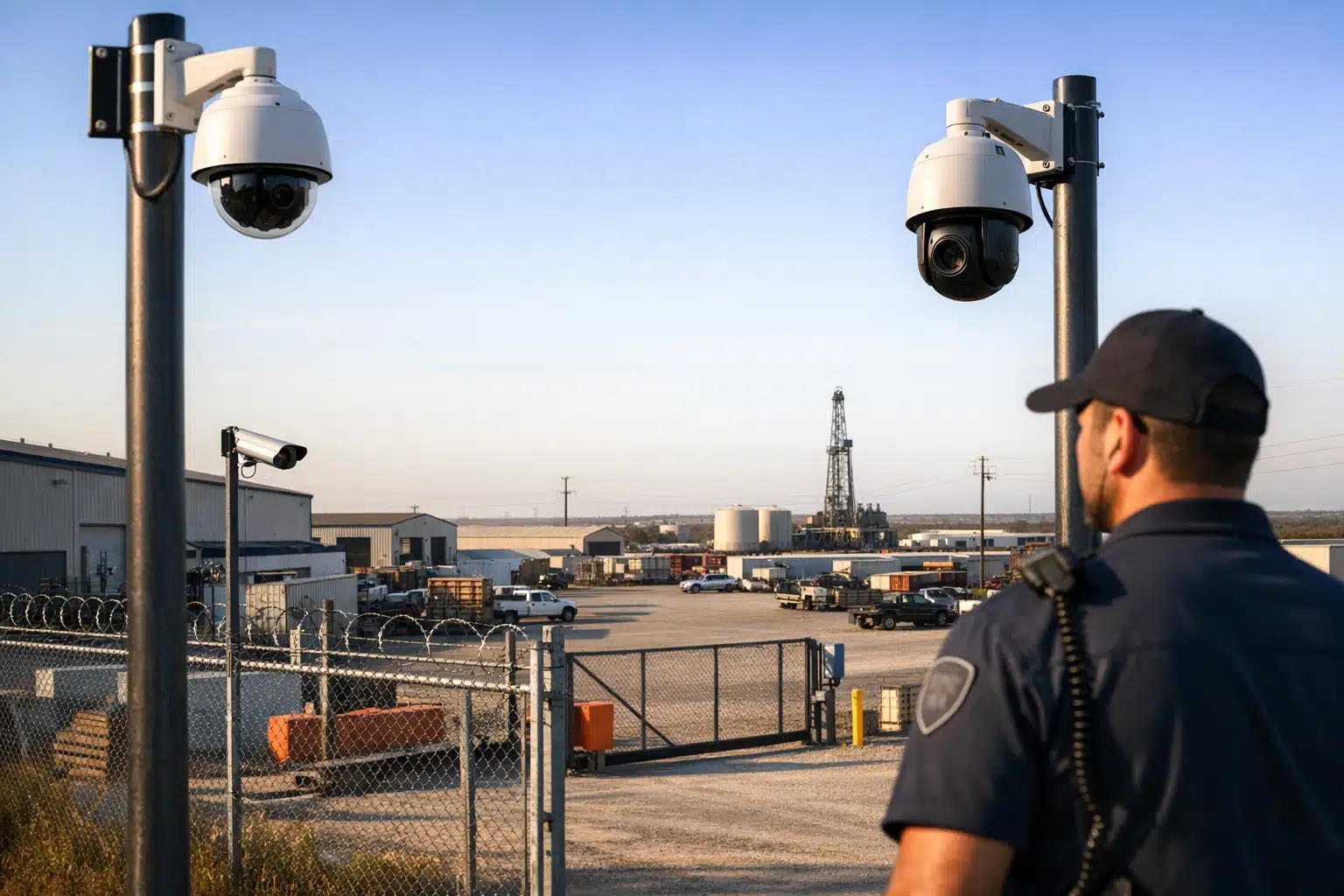
Remote surveillance for industrial parks in Fort Worth offers enhanced security by deterring theft and vandalism, particularly against issues like copper theft and equipment loss. It provides real-time monitoring of expansive areas, ensuring quick responses to unauthorized access and improving overall safety for businesses operating in these locations.
Why Fort Worth Industrial Parks Face Rising Security Risks
Copper theft, equipment loss, and after-hours trespassing hit Fort Worth industrial parks hard. Sites near Meacham Airport, the Alliance corridor, and East Loop 820 sit on wide acreage with long fence lines.
Remote surveillance gives these properties eyes on every gate, dock, and storage yard without stationing a guard at each corner. That matters when a single park spans dozens of acres and multiple tenants.
Fort Worth reported thousands of commercial burglaries and thefts in recent years, per city crime data. Industrial zones face extra exposure because they empty out at night and sit far from residential foot traffic.
This post breaks down how remote monitoring works for local warehouses, distribution yards, and manufacturing sites. It covers real coverage gaps, North Texas weather concerns, and what setup costs look like.
What Remote Surveillance Means for Industrial Park Security
Remote surveillance uses live and recorded video, monitored off-site by trained operators. Cameras feed a central station where staff watch feeds, verify alarms, and respond in real time.
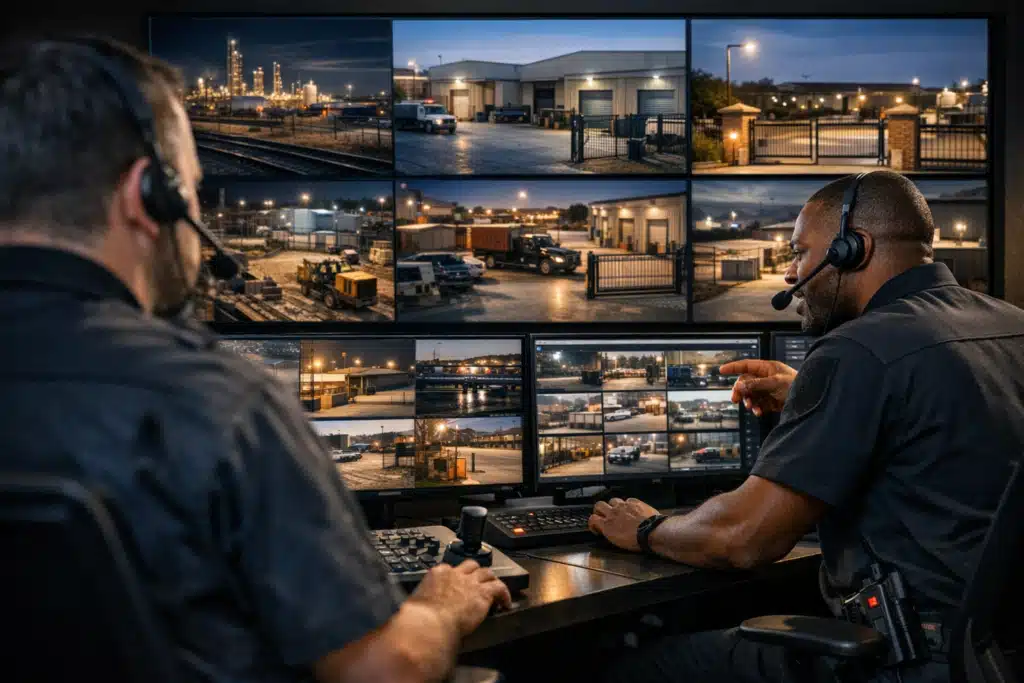
For industrial park security, that means one monitoring team can cover fence lines, loading docks, and equipment yards across multiple buildings at once.
How It Differs From Standard Camera Systems
A recorded-only camera helps after a crime happens. Remote monitoring stops the crime while it unfolds.
- Passive cameras: Footage reviewed later, when losses already occurred.
- Monitored surveillance: Operators watch live and act during the event.
- Voice-down speakers: Operators warn intruders by name and location on-site.
When an operator announces “You in the blue jacket near dock three, leave now,” most trespassers run before police arrive.
Protecting Fort Worth Industrial Sites Against North Texas Weather
North Texas weather tests any security setup. Summer heat above 100°F, spring hailstorms, and tornado warnings all affect camera hardware and site access.
Remote monitoring keeps working when a physical guard cannot safely patrol. During a severe thunderstorm warning, operators stay indoors and still watch every zone.
Weather Challenges Specific to Industrial Yards
- Summer heat: Camera enclosures need heat ratings above 120°F for open yards.
- Spring hail: Housings and mounts must survive golf-ball hail common in Tarrant County.
- High wind: Poles and mounts require ratings for gusts seen during storm fronts.
- Flooding: Low-lying sites near the Trinity River flood zones need elevated equipment.
Weather also raises theft risk. Crews leave equipment behind during storm delays, and thieves know it.
Cutting Costs Without Losing Coverage
A staffed guard at every entrance across a 40-acre park costs more than most tenants want to spend. Remote surveillance covers the same ground with fewer people.
One monitoring operator watches many camera zones at once. That lowers labor cost per protected acre.
Where Industrial Parks Save Money
- Fewer overnight guards needed for perimeter watch.
- Faster verified response reduces false-alarm police fees.
- Video evidence supports insurance claims and cuts disputed losses.
- Deterrence lowers repeat theft after the first announced warning.
Many Fort Worth operators pair a small on-site guard team with remote cameras. Guards handle access and physical response; operators watch the rest.
Protecting Loading Docks, Yards, and Oil & Gas Equipment
Loading docks and open storage yards draw the most theft in Fort Worth industrial zones. Catalytic converters, copper wire, tools, and diesel all move fast on the black market.
Oil and gas support yards face added risk. Pumps, valves, and metal stock sit exposed on fenced lots off the Loop and near the Barnett Shale service corridor.
Steps to Secure a High-Risk Industrial Yard
- Map the blind spots. Walk the fence line at night and mark dark corners.
- Cover every gate. Place cameras at each vehicle and pedestrian entry.
- Add analytics. Set alerts for motion in yards after posted hours.
- Install voice-down audio. Let operators speak to intruders directly.
- Log all access. Track who enters, when, and by which gate.
Texas law lets operators record video on private commercial property. Audio recording rules differ, so voice-down warnings should follow legal review.

 Posted on Google
Serving Fort Worth’s Growth Corridors
Industrial demand keeps climbing across Alliance, the North Fort Worth logistics belt, and the Southeast rail zones. New warehouse space fills fast, and each site needs coverage from day one.
Remote surveillance scales as parks grow. Adding a new building means adding cameras to the same monitoring feed, not hiring a whole new crew.
Who Benefits Most
- Distribution and logistics warehouses with overnight dock activity.
- Oil and gas service yards storing high-value metal and equipment.
- Manufacturing plants with staged raw materials outdoors.
- Multi-tenant parks where one system covers shared perimeters.
Shared monitoring across tenants splits cost while keeping every unit watched.
How to Start a Remote Surveillance Program
Setup begins with a site walk. A local assessor maps entries, blind spots, lighting, and power access.
- Book a site assessment of your park’s perimeter and yards.
- Prioritize high-loss zones like docks and equipment lots.
- Choose camera and analytic settings matched to your hours.
- Connect feeds to a monitored station.
- Test voice-down and response before going live.
A short pilot on your highest-risk gate shows results fast. Most operators expand once the first zone proves itself.
Get a Fort Worth Industrial Park Security Assessment
Remote surveillance protects wide industrial acreage at lower cost than full guard staffing. It works during storms, watches many zones at once, and stops theft as it happens.
Twin City Security Fort Worth handles remote monitoring and on-site coverage for warehouses, oil and gas yards, and multi-tenant parks across Tarrant County.
Call or text 817‑922‑9774 or email fortworth@twincitysecurity.com for a site assessment and monitoring quote.
Sources
- City of Fort Worth – Police Department
- FBI – Uniform Crime Reporting Program
- National Weather Service – Fort Worth/Dallas Forecast Office
- Texas Department of Public Safety – Private Security Program
Fort Worth's industrial parks face significant security challenges, including theft and trespassing, particularly at night. Remote surveillance offers a cost-effective solution by providing real-time monitoring across large areas without the need for extensive guard staffing.
- Remote surveillance uses live video feeds monitored off-site to prevent crimes as they happen. Operators can communicate directly with intruders, often deterring them before police arrive.
- This system is particularly beneficial for industrial parks that experience high theft rates, especially in loading docks and open storage areas.
- Weather conditions can impact security, but remote monitoring continues to function effectively even during severe storms, ensuring constant surveillance.