How to Ensure Safety at Fort Worth’s Outdoor Markets
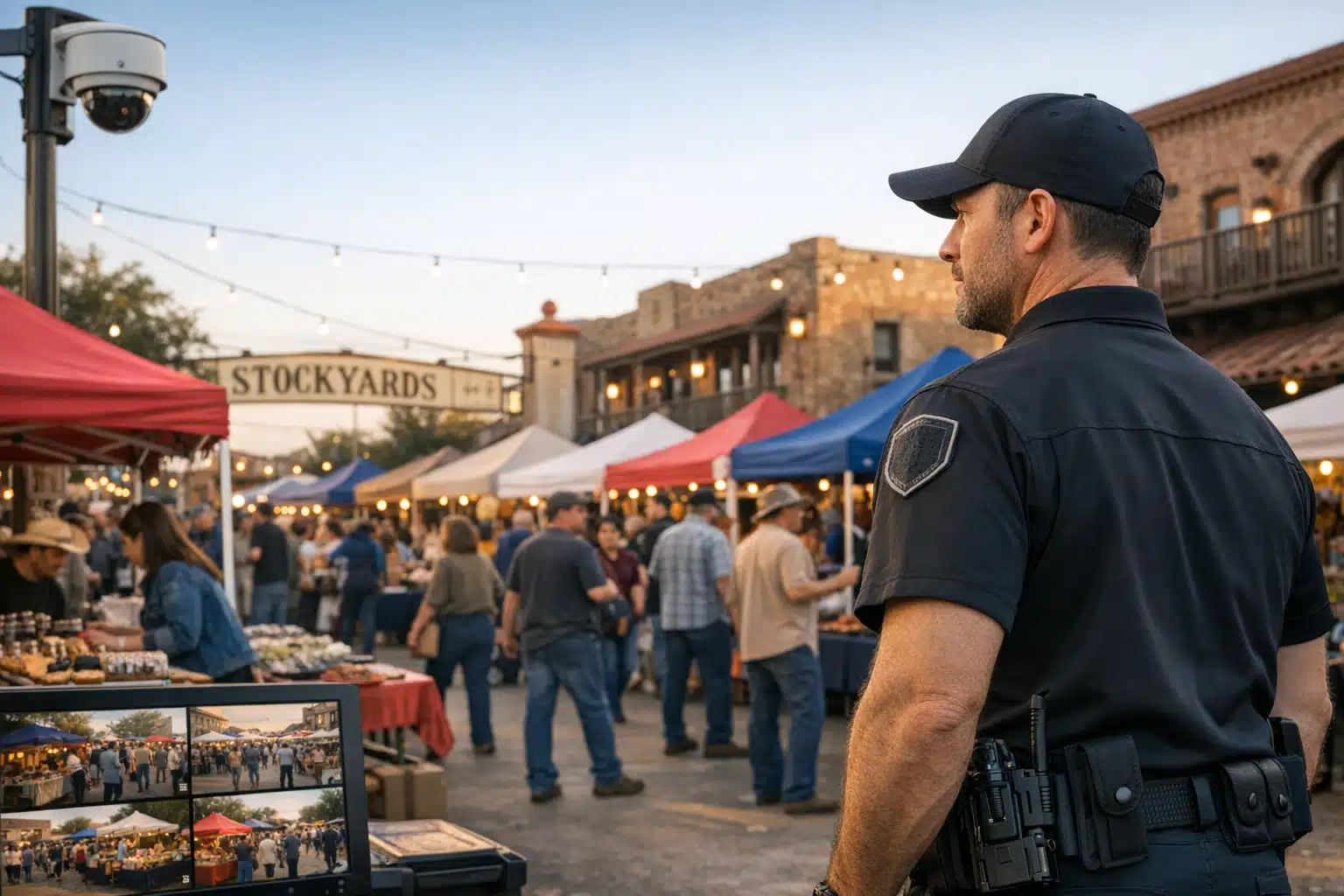
To ensure safety at Fort Worth’s outdoor markets, organizers should implement measures such as crowd control, adequate lighting, and surveillance. Additionally, vendors can enhance security by securing their merchandise and being aware of their surroundings. Collaborating with local law enforcement can also help maintain a safe environment for everyone.
Why Outdoor Market Security Matters in Fort Worth
Fort Worth hosts open-air markets year-round, from the Stockyards vendor stalls to Near Southside weekend pop-ups. Each draws crowds, cash, and inventory into exposed public spaces. That mix makes outdoor market security a real concern for organizers and vendors alike.
Property crime remains a steady issue across Tarrant County. Open markets add extra risk because goods sit on tables, not behind locked doors. A single unattended booth can lose hundreds in minutes.
This post breaks down practical steps for protecting vendors, shoppers, and cash flow at Fort Worth markets. It covers staffing, camera coverage, weather planning, and vendor-level protection you can act on before your next market day.
What Makes Fort Worth Outdoor Markets Different
Open-air markets in Fort Worth face conditions that indoor retail never deals with. Planning starts with knowing what you are up against.
Weather Swings Across North Texas
North Texas weather changes fast. A calm April morning can turn into a hailstorm by afternoon. Vendors lose product and shoppers scatter when storms hit without warning.
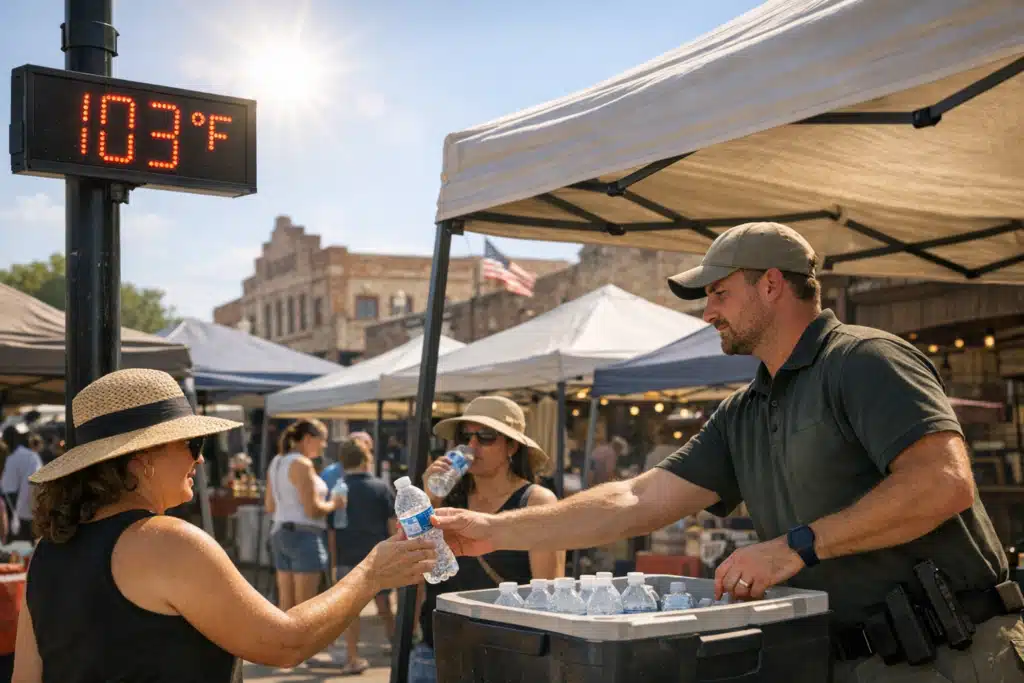
Summer heat brings its own problems. July temperatures push past 100 degrees in Fort Worth. Heat exhaustion among staff and crowd members becomes a safety matter, not just discomfort.
A good security plan tracks weather and includes evacuation triggers. Guards should know where covered shelter sits and how to move people there in minutes.
Crowd Density in Tight Spaces
Stockyards market events pack people into narrow walkways between historic buildings. Foot traffic bunches up near popular stalls. Tight crowds make theft easier and slow emergency response.
Markets in West 7th and Arlington Heights face similar squeeze points near entrances and food vendors. Mapping these choke areas ahead of time keeps sightlines clear.
Building a Vendor-First Outdoor Market Security Plan
Outdoor market security works best when it protects individual vendors, not just the venue perimeter. Each booth is a small business with its own cash, stock, and staff.
Generic venue-wide coverage misses the vendor level. A guard at the front gate does nothing for a jewelry seller robbed at the back row.
Step-by-Step Setup for Market Organizers
- Map the site. Mark every entrance, exit, cash-heavy stall, and blind corner before market day.
- Assign zone coverage. Split the market into zones and place a guard or camera in each one.
- Set vendor check-in points. Log vendors as they arrive so unknown persons stand out.
- Plan cash handling. Give vendors a secure spot or scheduled pickup for large cash amounts.
- Rehearse weather response. Walk staff through storm and heat protocols before doors open.
Protecting High-Value Vendors
Some vendors carry more risk than others. Jewelry, electronics, and cash-only food stalls attract theft. Match your coverage to the target, not the square footage.
Ask vendors what they carry during registration. Place stronger coverage near booths with portable, high-value stock.
On-Site Guards Versus Remote Video Surveillance
Both on-site guards and remote video monitoring have a place at Fort Worth markets. The right mix depends on your market size and budget.
When On-Site Guards Make Sense
Uniformed guards deter theft by presence alone. They handle disputes, direct crowds, and respond to medical calls in seconds.
Larger Stockyards events with alcohol sales benefit most from live staff. A guard can stop a confrontation before it spreads through a packed walkway.
When Remote Monitoring Fits Better
Remote video surveillance covers wide areas at lower cost. Cameras watch parking lots, back rows, and setup periods when few people are around.
Overnight coverage before a two-day market matters. Vendors often leave tents and stock in place after closing. Remote monitors catch trespassers during those quiet hours.
Many Fort Worth market operators pair both. Guards work the floor during hours, and cameras watch the site overnight.
Event Safety Planning for Larger Market Days
Event safety at bigger markets goes past theft prevention. Crowd volume, alcohol, and traffic all raise the stakes.
Coordinating With Local Response
Fort Worth requires permits for many public gatherings. Larger events may need coordination with police and fire officials. Building that relationship early smooths approval and response.
Share your site map and guard positions with responders. When seconds count, they should know your layout already.
Managing Alcohol and Food Zones
Food and drink areas draw the densest crowds and the most incidents. Position coverage where lines form and where alcohol is served.
- Check IDs at a single controlled point, not every stall.
- Keep clear paths between food zones and exits.
- Station a guard near any stage or performance area.

 Posted on Google
Weather-Specific Safety Steps for Fort Worth Markets
North Texas weather demands its own plan. Two conditions cause the most trouble: spring storms and summer heat.
Spring Storm and Tornado Season
Peak severe weather runs April through June across Tarrant County. Markets during this window need a monitored weather feed and a clear call to shut down.
Assign one person to track radar during the event. Give them authority to pause the market when warnings hit the area.
Summer Heat Protocol
Heat safety protects staff and shoppers alike. Simple steps cut the risk of heat illness on a 100-degree Fort Worth afternoon.
- Set up shaded rest points with water.
- Rotate guards out of direct sun on a set schedule.
- Watch for signs of heat exhaustion in crowds and vendors.
Common Mistakes at Fort Worth Outdoor Markets
Certain errors show up again and again at open-air markets. Avoiding them costs little and prevents big losses.
- Guarding only the front gate. Back rows and side exits get ignored and become theft points.
- Skipping overnight coverage. Unattended stock between market days invites trespass.
- No weather trigger. Waiting too long to pause a market puts crowds at risk.
- Ignoring vendor input. Vendors know their own risk better than anyone. Ask them.
How Twin City Security Fort Worth Supports Market Operators
Twin City Security Fort Worth works with market organizers, Stockyards operators, and event teams across the area. Coverage is built around your specific layout and vendor mix.
A site assessment maps your risk zones and matches guards and cameras to real threats. That means vendors get protection where they carry the most value.
Whether you run a weekend pop-up in Near Southside or a large Stockyards event, coverage scales to fit.
Conclusion
Safe Fort Worth outdoor markets come from vendor-level protection, smart guard and camera placement, and a real weather plan. Match coverage to your actual risks, not just your footprint. Plan before market day, not during it.
Ready for a Fort Worth market security assessment or monitoring quote? Call or text Twin City Security Fort Worth at 817‑922‑9774 or email fortworth@twincitysecurity.com.
Sources
- Fort Worth Police Department – Crime Data and Reports
- National Weather Service – Fort Worth/Dallas Forecast Office
- OSHA – Heat Illness Prevention
- Texas DPS – Private Security Bureau
Fort Worth's outdoor markets require careful security planning due to their exposure to public spaces and varying weather conditions. This article outlines essential strategies for protecting vendors and shoppers, emphasizing the importance of tailored security measures.
- Outdoor markets attract large crowds and cash, increasing the risk of theft and property crime. Security plans should focus on individual vendor protection rather than just venue perimeter safety.
- Weather can change rapidly in North Texas, necessitating protocols for storm response and heat safety to protect both vendors and attendees.
- Effective security includes a mix of on-site guards and remote video surveillance, with coverage tailored to the specific needs of high-value vendors and busy areas.